
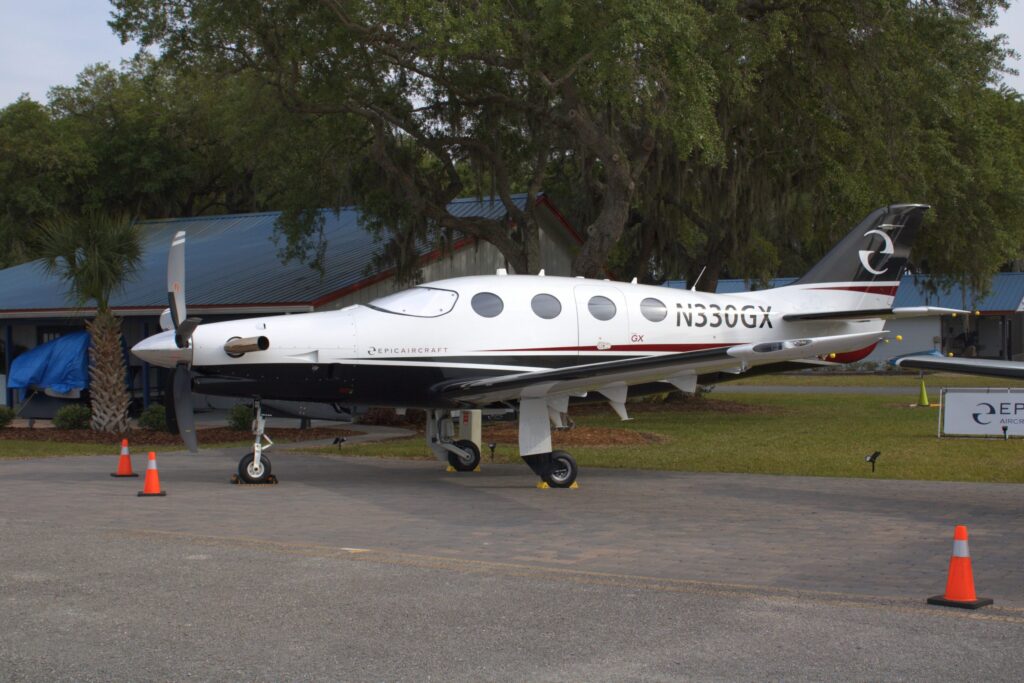
On February 13, 2026, an Epic E1000 crashed while attempting to land at Steamboat Springs Airport in Colorado, killing all four occupants. The accident has thrust the single‑engine turboprop into the spotlight of a long‑standing discussion about the safety of high‑performance general‑aviation aircraft. The Epic E1000, built by Epic Aircraft of Bend, Oregon, is a six‑seat, composite‑airframe turboprop that can cruise at speeds exceeding 300 knots.
Its advanced avionics and jet‑like performance have made it popular with private owners and small charter operators seeking speed without the expense of a jet. However, the same capabilities demand a high level of pilot proficiency, and the aircraft’s reputation for a steep learning curve has been a point of contention among aviation experts.
Steamboat Springs Airport sits at an elevation of roughly 6,800 feet, surrounded by rugged mountains. Pilots routinely contend with wind shear, icing, and sudden reductions in visibility in this environment. The combination of a fast, sophisticated airplane and a demanding winter mountain runway created a scenario in which even minor errors could prove disastrous.
Investigators from the National Transportation Safety Board (NTSB) will examine three primary factors: pilot performance, possible mechanical malfunction, and the prevailing weather conditions at the time of the crash. The agency’s inquiry will include a review of the pilot’s total flight hours, time logged in the E1000, and recent training records.
Engine data recorders, GPS tracks, and any cockpit audio or video will be retrieved, and the wreckage will be inspected for pre‑impact failures. The accident adds to a broader conversation about turbine‑powered single‑engine aircraft. While statistics show that turbine singles can have strong safety records when operated by experienced, well‑trained pilots, they are also less forgiving when a pilot’s skill set does not match the aircraft’s performance envelope. The Epic E1000 does not carry a whole‑airframe parachute system—a feature more common on competing models such as the Cirrus SR series—meaning a loss of control at low altitude is often fatal.
Epic Aircraft’s background provides additional context. After a period of bankruptcy and restructuring, the company secured FAA certification for the E1000 in 2019.
The aircraft’s composite construction offers a lightweight yet strong airframe, yet experts note that damage to carbon‑fiber structures can be harder to detect than with traditional metal airframes. This concern is industry‑wide and not unique to Epic. General‑aviation accident numbers have remained relatively flat in recent years, despite advances in technology.
The FAA and industry groups continue to advocate for enhanced pilot training, improved weather‑decision protocols, and broader adoption of safety aids such as angle‑of‑attack indicators. The lack of a parachute system on the E1000 underscores the importance of these measures.
The NTSB’s final report, expected within 12 to 18 months, will assign a probable cause and may prompt recommendations. Epic Aircraft has pledged full cooperation and may issue safety bulletins if any component is found to have a recurring issue. One of the most heated aspects of the debate concerns pilot certification.
Currently, a holder of a private pilot license with a multi‑engine rating can fly the E1000 without a specific type rating. Some industry voices argue that a dedicated endorsement, similar to those required for jets, should be mandatory for such high‑performance turboprops.
Others maintain that the aircraft’s modern avionics and pilot judgment are sufficient safeguards. For the families of the four victims, the technical and regulatory discussions offer little solace. The tragedy serves as a stark reminder of the risks inherent in operating fast, complex aircraft in challenging environments, and it will likely intensify calls for clearer standards and more rigorous training within the general‑aviation community.




