
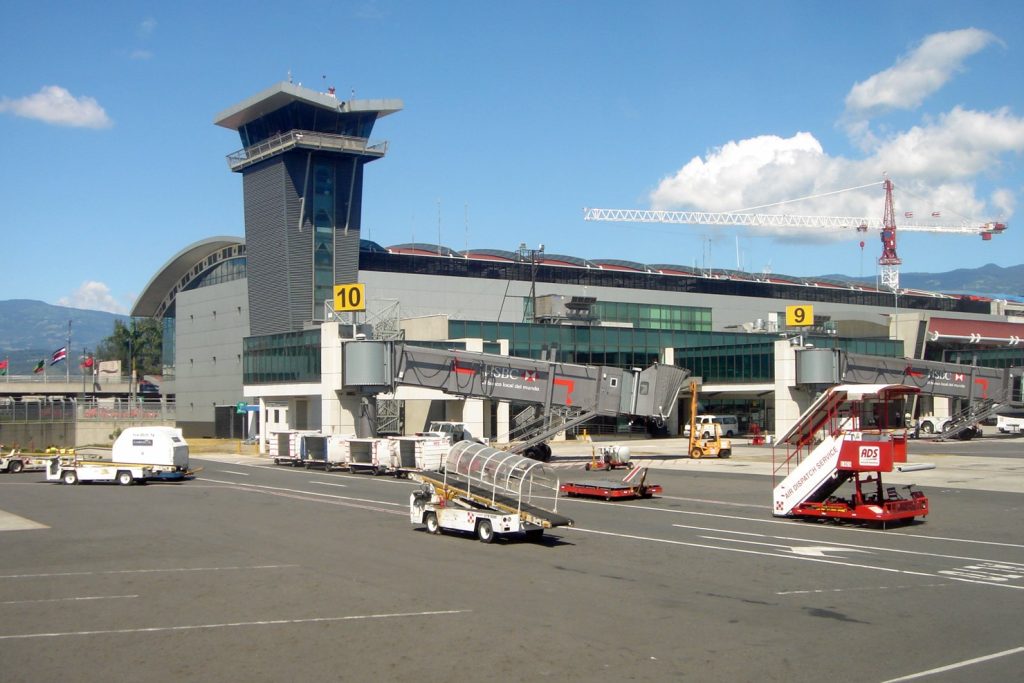
On September 24, 2025, Costa Rica’s radar systems went dark. A power outage—sudden, unannounced—took them offline. The country closed its airspace.
For at least five hours, no planes moved in or out. This is a nation of roughly five million people, spread across nearly 51,180 square kilometers of rugged terrain, volcanic peaks, and coastal lowlands.
The geography is beautiful. It is also difficult. Radar coverage over mountains and along both Pacific and Caribbean coasts already requires careful engineering.
When the power failed, the system failed. The capital, San José, holds about 350,000 residents within city limits.
The greater metropolitan area pushes that number to two million. That is a dense hub for a small country. Tourists funnel through Juan Santamaría International Airport.
Business travelers pass through. Cargo moves. The closure hit all of it.
Hundreds of flights were affected. Some were diverted.
Others were cancelled outright. Passengers sat in terminals or scrambled for alternate plans. Airlines scrambled too.
The ripple effect was immediate. A power outage in one small Central American country disrupted schedules across the region.
The root cause remains the same as it often is in developing nations with aging infrastructure: a sudden failure in the electrical grid. Costa Rica has invested heavily in renewable energy—hydropower, wind, geothermal. But generation is one thing.
Distribution and backup systems are another. The radar failure exposed a weak link. The country’s critical infrastructure, however green its power sources, is not yet resilient enough.
This matters because Costa Rica’s economy depends on movement. Tourism is a major driver.
Ecotourism, adventure travel, beach resorts—they all rely on air travel to bring visitors. Agriculture exports, medical devices, microchips: they move by air too. When the airspace closes, money stops flowing.
The radar systems were eventually restored. The airspace reopened.
Relief followed. But the incident was not a one-off glitch. It was a warning.
The country’s complex geography makes it inherently vulnerable. A single power failure, a single point of failure in the grid, and the entire aviation network seizes up. For five hours, Costa Rica was effectively cut off from the outside world by air.
That is a long time when you are a small country trying to compete in a global economy. The disruption was contained, but the underlying problem was not solved.
Not yet. Investing in modern infrastructure means more than building new solar farms or expanding airport terminals. It means hardening the systems that keep those things running.
Redundant power supplies for radar. Backup generators that actually work.
Grids that do not collapse from a single fault. The incident on September 24 made that clear. Costa Rica has made progress on many fronts.
But progress does not protect against a five-hour blackout. Only reliable infrastructure does. And that infrastructure, as the event showed, is not fully there.
{“@context”: “https://schema.org”, “@type”: “NewsArticle”, “headline”: “Costa Rica Shuts Airspace for Five Hours After Radar System Power Outage”, “description”: “On September 24, 2025, Costa Ricau2019s radar systems went dark. A power outageu2014sudden, unannouncedu2014took them offline. The country closed its airspace. For at least”, “datePublished”: “2025-09-24T15:00:00+00:00”, “author”: {“@type”: “Person”, “name”: “InfoPulse Today”}, “publisher”: {“@type”: “Organization”, “name”: “InfoPulse Today”}}




