
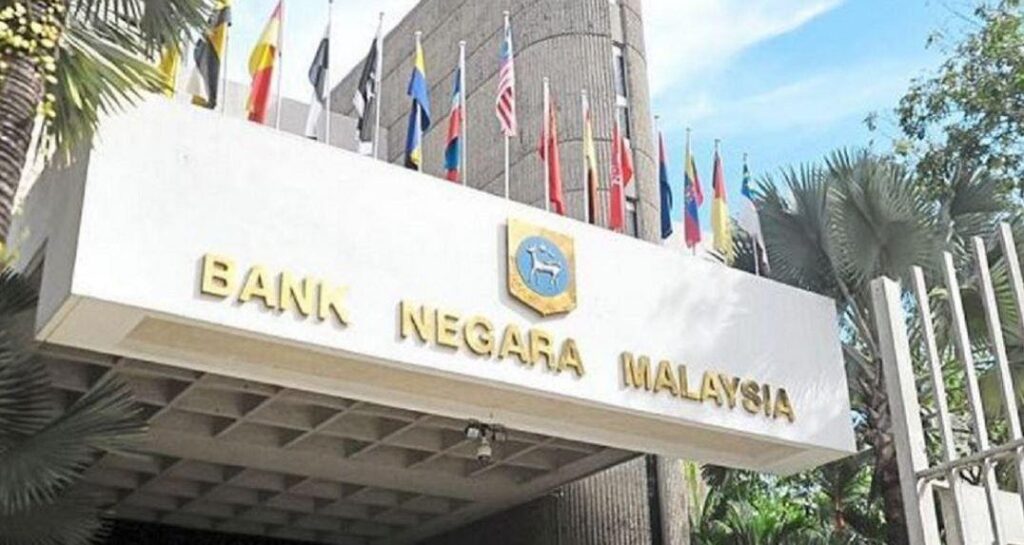
Bank Negara Malaysia’s (BNM) international reserves climbed to US$111 billion as of 15 June 2021, a marginal US$100 million increase from the US$110.9 billion recorded on 31 May. The Kuala Lumpur-based central bank released the figure on 25 June, noting that the buffer equals 8.5 months of retained imports and 1.2 times the nation’s short-term external debt. Foreign currency assets dominated the stockpile, accounting for US$102.3 billion, followed by gold at US$2.1 billion.
Malaysia’s reserve position at the International Monetary Fund (IMF) stood at US$1.4 billion, while special drawing rights (SDRs) added another US$1.2 billion. Other reserve assets, mostly securities and deposits, contributed the remaining US$4 billion.
BNM said the structure “remains liquid and is positioned to meet external obligations under stressed scenarios.” The ringgit value of the entire portfolio was RM460.87 billion, using the prevailing exchange rate of RM4.14 per US dollar. Officials emphasise that the ratio of reserves to imports has stayed above the traditional three-month benchmark for more than two decades, giving policymakers room to smooth volatile capital flows without tightening domestic liquidity.
Policy backdrop and MPC appointment
The reserve update came six months after the appointment of Nor Zahidi Alias as an external member of BNM’s Monetary Policy Committee (MPC) on 1 January 2021. The two-year term, made under Section 39 of the Central Bank of Malaysia Act 2009, adds a market-oriented voice to the seven-member panel that sets the overnight policy rate. “External members are expected to challenge internal views and bring diverse evidence to the table,” Nor Zahidi told a virtual seminar hosted by the Malaysian Economic Association on 18 May.
Governor Datuk Nor Shamsiah Mohd Yunus said in the same statement that Nor Zahidi’s background in fiscal analytics “complements the committee’s existing expertise in banking and financial stability.” The MPC has held the benchmark rate at a historic low of 1.75 per cent since July 2020, judging that premature tightening could derail a fragile domestic recovery even as headline inflation creeps higher.
External debt and import cover
BNM’s latest published data show short-term external debt at US$92.4 billion, equivalent to 32 per cent of total external obligations. With reserves at US$111 billion, the cover ratio is 1.2 times, above the IMF’s recommended one-to-one threshold. “The buffer provides confidence to investors and rating agencies that Malaysia can honour foreign currency commitments even during sudden stop episodes,” said Dr. Nungsari Ahmad Radhi, former member of the Economic Action Council, in a phone interview on 22 June.
The reserve level also funds 8.5 months of retained imports, well beyond the three-month danger zone that often triggers balance-of-payments crises in emerging markets. Crude oil, electronics and palm oil account for roughly 45 per cent of export receipts, leaving the country exposed to commodity price swings.
By maintaining ample reserves, BNM can intervene in the foreign-exchange market without draining on-shore liquidity or raising interest rates.
Gold, SDRs and other assets
Gold holdings have doubled in US-dollar terms since early 2020, reflecting both price appreciation and a deliberate diversification strategy. At US$2.1 billion, bullion represents 1.9 per cent of total reserves, still modest compared with regional peers such as Thailand and Indonesia. “Gold is not a yield-earning asset, but it performs well when real interest rates are negative and the dollar weakens,” said Wan Suhaimie Amrin, fixed-income strategist at Kenanga Investment Bank, on 24 June.
The US$1.2 billion SDR allocation stems from an IMF general issuance approved in August 2021, although the accounting entry was pre-booked in June after Kuala Lumpur signalled acceptance. SDRs can be converted into hard currency through voluntary trading arrangements with other IMF members, giving BNM an additional liquidity line that does not incur interest until drawn.
Other reserve assets include deposits placed with overseas commercial banks and securities issued by triple-A sovereigns. The central bank does not publish duration or currency breakdowns, but analysts estimate that roughly 60 per cent is denominated in US dollars, 30 per cent in euros and yen, and the remainder in sterling, yuan and Canadian dollars. The modest month-on-month increase keeps Malaysia comfortably inside the top 20 global holders of foreign reserves, ahead of Mexico and just behind Poland.
With the Federal Reserve signalling two rate hikes for 2023 and the ringgit hovering near a five-year low, traders will watch BNM’s next MPC meeting on 7 July for any hint that the reserve cushion is allowing policymakers to look past currency weakness and focus on domestic growth.
{“@context”:”https://schema.org”,”@type”:”NewsArticle”,”headline”:”BNM International Reserves Hit US1 Billion in June 2021″,”datePublished”:”2021-06-25T06:07:52+00:00″,”dateModified”:”2026-05-15T05:28:34+00:00″,”author”:{“@type”:”Organization”,”name”:”InfoPulse Today”},”publisher”:{“@type”:”Organization”,”name”:”InfoPulse Today”,”logo”:{“@type”:”ImageObject”,”url”:”https://newsfeed.infopulsetoday.com/wp-content/uploads/logo.png”}},”mainEntityOfPage”:{“@type”:”WebPage”,”@id”:”https://newsfeed.infopulsetoday.com/?p=562″},”articleSection”:”Money & Finance”,”keywords”:”bnm international reserves, malaysia forex reserves, bank negara reserves, june 2021 reserves, foreign currency assets, reserve composition, import cover ratio, ringgit exchange rate, imf reserve position”,”description”:”Bank Negara Malaysia’s (BNM) international reserves climbed to US1 billion as of 15 June 2021, a marginal US0 million increase from the US0.9 billu2026″}




