
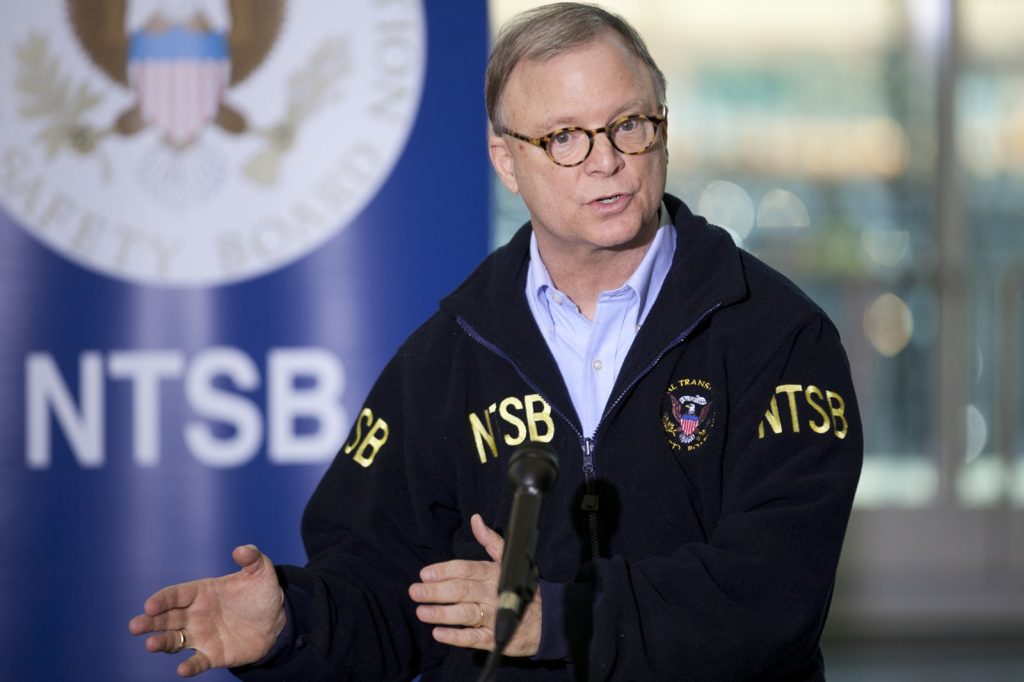
WASHINGTON, July 16 — The National Transportation Safety Board, the independent federal agency tasked with determining the probable cause of civil transportation accidents, operates under a structure designed to insulate its investigators from the very regulatory bodies they may need to critique. That design, codified in the Independent Safety Board Act, severed the NTSB’s administrative ties to the Department of Transportation and made it a fully independent agency. The detail that matters is why that independence was necessary.
Before the NTSB’s creation in its current form, accident investigation was handled by the Civil Aeronautics Board’s Bureau of Aviation Safety, and before that by the Department of Commerce under the Air Commerce Act of 1926. The problem, as the historical record shows, was one of institutional bias: the Federal Aviation Administration — then the Civil Aviation Authority — was investigating itself.
Two high-profile crashes — the 1931 death of Notre Dame coach Knute Rockne and the 1935 crash that killed Senator Bronson Cutting — coalesced public and political pressure to break that cycle. The first attempt at an independent Air Safety Board, established in 1938, lasted only fourteen months. Under the hood of the current agency, the formal ‘National Transportation Safety Board’ refers to a five-member investigative board.
Those five members are nominated by the President and confirmed by the Senate for five-year terms, with the stipulation that no more than three may belong to the same political party. One member is nominated as chair by the President and approved by the Senate for a fixed three-year term; another is designated vice-chair for a fixed three-year term and becomes acting chair when no formal chair is in place.
Board members may continue to serve until a successor is confirmed and takes office. The agency’s jurisdiction is broad. Authorized by Congress under Chapter 11, Title 49 of the United States Code, the NTSB investigates civil aviation accidents and incidents, certain types of highway crashes, ship and marine accidents, pipeline incidents, bridge failures, and railroad accidents.
It also investigates cases of hazardous materials releases that occur during transportation. The board is based in Washington, D.C., with three regional offices in Anchorage, Alaska; Aurora, Colorado; and Federal Way, Washington, and operates a national training center at its Ashburn facility. The technical reality of the NTSB’s mission is straightforward: it determines probable cause and formulates safety recommendations to improve transportation safety in the United States.
The board considers these recommendations its primary tool for preventing future accidents. As ever, the agency does not have the authority to enforce those recommendations — that power rests with the agencies and institutions to which the recommendations are directed.
Since its creation, the NTSB has investigated over 140,000 aviation incidents and several thousand surface transportation incidents, as of 2015. The board is authorized to establish and manage separate sub-offices for highway, marine, aviation, railroad, pipeline, and hazardous materials investigations. What to watch next: with new board members nominated by the Trump administration and awaiting confirmation, the composition of the five-member panel will shift.
The NTSB’s independence from the DOT, hard-won after a decades-long struggle that began with the Rockne and Cutting crashes, remains the foundational principle of American transportation accident investigation — a principle that the agency’s current structure is designed to protect.
Sources
{“@context”: “https://schema.org”, “@type”: “NewsArticle”, “headline”: “NTSB explains how it investigates crashes and issues safety fixes”, “description”: “WASHINGTON, July 16 — The National Transportation Safety Board, the independent federal agency tasked with determining the probable cause of civil transportation accidents, operates under…”, “datePublished”: “2026-07-16T09:30:00+00:00”, “author”: {“@type”: “Person”, “name”: “Sebastian Smith”}, “publisher”: {“@type”: “Organization”, “name”: “InfoPulse Today”, “url”: “https://newsfeed.infopulsetoday.com/”}, “citation”: [{“@type”: “CreativeWork”, “url”: “https://en.wikipedia.org/wiki/National_Transportation_Safety_Board”}]}




