
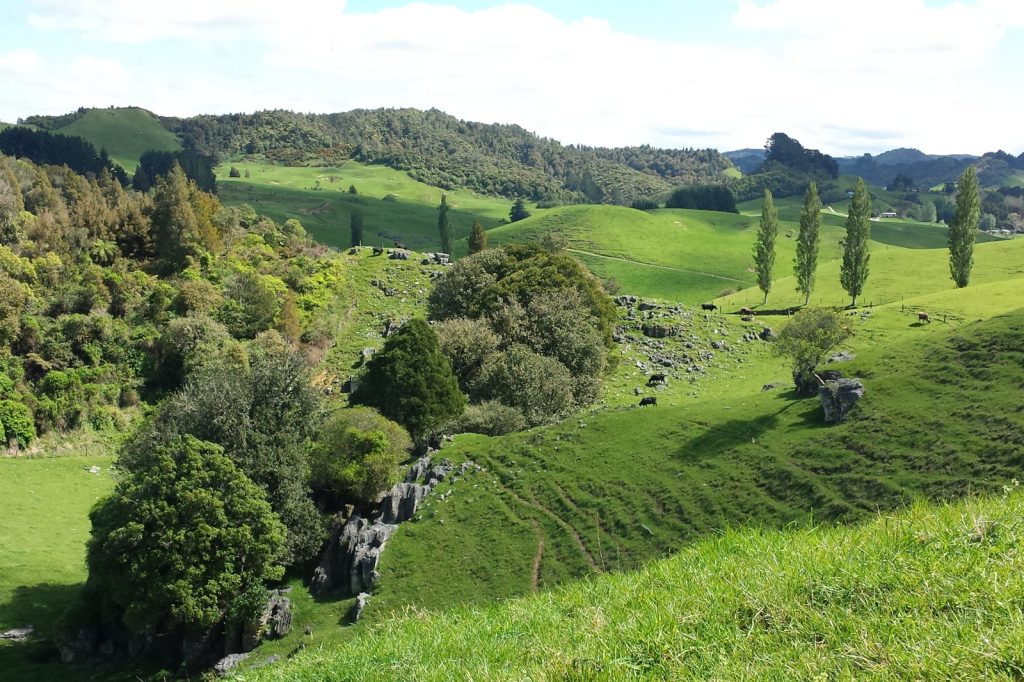
A contentious debate over whether to convert dairy farms into solar arrays and residential subdivisions is testing how one of the world’s most agriculturally dependent nations manages the competing demands of food production, housing supply, and clean energy. The outcome is being watched not only in New Zealand but also in India and other Asian economies grappling with the same fundamental question: how does a food-producing nation reconcile the need for renewable energy and urban expansion with the protection of its most versatile soils?
A Shift in Land-Use Priorities
At the heart of the discussion is the Waikato region, which contains some of New Zealand’s most productive soils. Applications now under consideration include the conversion of farmland on town boundaries into residential developments, as well as proposals for solar farms on dairy land.
These projects were previously assessed through standard council processes guided by the National Policy Statement for Highly Productive Land, a framework designed to prevent inappropriate subdivision and development of the country’s most versatile soils. Waikato regional councillor Keith Holmes, a former Federated Farmers leader who chairs the council’s Economic Growth and Resilience Committee, described the protection of high-quality soils as a “no-brainer.” But he warned that an overly cautious approach had stalled economic activity and regional growth.
“We have shrouded ourselves in the mentality that we shouldn’t do anything, which has stalled economic activity and regional growth, and the growth of ideas,” Holmes said. “We have got to be smart.
Let’s be sensible about it.” He added that the “greater good” of New Zealand must guide decisions on prime farmland, and noted that submissions on a range of fast-track projects have highlighted a growing tension between protecting highly productive land and enabling housing, infrastructure and renewable energy development. The town of Matamata, nestled near the base of the Kaimai Ranges in the Waikato region, epitomizes the stakes. For more than a century, its economy has been anchored in agriculture, originally settled by European farmers in the late nineteenth century and later known for dairy farming and Thoroughbred horse breeding.
The town gained global recognition after a nearby farm was used as the filming location for the Hobbiton movie set in Peter Jackson’s “The Lord of the Rings” trilogy. The New Zealand government later decided to preserve the Hobbit holes as a permanent tourist attraction, turning Matamata into a destination for international visitors and adding tourism to its traditional agricultural identity.
The town has grown steadily in population since that time, attracting new residents drawn to its rural character and proximity to larger cities.
Global Parallels and Long-Term Thinking
Analysts note that the pattern is not unique to New Zealand. Across India, solar parks and housing colonies increasingly push onto agricultural land near fast-growing cities, triggering similar policy friction. The central government’s push for renewable capacity means large tracts of land are being eyed for solar installations, often on the same fertile belts that supply urban markets with fresh produce. Indian planners watching the New Zealand debate see familiar tensions: how to meet rising energy demand and urban expansion without permanently losing the soil base that underpins food security.
Holmes suggested New Zealand adopt long-term resource planning similar to Japan, proposing a 50 to 400-year outlook to ensure land use decisions optimise resources for future generations. “We are always going to be a food-producing nation,” he said, adding that urban growth should be directed upwards rather than outwards to avoid further encroachment on productive farmland — a model widely used in Europe and Japan.
His call for a longer planning horizon reflects a recognition that the scale of proposals has changed. Applications to convert dairy land into solar farms, or to rezone farmland on town boundaries for residential development, have put local councils in the position of balancing short-term growth against the long-term protection of fertile soils.
A Test Case for Small Economies
The question now is whether the fast-track process in New Zealand will tilt the balance toward development, or whether the policy statement protecting high-quality soils will hold the line. For markets watching the outcome, it is a test case in how small economies balance food security, housing supply and the clean energy transition — a calculation that India and much of Asia will have to make repeatedly in the years ahead. Decisions made in places like Matamata will shape how New Zealand resolves a fundamental conflict.
The country depends on its agricultural exports for a large share of its economic activity. At the same time, the need for more housing and renewable energy presses against the same finite land base.
The outcome of these local disputes could set a precedent for how other farming communities across the country handle similar pressures in the future.
{“@context”: “https://schema.org”, “@type”: “NewsArticle”, “headline”: “Waikato’s farmland debate pits food, energy and housing against fertile soils”, “description”: “WAIKATO, New Zealand, June 27 — A contentious debate over whether to convert dairy farms into solar arrays and residential subdivisions is testing how one…”, “datePublished”: “2026-06-27T09:30:00+00:00”, “author”: {“@type”: “Person”, “name”: “Ava Anderson”}, “publisher”: {“@type”: “Organization”, “name”: “InfoPulse Today”, “url”: “https://newsfeed.infopulsetoday.com/”}}




