
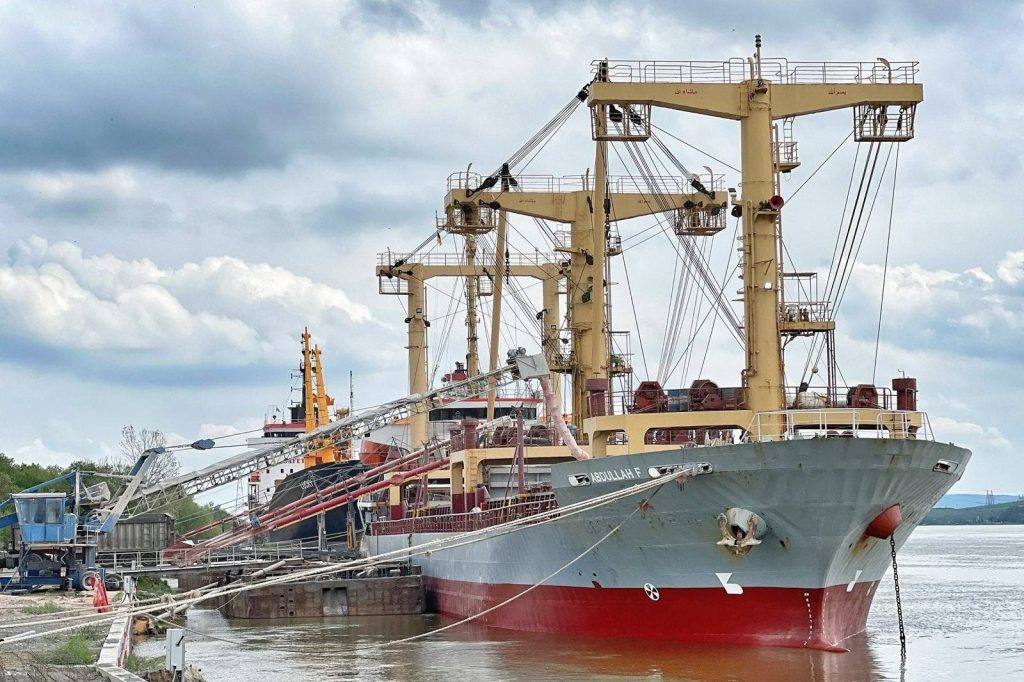
Two years after Moscow walked away from the United Nations-brokered deal that once kept Black Sea grain shipments flowing, the waters off Ukraine’s coast have become the proving ground for a new kind of maritime strategy. The diplomatic path that opened three Ukrainian ports to global markets in mid-2022 is now closed, replaced by a corridor Ukraine carved out under its own military protection. That corridor, lined with naval drones and missile systems rather than diplomatic assurances, has become the backbone of Ukraine’s agricultural export economy.
The question now is whether a solution born of wartime necessity can endure as a permanent export route.
The Collapse of a Diplomatic Deal
The original Black Sea Grain Initiative was signed on July 22, 2022, bringing together representatives from Russia, Ukraine, Turkey, and the United Nations. Over the course of nearly a year, the agreement created safe passage for grain exports from three Ukrainian ports, facilitating the export of 32.9 million metric tons of grain and foodstuffs. Then, on July 17, 2023, Moscow withdrew from the arrangement, collapsing the diplomatic channel that had kept agricultural commodities moving during the early stages of the conflict.
The Black Sea itself is an inland body of water bordered by six countries: Bulgaria, Georgia, Romania, Russia, Turkey, and Ukraine. Its drainage basin extends into parts of two dozen European nations, fed by major rivers including the Danube, Dnieper, and Dniester.
Historically, the sea has served as a vital trade route linking Eastern Europe and the Caucasus to global markets through the Turkish Straits — the Bosporus and Dardanelles connecting to the Aegean. To the north, it connects to the smaller Sea of Azov via the Kerch Strait, reinforcing its role as a maritime crossroads. Ukraine and Russia had long relied on the Black Sea for agricultural exports, with Ukraine emerging as a major global grain supplier before the 2022 invasion disrupted shipping.
The sea’s unique water flow creates deep, anoxic layers that preserve ancient shipwrecks, but its strategic importance in the modern era has been defined by grain and security.
Ukraine’s Self-Built Corridor
After the grain initiative collapsed, Ukraine did not wait for a new diplomatic agreement. Instead, it established a temporary corridor along its western coast, protected by naval drones and missiles.
That corridor has become the backbone of Ukraine’s export strategy. In 2023, Ukraine exported 56 million tons of grain, with 95% going through Black Sea ports. Ukraine’s agricultural exports are worth approximately $20 billion annually, making the corridor critical for its economy.
Without a functioning route, that revenue stream would be at risk. The corridor works, but it requires constant military enforcement.
In May 2024, strikes on Russian ships aimed to secure the sea lanes — tactical moves to keep the corridor open rather than symbolic hits. Control over these waters now determines whether Ukraine can sustain its agricultural economy. The shift from a negotiated corridor to one protected by firepower has broader implications.
The conflict has raised global food prices, with the UN Food and Agriculture Organization reporting a 14% increase in the cereal price index in 2022. That spike rippled through import-dependent nations, particularly in Africa and the Middle East.
The grain deal was never just about Ukraine — it was about global food security. The sea’s strategic importance grew dramatically after the collapse of the Black Sea Grain Initiative, forcing Ukraine to carve its own export routes under military protection.
A Temporary Solution or a Permanent Shift?
What started as a wartime innovation now raises a bigger question: can a temporary military solution become a permanent export route? The answer depends on whether Ukraine can hold the line — and whether the world’s grain buyers will keep betting on a corridor protected by drones and missiles.
The trend is clear: the era of negotiated grain corridors may be giving way to corridors carved by firepower. Today, the Black Sea is more than a geographic feature; it is a lifeline for trade, energy, and regional security. The corridor Ukraine has built is a testament to adaptation under fire, but its longevity remains uncertain.
The numbers tell the story: the corridor works, but its survival depends on continued military enforcement. The underlying trajectory is a fundamental shift in how Ukraine defends its economic lifeline — and how the global grain trade may have to adapt to a world where safe passage is no longer guaranteed by agreement, but by strength.
{“@context”: “https://schema.org”, “@type”: “NewsArticle”, “headline”: “Russia’s Withdrawal Reshapes Ukraine’s Grain Export Strategy”, “description”: “ANKARA, July 9 — Two years after Moscow walked away from the United Nations-brokered deal that once kept Black Sea grain shipments flowing, the waters…”, “datePublished”: “2026-07-09T09:30:00+00:00”, “author”: {“@type”: “Person”, “name”: “Dmitry Volkov”}, “publisher”: {“@type”: “Organization”, “name”: “InfoPulse Today”, “url”: “https://newsfeed.infopulsetoday.com/”}}




