
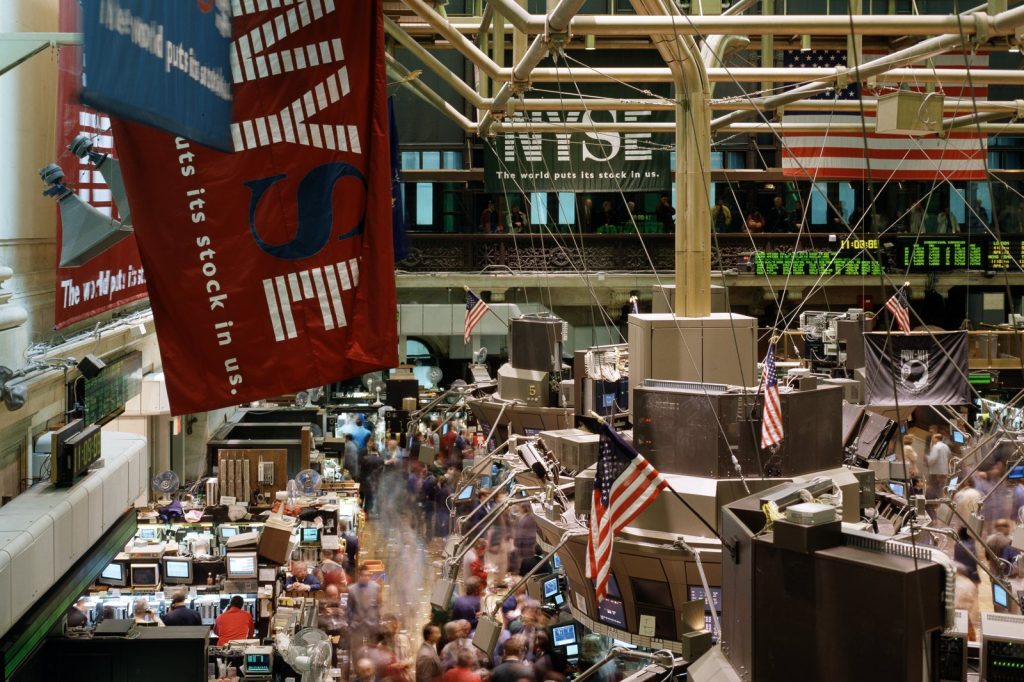
WASHINGTON, July 9 — The Dow Jones Industrial Average fell 424 points today, a decline of 1.2 percent that officials are characterising as a routine geopolitical shock rather than the beginning of a sustained downturn. The drop comes amid renewed tensions in the Gulf region, though the White House has not issued a formal statement on the specific trigger. The record shows that such single-day declines are consistent with the pattern of market reactions to geopolitical crises over the past three decades.
According to historical data, the 2019 US-Iran tensions following the killing of Qasem Soleimani produced a 0.8 percent drop on January 3, 2020, and the market rebounded quickly. Today’s 1.2 percent decline is of similar magnitude to that event.
The historical pattern of war and markets
The 1990-1991 Gulf War remains the benchmark for understanding how financial markets process major military conflict. Iraq’s invasion of Kuwait on August 2, 1990, triggered a chain reaction that saw the Dow drop 18 percent from its July 1990 peak to an October 1990 low of 2365. Oil prices doubled to $40 per barrel during that period.
The market recovered only after the US-led Operation Desert Storm began on January 17, 1991. The September 11, 2001 attacks produced the single worst day for the Dow at that time.
On September 17, 2001, when trading resumed after the attacks, the index fell 684 points, a decline of 7.1 percent. That event demonstrated how even catastrophic geopolitical shocks, while producing severe short-term volatility, do not necessarily lead to prolonged bear markets. The 2003 invasion of Iraq followed a different pattern.
The Dow fell 3.6 percent in the month before the war began, as uncertainty weighed on investor sentiment. But the index rallied 25 percent in the year following the invasion, confirming the pattern that military action, once underway, often removes the uncertainty that markets fear most.
The Russia-Ukraine conflicts
The 2014 Russia-Ukraine conflict over Crimea produced a more contained reaction. The Dow dropped 2 percent in March 2014 as the crisis unfolded. The market absorbed the shock relatively quickly, and the decline did not develop into a broader sell-off.
The 2022 Russian invasion of Ukraine on February 24, 2022, was a different matter. The Dow fell 3.6 percent over two days as the scale of the invasion became clear.
Oil prices surged to $130 per barrel in March 2022, reflecting the disruption to global energy markets. But again, the Dow recovered within three months, consistent with the historical pattern that geopolitical crises cause short-term volatility but rarely lead to sustained bear markets unless accompanied by a recession. Officials monitoring today’s 424-point decline point to this record as evidence that the current sell-off is likely to be contained.
The 1.2 percent drop is within the range of normal geopolitical reactions and well below the 3.6 percent declines seen during the Iraq invasion and the 2022 Ukraine crisis.
What to watch next
The key question for analysts now is whether today’s drop represents a one-day event or the beginning of a larger correction. The historical data suggests that the answer depends on factors beyond the immediate crisis itself. Geopolitical shocks, the record shows, rarely produce sustained bear markets on their own.
The exceptions occur when the crisis coincides with or triggers a broader economic recession. Oil markets will be the first indicator to watch.
The 1990 Gulf War saw oil prices double, and the 2022 Ukraine conflict pushed prices to $130 per barrel. If today’s tensions produce a similar spike in energy costs, the economic consequences could be more severe than the stock market decline alone suggests. The US administration has not indicated whether it views the current situation as analogous to the 2019 Iran tensions or the more serious 1990 Gulf War.
The magnitude of today’s decline, at 1.2 percent, is closer to the 2019 event, but the strategic context in the Gulf may be different. Officials are expected to provide further clarity in the coming days.
{“@context”: “https://schema.org”, “@type”: “NewsArticle”, “headline”: “Geopolitical Crises’ Impact on US Stocks: 1990 Gulf War to 2022 Ukraine”, “description”: “WASHINGTON, July 9 — The Dow Jones Industrial Average fell 424 points today, a decline of 1.2 percent that officials are characterising as a routine…”, “datePublished”: “2026-07-09T09:30:00+00:00”, “author”: {“@type”: “Person”, “name”: “Dmitry Volkov”}, “publisher”: {“@type”: “Organization”, “name”: “InfoPulse Today”, “url”: “https://newsfeed.infopulsetoday.com/”}}




