
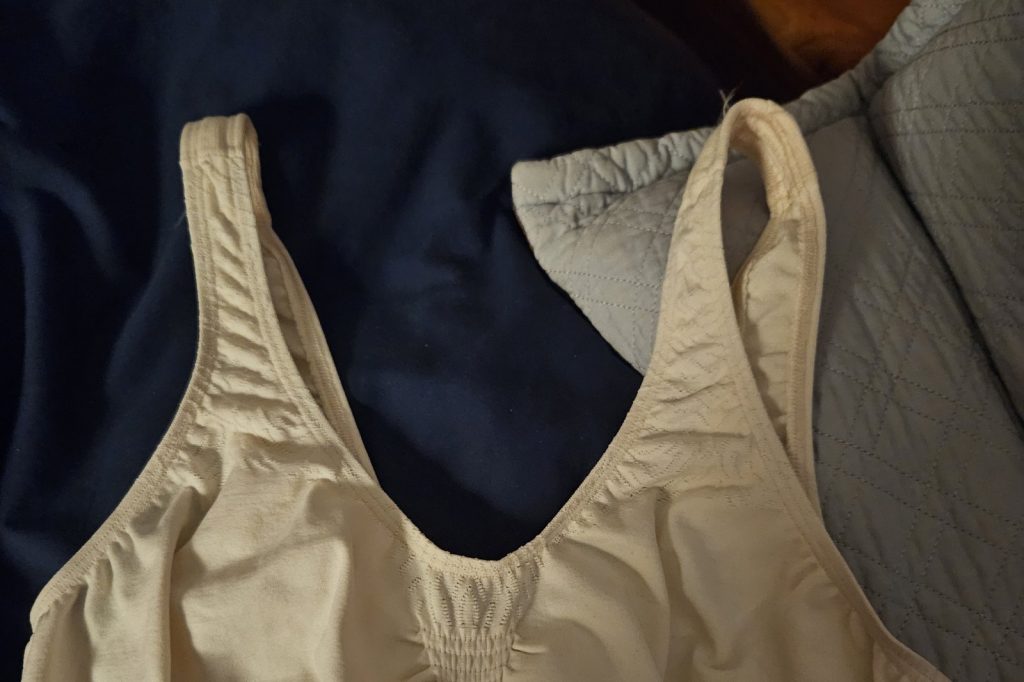
The split was always there. But the pandemic made it visible — a drawer divided, a closet at war with itself. The document circulating online doesn’t call it a culture war.
It calls it Team Wire versus Team Wireless. The terms are blunt.
The choice is not. Wireless bras have the numbers on their side now. Retail data cited in the filing shows a surge in sales since remote work took hold.
The reason is plain: comfort. The document states clearly that wireless bras lack the rigid metal or plastic frame that can dig into ribcage or breast tissue.
For women who sit at desks for long hours, that frame becomes a common source of irritation. The pandemic shifted daily wardrobe priorities. Comfort won.
But winning sales and winning the argument are different things. The filing makes clear that underwire bras remain the standard for formal wear, professional attire, and fitted clothing. They provide more lift and separation.
For fuller busts, the wire frame helps distribute weight across the band and shoulders. Wireless options often rely on compression or stretch fabric.
The document says this can flatten shape rather than enhance it. That is a trade-off. Not everyone wants to make it.
The battleground is appearance under clothing. Underwire bras tend to create cleaner lines under button-down shirts.
The document calls this a key battleground. It is easy to see why. A smooth silhouette matters in a meeting, a dinner, a courtroom.
Wireless bras, for all their comfort, do not always deliver that. The choice becomes situational. A woman might wear wireless at her desk, wired to a client dinner.
The closet holds both teams. This is not a new debate.
The filing acknowledges the timeline is not new. What has changed is the polarization. The split has hardened in recent seasons.
The pandemic accelerated a shift that was already underway. Comfort became a higher priority.
But the forces that favor structure and shape did not disappear. They remain embedded in professional norms and formal expectations. Where this leads is unclear.
The document does not predict a winner. It describes a divide. The retail data suggests wireless is gaining ground.
But the filing notes that underwire bras remain the standard for occasions that demand a structured silhouette. That standard is unlikely to vanish.
The question is whether professional attire itself will shift. If remote work persists, if dress codes loosen, the balance could tip. If formal wear holds its ground, underwire will hold its market.
The document breaks the debate down across four categories: comfort, support, appearance under clothing, and durability. Comfort goes to wireless.
Support goes to wired. Appearance is contested. Durability is not detailed, but the implication is clear — a wire can bend, a strap can snap.
Stretch fabric can sag. Neither side is perfect. The real force behind the divide is not technology.
It is lifestyle. The pandemic changed how women spend their days.
That changed what they wear. The document captures a moment when two competing priorities — comfort and structure — are pulling in opposite directions. Neither is likely to win outright.
The closet will remain divided. The teams will keep their territory.




