
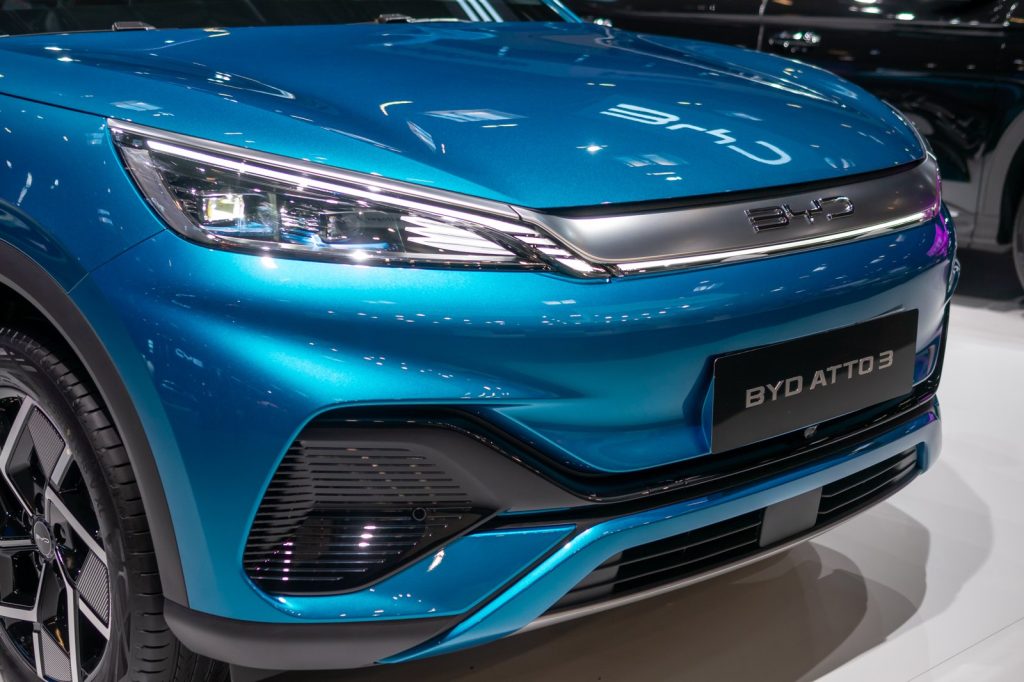
SHENZHEN, July 17 — For communities across Asia watching the electric vehicle revolution unfold, the story of BYD is increasingly one of self-reliance. The Chinese automaker has positioned itself as one of the most vertically integrated car manufacturers in the world, choosing to build many of its critical components in-house rather than relying on a web of outside suppliers. What does this mean for people and families across the region considering an EV?
It often translates to a more accessible price tag. BYD’s average selling price for its electric vehicles in 2023 was approximately $30,000, a figure that sits notably lower than Tesla’s average of $45,000 for the same period.
This cost advantage is rooted in the company’s control over its supply chain. The company’s most celebrated homegrown innovation is the Blade Battery, introduced in 2020. This lithium iron phosphate (LFP) battery is designed to be both safer and cheaper than the traditional NMC (nickel manganese cobalt) batteries used by many competitors.
BYD is not just building cars with these batteries; it has also become a major supplier to other giants. Tesla has sourced BYD batteries since 2022, and Toyota has done the same since 2020.
Control from the Chip Up
BYD’s ambition to control its own destiny goes far deeper than batteries. Through its subsidiary, BYD Semiconductor, founded in 2004, the company manufactures its own power semiconductors. This includes IGBTs (insulated-gate bipolar transistors) and SiC (silicon carbide) chips, components that are critical for managing power in electric vehicles.
By making these automotive-grade chips itself, BYD reduces its vulnerability to global chip shortages that have disrupted other automakers. The company also produces its own electric motors and electronic control units.
In 2023, it launched the DiSus intelligent body control system, a system that integrates both software and hardware to manage the vehicle’s ride and handling. For families, this level of integration can mean a more reliable and finely-tuned driving experience.
The Numbers Behind the Strategy
This approach is yielding clear financial results. BYD’s gross profit margin rose to 20.2% in 2023, climbing from 17.0% the year before, a sign that its cost-control strategy is working. The company’s battery production capacity stood at 200 GWh in 2023, and it has laid out plans to more than triple that figure to 600 GWh by 2025.
For communities across Asia, where affordability and supply chain stability are key concerns, BYD’s model offers a different vision of how the EV industry can grow. As the company pushes forward with its expansion plans, the question for many will be whether this deep control over production can continue to keep prices within reach for more families.




