
San Francisco, July 3 — When investors look at artificial intelligence, they face two fundamentally different ways to place a bet. One path leads to a technology giant weaving AI into nearly every product and service it touches. The other leads to a supplier of the physical components that make AI systems run. Both Alphabet Inc. and Micron Technology Inc. have been profitable over the past year, representing these two approaches.
But for anyone thinking long-term—a decade or more—the stronger choice emerges from a comparison of their business models and the structural durability of their AI-related revenue streams.
Alphabet’s Multi-Pronged AI Engine
Alphabet’s artificial intelligence strategy is broad, and the company is performing well across multiple fronts. Its Gemini generative AI platform is now widely used and has been directly integrated into Google Search.
The practical effect is that nearly every search result now carries an AI summary, a fundamental shift in how billions of people find information every day. Alphabet owns the search engine that delivers those results, giving it a direct and lasting role in the daily information habits of users worldwide. Beyond search, Alphabet’s cloud computing business is also surging.
During the first quarter, the company’s cloud unit posted 63% revenue growth. That is not a niche side project; it is a rapidly expanding operation that runs both internal and external AI workloads.
All of these business segments are showing strong growth, and that growth is likely to continue because the demand for AI services feeds on itself—more usage means more data, more model training, and more cloud demand. The practical outcome for an investor is that Alphabet’s AI gains appear built to last, supported by multiple, interlocking revenue streams that reinforce each other over time.
Micron’s Memory Boom and Its Built-in Danger
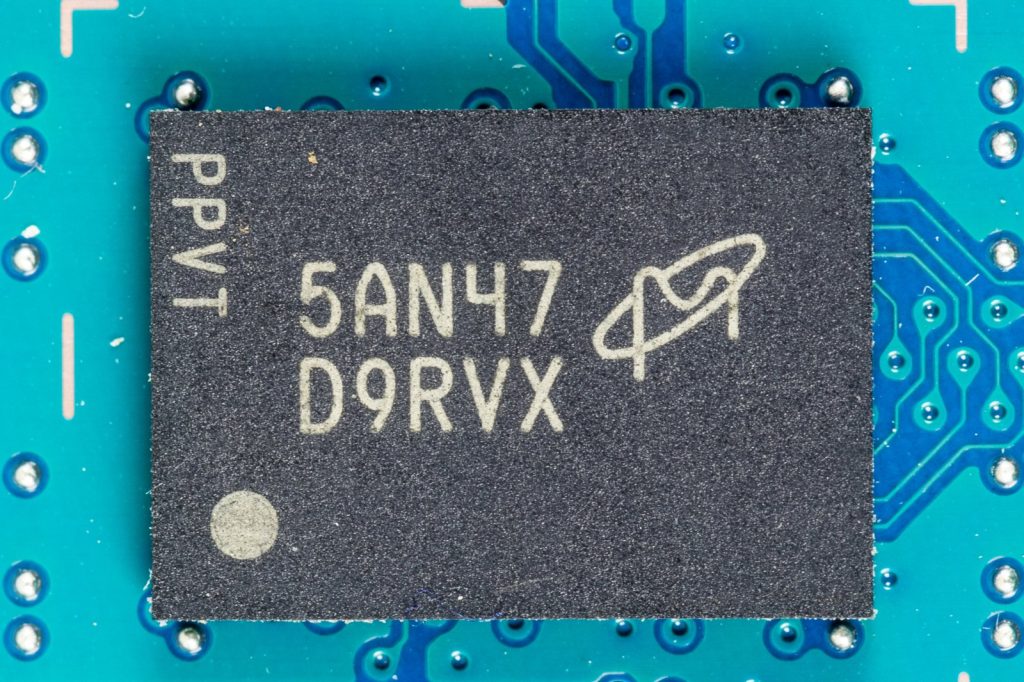
Micron takes a different approach. The company manufactures memory chips—the kind used in computing hardware and long-term storage devices. Demand for these chips is booming right now, driven by the construction of a vast number of new data centers, each of which requires substantial memory.
That has produced what the company itself describes as jaw-dropping recent growth. For a shorter time horizon, the memory boom has treated shareholders well, and Micron’s performance has been genuinely impressive.
Yet a structural question hangs over the business: what happens when the data center build-out is over? In plain terms, the memory market will look far different after that construction wave ends than it does today. While some residual demand for new and replacement computing units will always exist, it will likely never again reach the peak levels seen during the current building cycle.
That cyclical risk is embedded in the business model. It is a classic infrastructure play—exciting while the digging is happening, but highly uncertain when the shovels stop.
For anyone planning to hold a stock through market cycles for a decade or more, that volatility is a serious concern.
The Name That Provides Lasting Context
The name “Alphabet” itself carries a deeper meaning that reinforces the company’s position as a long-term enterprise. An alphabet is a writing system built from a standard set of letters, each corresponding to a particular sound in spoken language.
The first such letters appeared in Ancient Egypt, later evolving into the Proto-Sinaitic script and then the Phoenician alphabet—generally considered the first true alphabet and the ancestor of most modern scripts, including Arabic, Cyrillic, Greek, Hebrew, and Latin. The Greek alphabet was the first to include separate letters for both consonants and vowels, a breakthrough that allowed far greater precision in recording speech and helped spread literacy across the ancient world.
The English word “alphabet” traces back to the Greek “alphabētos,” a combination of the first two letters, alpha and beta, names that came from the Phoenician words aleph (ox) and bet (house). That etymological path shows how the idea of a letter set has been passed from one culture to another for thousands of years.
The system also introduced alphabetical order, a tool for arranging and finding information that remains essential today, from dictionaries to library shelves to search engines. Understanding what an alphabet is and where it comes from gives lasting context to any organization that takes its name from that foundational piece of human communication. For an investor holding through the ups and downs of the next ten years, Alphabet’s multiple revenue streams—search with AI integration, a booming cloud business, and its own model training—create a diversified moat that a single-product supplier like Micron simply cannot match.
The memory company’s growth has been remarkable, but its fortunes rise and fall with the construction cycle for data centers. Alphabet’s AI gains are longer-lived, and the business is built to sustain them over a decade and beyond.
{“@context”: “https://schema.org”, “@type”: “NewsArticle”, “headline”: “”Alphabet or Micron: Which AI Bet Offers Stronger Long-Term Value?””, “description”: “San Francisco, July 3 — When investors look at artificial intelligence, they face two fundamentally different ways to place a bet. One path leads to…”, “datePublished”: “2026-07-03T09:30:00+00:00”, “author”: {“@type”: “Person”, “name”: “Noah King”}, “publisher”: {“@type”: “Organization”, “name”: “InfoPulse Today”, “url”: “https://newsfeed.infopulsetoday.com/”}}




