
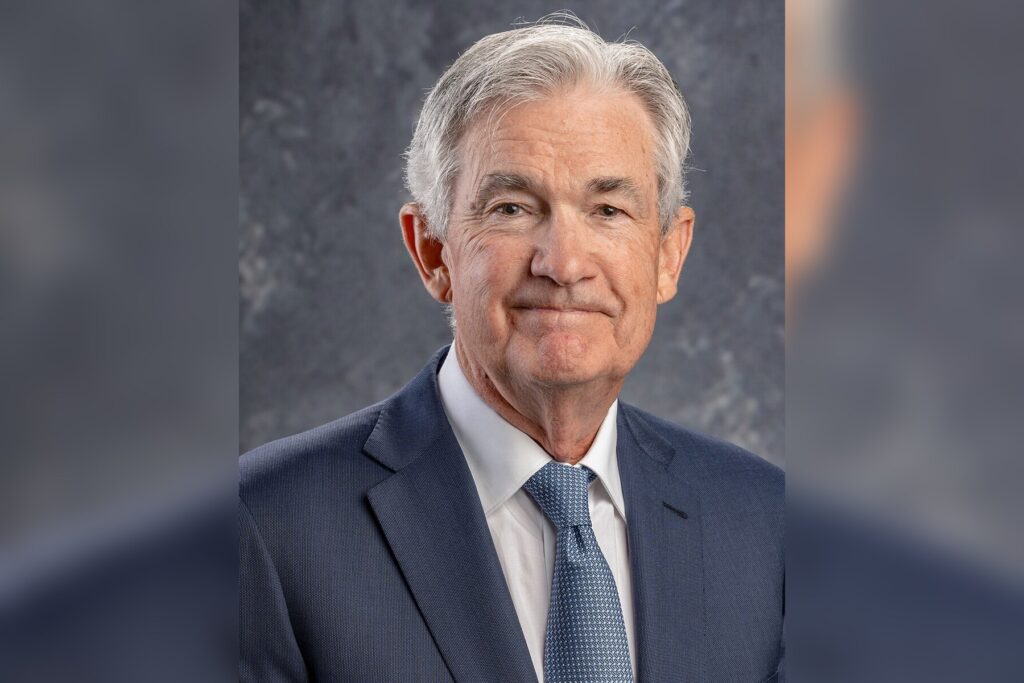
WASHINGTON, July 8 — The Federal Open Market Committee convenes its latest two-day policy meeting today in Washington, a gathering that carries strategic weight for global financial markets and the broader economic trajectory. The FOMC, the monetary policy arm of the Federal Reserve System, will vote on the target range for the federal funds rate — the interest rate banks charge each other for overnight loans — and issue a statement at the conclusion of the meeting. The committee’s composition reflects the institutional architecture of the Fed itself.
Twelve voting members sit on the FOMC: the seven members of the Board of Governors, the president of the Federal Reserve Bank of New York, and four of the remaining 11 Reserve Bank presidents, who serve one-year rotating terms. Chair Jerome H.
Powell leads the committee, with New York Fed President John C. Williams serving as Vice Chair. Decisions are made by majority vote, with dissents recorded and published — a transparency mechanism that allows markets to parse the internal calculus of the committee.
The FOMC holds eight regularly scheduled meetings per year, and the statement released after each gathering is parsed for every nuance of language. Meeting minutes follow three weeks later, offering a fuller picture of the debate.
The broader stakes for this meeting are shaped by the data the committee tracks. The FOMC bases its decisions on a suite of economic indicators: the Consumer Price Index, the Personal Consumption Expenditures price index, employment reports from the Bureau of Labor Statistics, and GDP data from the Bureau of Economic Analysis. Each of these metrics feeds into the committee’s assessment of whether the economy is running too hot, too cold, or on a sustainable path.
Since 2012, the FOMC has also published economic projections — the so-called “dot plot” — showing each member’s expectation for the federal funds rate, inflation, GDP growth, and unemployment over the next several years. These projections give markets a forward-looking map of where the committee sees the economy heading, though the dots are not commitments and can shift sharply between meetings. What this signals to global investors is the committee’s reading of inflationary pressures and labor market strength.
The federal funds rate is the primary lever the Fed uses to influence borrowing costs across the economy, from mortgages to corporate debt. A change in the target range — or even the signal of a future change — ripples through currency markets, bond yields, and equity valuations.
The meeting runs through today, with the statement expected tomorrow. Strategically, the outcome will be framed not just by the rate decision itself, but by the language in the statement and the distribution of the dot plot. Dissents, if any, will also draw scrutiny as a window into internal divisions on the committee.
The FOMC’s work is the quiet machinery behind much of the financial system’s daily operation. For those watching the geopolitical chessboard, the committee’s decisions are a reminder that monetary policy remains a central instrument of economic statecraft — one that shapes capital flows, exchange rates, and the relative power of currencies on the global stage.
{“@context”: “https://schema.org”, “@type”: “NewsArticle”, “headline”: “FOMC Explained: Who Sets US Interest Rates & Voting Process”, “description”: “WASHINGTON, July 8 — The Federal Open Market Committee convenes its latest two-day policy meeting today in Washington, a gathering that carries strategic weight for…”, “datePublished”: “2026-07-08T09:30:00+00:00”, “author”: {“@type”: “Person”, “name”: “Noah King”}, “publisher”: {“@type”: “Organization”, “name”: “InfoPulse Today”, “url”: “https://newsfeed.2bme.xyz/”}}




