
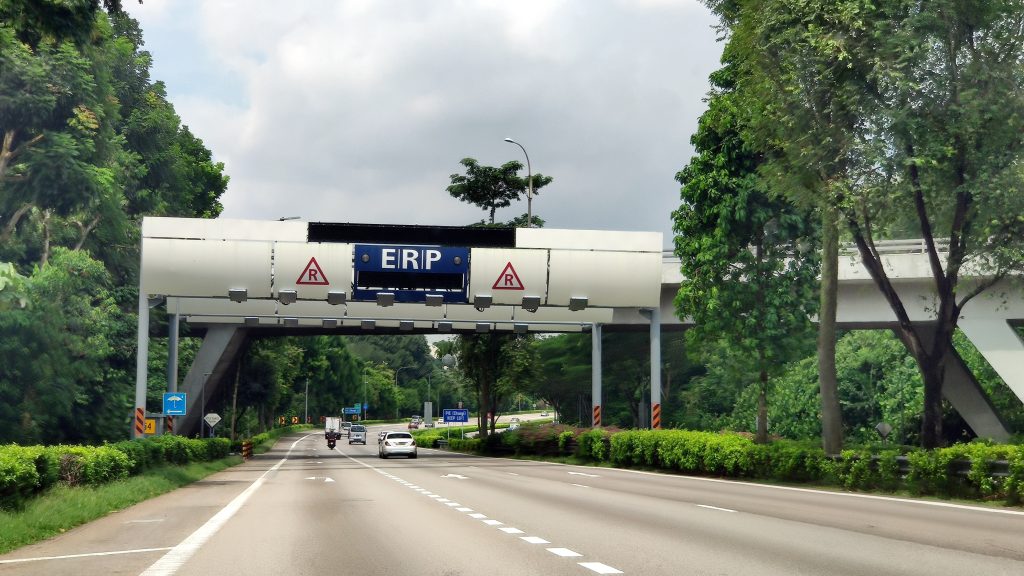
LONDON, July 17 — The technical reality of congestion pricing is, at its core, a matter of applied economics and behavioural engineering. The system imposes a surcharge on users of public goods—typically roads—during periods of excess demand. The mechanism is straightforward: use the price signal to cover the social cost of an activity, such as driving in a congested urban centre at peak times, for which users otherwise do not pay the full negative externality they create.
By putting a price on an over-consumed product, the theory holds, you encourage a redistribution of demand either in space or in time, leading to a more efficient outcome. Singapore was the first to introduce the concept on urban roads, in 1975, and refined the system in 1998.
Since then, the policy has been implemented in London, Durham in England, Stockholm, Gothenburg, Milan, and New York City. Before the COVID-19 pandemic, it was under consideration in Washington, D.C., San Francisco, and Boston. Outside the United States, pilot programmes or proposals have emerged in Bangkok, Cambridge, Edinburgh, Switzerland, and Hong Kong—first in the 1980s and again since 2018.
Under the hood of the price mechanism
The economic theory that underpins congestion pricing is not new, but its application has gained momentum. Greater awareness of pollution and greenhouse gas emissions, in the context of climate change, has increased interest in the tool. The detail that matters here is that the system does not simply punish drivers; it sets a price on a scarce resource—road space during peak demand—to align private cost with social cost.
The result, according to the source material, is a reduction in traffic congestion, a reduction in pollution, a reduction in asthma cases, and an increase in home values in the affected areas. There is a consensus among economists that, in crowded transportation networks, congestion pricing—with the proceeds used to lower other taxes—makes citizens on average better off.
As ever, the devil is in the distributional details. Economists disagree on how to set the tolls themselves, how to cover common costs, what to do with excess revenues, how to compensate the ‘losers’ from tolling roads that were previously free, and whether to privatise the highways.
What to watch next
The wry observation that follows any discussion of congestion pricing is that the policy is, in theory, a textbook solution to a textbook problem. In practice, it remains politically volatile. New York City’s implementation, for example, was years in the making and survived multiple legal and political challenges.
The programmes in Washington, D.C., San Francisco, and Boston that were considered before the pandemic have not yet been revived, though the economic and environmental arguments for them have only strengthened. The question now is whether the technical reality of the price mechanism can overcome the political reality of the voter at the petrol pump.
Sources
{“@context”: “https://schema.org”, “@type”: “NewsArticle”, “headline”: “Congestion Pricing Cuts Speeding, Pollution via Road Tolls”, “description”: “LONDON, July 17 — The technical reality of congestion pricing is, at its core, a matter of applied economics and behavioural engineering. The system imposes…”, “datePublished”: “2026-07-17T09:30:00+00:00”, “author”: {“@type”: “Person”, “name”: “Sebastian Smith”}, “publisher”: {“@type”: “Organization”, “name”: “InfoPulse Today”, “url”: “https://newsfeed.infopulsetoday.com/”}, “citation”: [{“@type”: “CreativeWork”, “url”: “https://en.wikipedia.org/wiki/Congestion_pricing”}]}




