
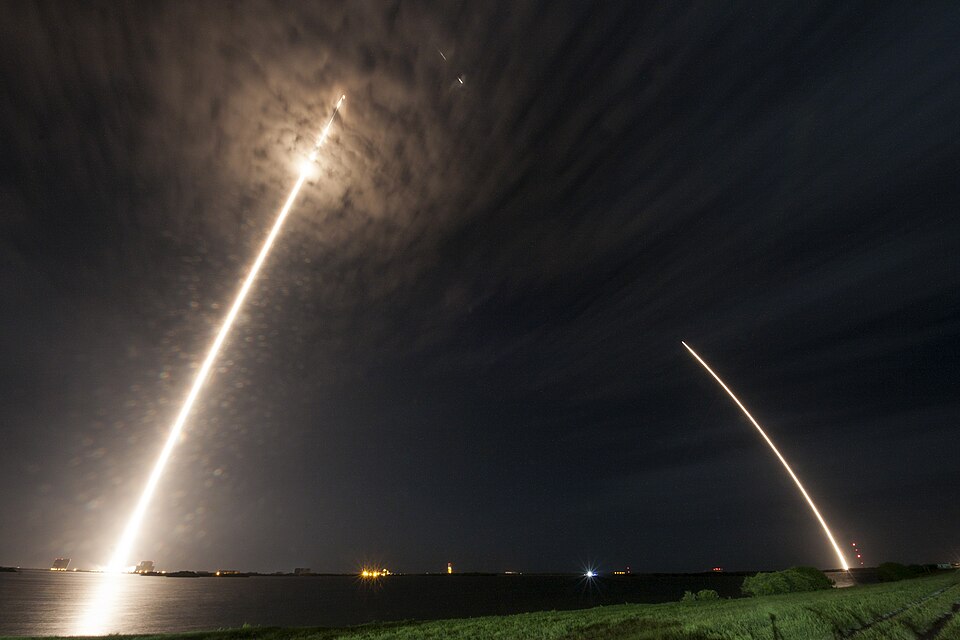
LOS ANGELES, July 9 — When SpaceX first attempted to send its Starship spacecraft to orbit in April 2023, the vehicle cleared the launch pad but did not complete its full flight plan. By November of that same year, a second test achieved a critical milestone: stage separation, where the Super Heavy booster detached from the upper stage as designed. These test flights laid the groundwork for what SpaceX now calls its future prospects — missions to the Moon and Mars using the Starship spacecraft.
The vehicle is enormous, designed to carry both crew and cargo far beyond Earth orbit.
The Lunar Contract and the 2026 Target
NASA has awarded SpaceX a $2.9 billion contract for the Human Landing System under the Artemis program. That program aims to return astronauts to the lunar surface, and the current target is a landing by 2026. The practical upshot: Starship is not just a Mars dream; it is the vehicle NASA has selected to get its next astronauts onto the Moon.
The Artemis timeline has shifted before, and risks remain. But the contract gives SpaceX a government customer with a firm deadline and deep pockets — a dynamic that has historically driven rapid iteration in aerospace.
Starlink’s Revenue Engine
Separately, SpaceX plans to expand its Starlink satellite constellation to over 12,000 satellites. The company has projected potential revenue of $10 billion from Starlink by 2025. Here’s what that means for the broader business: Starlink is the cash cow that helps fund Starship development.
The satellite internet service already has hundreds of thousands of users globally, and scaling up means more subscribers, more data revenue, and more money flowing back into the rocket program. SpaceX also holds contracts with the U.S. Space Force for national security launches.
Those missions are high-value, high-reliability flights that further diversify the company’s revenue base. The combination of commercial satellite internet, government launch contracts, and the Artemis lunar contract gives SpaceX a financial foundation that few private space companies have ever achieved.
Investor Confidence and Stock Price Outlook
Analysts predict that SpaceX stock may trade between $140 and $160 in the short term, depending on mission success and market conditions. These developments — successful Starship tests, the NASA contract, Starlink growth, and Space Force deals — could boost investor confidence and the stock price. The practical upshot for anyone watching the company’s valuation: each successful test flight reduces technical risk, and each new contract adds predictable revenue.
But risks are real. Regulatory challenges could slow launch cadence.
Competition from Blue Origin and United Launch Alliance means SpaceX does not have the field to itself. And the high cost of Starship development remains a constant pressure. A single major failure during a test flight could rattle investor sentiment.
What to Watch Next
The next major milestone for SpaceX is the Artemis lunar landing, targeted for 2026. Success there would validate Starship as a crewed lunar lander and open the door to the Mars missions that have long been described as the company’s founding purpose. Failure, or even significant delay, would test the patience of NASA, investors, and the broader space community.
For now, the company has a clear path: test, iterate, launch, and earn. Whether that path leads to the Moon by 2026 or to Mars in the 2030s depends on the next few flights.




