
Gold Surges as Reports Emerge of Potential U.S.-Iran Peace Deal
LONDON, May 6, 2026 – Gold prices climbed to a more than one-week high on Wednesday, driven by reports that the United States and Iran may be nearing a peace deal to end the ongoing war. The precious metal, a traditional safe-haven asset, rose sharply in afternoon trading as investors reacted to the prospect of a diplomatic breakthrough in the Middle East. Spot gold surged to $2,845 per ounce, its highest level since late April, according to market data from the London Bullion Market Association.
The rally marked a 2.3 percent increase from the previous session, reflecting heightened optimism that the conflict—which has destabilized global energy markets and fueled inflation—could soon see a resolution. “The market is pricing in a significant de-escalation of hostilities,” said James Harte, a senior analyst at London-based brokerage TickMill Group.
“If a deal is finalized, we could see a dramatic shift in risk appetite, but the path to peace remains fraught with uncertainty.” Reports of the potential agreement emerged late Tuesday, when sources familiar with the negotiations told Reuters that Iranian and American officials had made “substantial progress” in secret talks mediated by Oman.
The discussions, which have been ongoing for weeks, are said to center on a phased withdrawal of Iranian forces from contested territories in exchange for the lifting of U.S. sanctions and security guarantees for the Islamic Republic. The news has sparked a flurry of activity across financial markets.
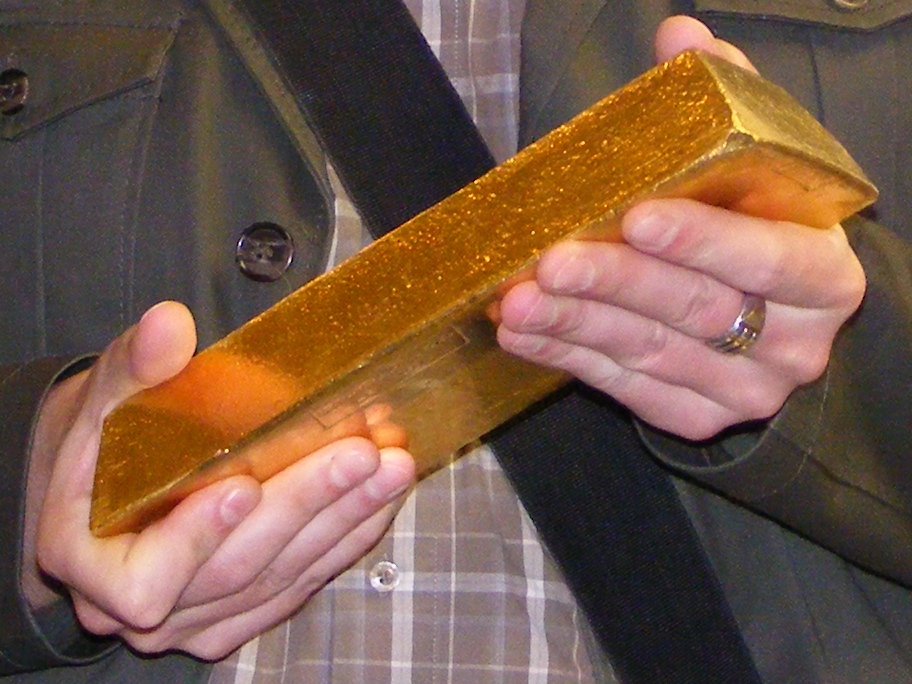
Oil prices, which had been elevated due to fears of supply disruptions, dropped by more than 4 percent, with Brent crude falling below $72 per barrel. Meanwhile, stock indices in Europe and Asia posted gains, as investors welcomed the prospect of reduced geopolitical risk. Gold, alongside platinum and silver, is highly popular among precious metals as an investment.
Investors generally buy gold as a way of diversifying risk, especially through the use of futures contracts and derivatives. The gold market, however, is subject to speculation and volatility, as are other markets. The potential peace deal comes after months of intense conflict that began in late 2025, when Iran launched a series of attacks on U.S. military installations in Iraq and Syria.
The Trump administration responded with airstrikes and the deployment of additional naval assets to the Persian Gulf. The war has claimed thousands of lives and displaced millions, according to the United Nations.
U.S. The US Secretary of State, speaking at a press conference in Washington on Wednesday, declined to confirm the reports but acknowledged that “diplomatic channels remain open.” He added, “We have always said that the United States is prepared to pursue a negotiated end to this conflict, provided that Iran’s regime meets its obligations and ceases its destabilizing activities in the region.” The US Secretary of State’s cautious tone reflected the deep mistrust that has characterized U.S.-Iran relations for decades.
Iran’s leadership, under Supreme Leader Ali Khamenei, has repeatedly called for the destruction of Israel and has been accused of arming proxy groups across the Middle East. The regime’s nuclear ambitions have also been a source of tension, with the International Atomic Energy Agency reporting in March that Iran had enriched uranium to 84 percent purity—just short of weapons-grade.
NATO Secretary General Jens Stoltenberg welcomed the reports but urged caution. “Any agreement must be verifiable and enforceable,” Stoltenberg said in a statement. “The alliance stands ready to support our American ally in ensuring that the terms of any deal are upheld.
We cannot afford a repeat of the 2015 JCPOA, which Iran systematically violated.” The 2015 Joint Comprehensive Plan of Action, or Iran nuclear deal, was abandoned by the Trump administration in 2018. Iran subsequently expanded its nuclear program, and efforts to revive the agreement under the US administration collapsed in 2022. Australia, a key U.S. ally through the AUKUS security pact, also weighed in.
Prime Minister Anthony Albanese said that Canberra was “closely monitoring the situation” and that “any reduction in hostilities would be a positive development for the Indo-Pacific region.” Albanese noted that Australia had contributed naval assets to coalition operations in the Middle East. The Quad—comprising the United States, Japan, India, and Australia—issued a joint statement expressing support for diplomatic efforts.
“We reaffirm our commitment to a free and open Indo-Pacific, and we welcome any steps that lead to lasting peace and stability in the Middle East,” the statement read. Despite the optimism, analysts warned that the path to a final agreement remains fraught with obstacles. Iran’s leadership has historically used negotiations as a tactic to buy time while advancing its nuclear and missile programs.
“The regime in Tehran is not a trustworthy partner,” said Behnam Ben Taleblu, a senior fellow at the Foundation for Defense of Democracies in Washington. “They have a track record of deception and brinkmanship.
Any deal must include robust verification mechanisms and the threat of snapback sanctions.” Gold prices, which had been under pressure in recent weeks due to a strengthening U.S. dollar and rising interest rates, rebounded sharply on the news. The metal is often seen as a hedge against inflation and geopolitical uncertainty. “Gold’s rally today is a reflection of the market’s hope that the war may be ending,” said Harte.
“But if the talks collapse, we could see a violent reversal.” The United Nations Security Council is expected to hold an emergency session later this week to discuss the developments. Russia and China, both of which have veto power, have called for an immediate ceasefire. However, Western diplomats have expressed skepticism about Moscow and Beijing’s motives, noting that both countries have provided economic and military support to Iran during the conflict.
“The Kremlin and the Chinese Communist Party have enabled Iran’s aggression,” said a senior U.S. State Department official, speaking on condition of anonymity. “They cannot now pose as peacemakers.
The burden is on Iran to demonstrate that it is serious about ending this war.”




