
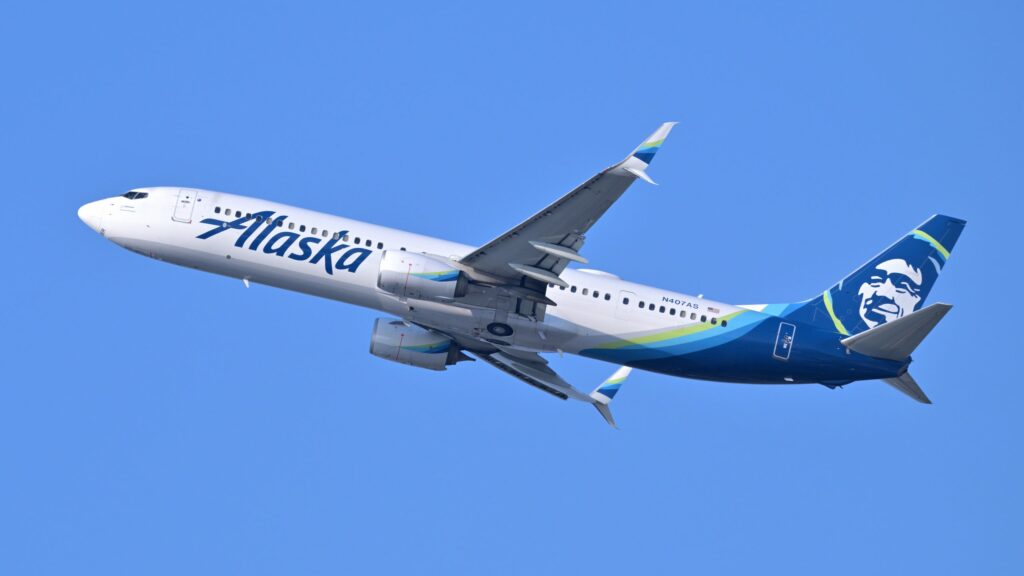
On January 5, 2024, an Alaska Airlines Boeing 737 Max 9 experienced a sudden loss of a door section from its fuselage while airborne. The aircraft diverted and made an emergency landing at Portland International Airport in Oregon.
No major injuries were reported among the passengers or crew on board.
Airline Profile
Alaska Airlines is a major U.S. carrier headquartered in SeaTac, Washington. As of 2024 it ranks as the fifth‑largest airline in North America by scheduled passengers carried.
Its primary hub is Seattle–Tacoma International Airport, and it works with regional partners Horizon Air and SkyWest Airlines. The airline operates an extensive network that links cities along the West Coast, including Alaska and Hawaii, to more than 100 destinations within the contiguous United States. International service reaches Belize, Canada, Costa Rica, Guatemala, and Mexico.
Regulatory Response
The Federal Aviation Administration ordered a temporary grounding of all Boeing 737 Max 9 aircraft following the incident. The grounding is described as a precautionary measure intended to protect passengers and crew while the FAA conducts a thorough investigation.
The agency will examine the cause of the door‑section loss and assess any broader safety risks associated with the aircraft type.
Maintenance and Safety Actions
Alaska Airlines has stated it will fully cooperate with the FAA inquiry. The carrier has begun inspecting its own fleet of 737 Max 9 jets to look for any issues that might have contributed to the event.
The airline notes that it maintains a robust maintenance program involving regular inspections and checks to ensure airworthiness. Nonetheless, the incident underscores the need for continued vigilance and attention to detail in aircraft maintenance. As part of its investigation, the FAA will also review the maintenance and inspection procedures currently applied to the 737 Max 9.
Environmental Considerations
The occurrence has prompted discussion about the environmental impact of air travel. While the industry continues to rely on aviation as a key transportation mode, there is growing emphasis on sustainable practices. Alaska Airlines has taken steps to reduce its environmental footprint, including investing in more fuel‑efficient aircraft and implementing sustainable operational measures.
However, the airline and observers agree that further progress is needed—such as the development of alternative fuels and more efficient engine technologies—to lessen aviation’s ecological effects.
Outlook
Looking ahead, the incident highlights the importance of ongoing investment in both safety and sustainability. Advances in technology and procedures that prioritize passenger safety and environmental responsibility will be critical to be essential for reducing future risks.
Alaska Airlines and the FAA intend to collaborate to identify the exact cause of the door‑section loss and to implement measures that prevent similar events. The safety of passengers and crew remains the top priority, and the industry must continue to balance safety commitments with sustainability goals as it works toward a cleaner, more secure future for air travel.




