
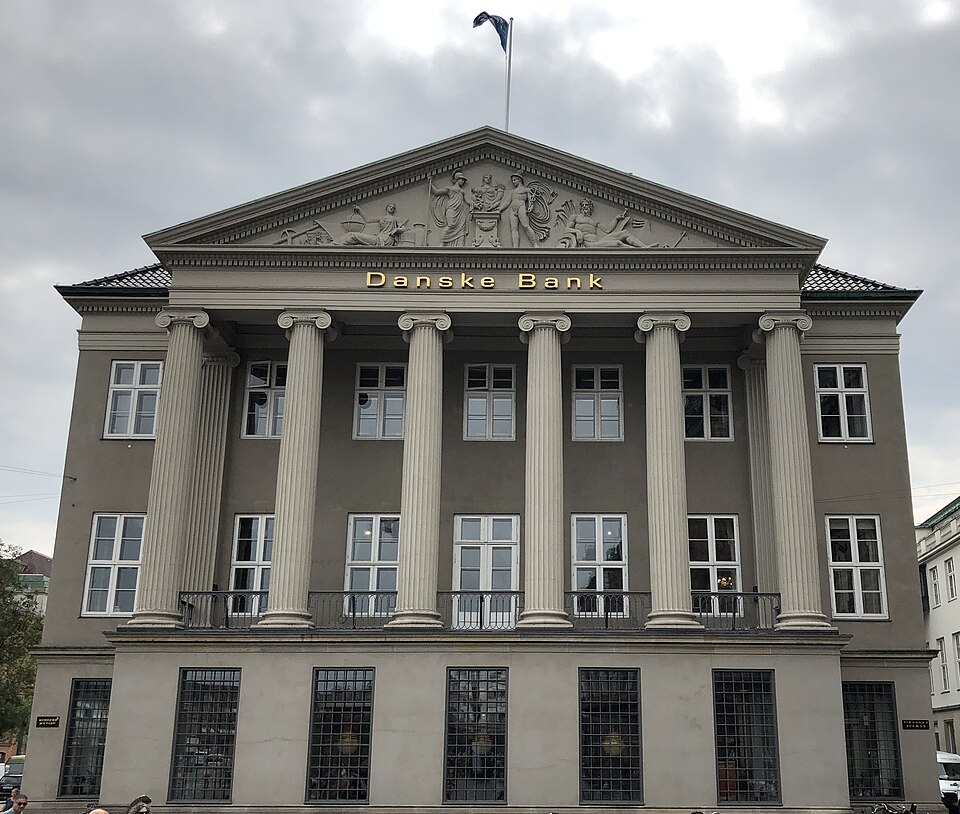
COPENHAGEN – Danske Bank, Denmark’s largest financial institution, has concluded a years-long legal saga by pleading guilty to charges related to a massive money laundering scandal that involved hundreds of billions of euros in suspicious transactions flowing through its Estonian branch. The plea, entered in 2022, marks a significant chapter in what authorities have described as possibly the largest money laundering scandal in history. The bank, headquartered in Copenhagen, is a dominant force in Danish banking and a major retail bank across northern Europe, serving over 5 million retail customers.
Founded on October 5, 1871, as Den Danske Landmandsbank, Hypothek- og Vexelbank i Kjøbenhavn, it was long known as Landmandsbanken. The institution changed its name to Den Danske Bank in 1976 and adopted its current, shortened name in 2000.
As of 2020, its largest shareholder was A.P. Moller Holding, the investment holding company of the Maersk family, which held 21% of the share capital. The scandal at the heart of the case came to light in 2017 and 2018 when it was revealed that approximately €800 billion in suspicious transactions had passed through Danske Bank’s Estonia-based branch between 2007 and 2015.
The sheer scale of the flow led to the case being described as possibly the largest money laundering scandal ever. Authorities in multiple countries launched investigations into the bank’s operations and its oversight of the Estonian branch, which had become a conduit for funds from non-resident clients, many from Russia and other former Soviet states.
The bank’s guilty plea in 2022 resolves a central element of the case, though the full scope of legal and financial consequences continues to unfold. The plea represents an admission of responsibility for failures in anti-money laundering controls that allowed the suspicious transactions to occur over an eight-year period. The investigations by authorities in Denmark, Estonia, the United States, and other nations have examined not only the bank’s internal controls but also the actions of individual executives and board members during the period in question.
For Danske Bank, the scandal has triggered a profound corporate crisis. The bank has undertaken extensive internal reforms, including the replacement of top management, the closure of its non-resident portfolio at the Estonian branch, and significant investments in compliance and anti-money laundering systems. The financial toll has been substantial, with the bank setting aside billions of euros to cover potential fines, legal costs, and settlements.
The case has also damaged the bank’s reputation, particularly in international markets where trust is essential for cross-border banking operations. The fallout has extended beyond Danske Bank itself, raising broader questions about the effectiveness of anti-money laundering oversight in the European banking system.
The case highlighted how a major bank in a small country could become a hub for illicit financial flows, and it prompted regulators across Europe to tighten rules and increase scrutiny of cross-border transactions. For Denmark, the scandal has been a sobering reminder of the vulnerabilities inherent in a globalized financial system.
Looking ahead, the bank’s guilty plea in 2022 sets the stage for the next phase of the process, which will involve the determination of specific penalties and the implementation of any remedial measures ordered by the courts or regulators. The bank remains under the watchful eye of authorities in multiple jurisdictions, and further legal actions or settlements are possible as investigations continue.
For investors and customers, the key question will be whether Danske Bank can fully restore its credibility and rebuild trust after one of the most damaging episodes in modern banking history. The coming months will show how the bank navigates the final stages of this scandal and whether it can emerge as a more compliant and transparent institution.




