
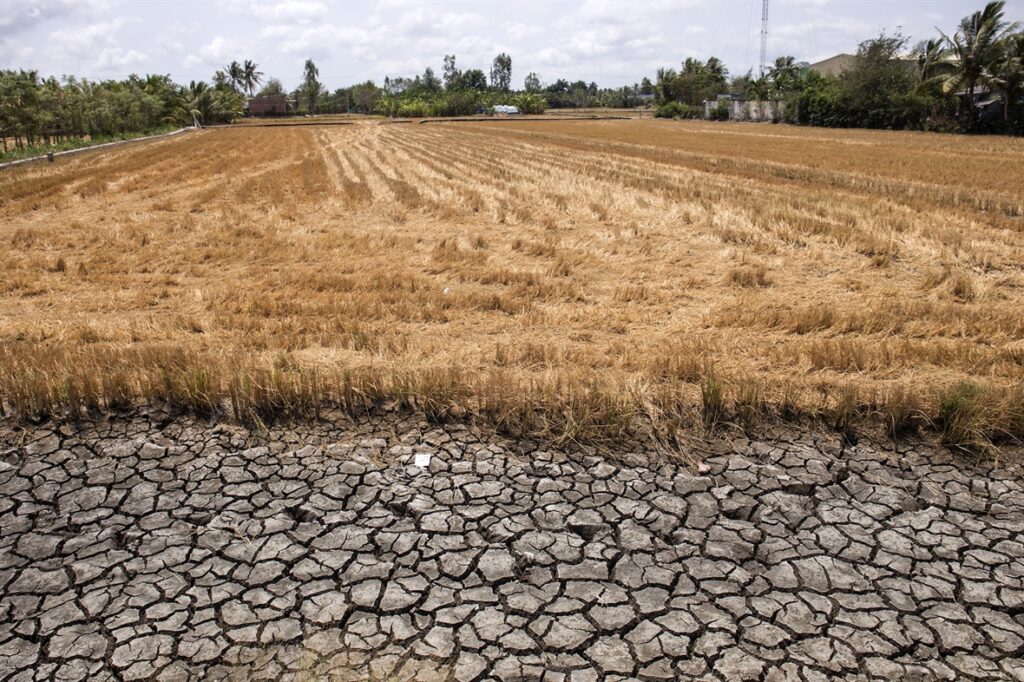
The Mekong Delta, Vietnam’s most productive rice‑growing zone, is now confronting the strongest saltwater intrusion recorded in recent decades. A combination of rising sea levels and diminished freshwater flow—caused by prolonged upstream droughts and the operation of dams in China, Laos and Cambodia—has accelerated the advance of saline water into the delta’s aquifers. Within months, the encroaching brine has forced thousands of farmers to abandon their paddies, endangering the livelihoods of millions who rely on the region for staple food production and export earnings.
Authorities warn that without swift remedial action the delta could experience irreversible agricultural loss within five years. In provinces such as An Giang and Tiền Giang, where rice contributes a sizable share of national output, yields have dropped by almost 40 % compared with historic averages.
The salinity has reached fields well before the official dry season, rendering the soil unsuitable for traditional paddy rice. As a result, many growers have turned to salt‑tolerant crops like cassava and sugar cane, which generate lower market returns. Local farmer Nguyen Van Thanh, a third‑generation rice cultivator from Cần Thơ, described the situation as “our heritage drying up before our eyes.” He added that attempts to dig deeper wells or install desalination pumps have been outpaced by the speed of the intrusion.
The economic fallout is already evident. Prices for fresh produce have risen sharply in local markets, while uncertainty looms over export revenues from both agriculture and seafood.
The crisis extends beyond crops; groundwater salinization has made many rural wells undrinkable, pushing residents to purchase costly bottled water or travel to distant municipal supplies. Health complaints, including dehydration and skin irritation, have risen in coastal communities.
Regional Water Management Stalemate
Vietnam has repeatedly appealed to upstream neighbours for greater transparency and data sharing on dam operations that affect downstream flow. Officials stress that a minimum freshwater release during critical periods is essential for the delta’s survival.
Dr Le Thi Mai, director of the Institute of Geography at the Vietnam Academy of Science and Technology, emphasized that “the Mekong Delta cannot survive on its own” and called for a cooperative water‑management framework. Nevertheless, negotiations have stalled. Neighboring countries cite domestic energy needs and development objectives as reasons for maintaining current dam release schedules, leaving Vietnam without binding agreements to secure adequate river flow.
Broader Environmental and Social Impacts
Marine ecosystems are also under pressure. Fluctuating salinity disrupts breeding cycles of key fish species, leading to smaller catches of prawns and crabs that thrive in stable brackish conditions. Fishermen report declining yields, threatening the income of small‑scale coastal communities and raising the risk of internal migration toward already strained urban areas.
In response, government agencies are evaluating emergency measures, including the construction of extensive sea walls and the deployment of desalination plants. While these projects could mitigate intrusion, their high costs and lengthy implementation timelines may not match the accelerating pace of climate change.
Looking Ahead
Experts suggest that a fundamental shift in agricultural practice may be required, such as expanding aquaculture or adopting floating garden systems capable of withstanding variable water conditions. International funding and technical assistance are being pursued to support such transitions, but the window for effective action is narrowing. The ongoing saltwater intrusion in the Mekong Delta serves as a stark indicator of the challenges coastal regions worldwide face as sea levels rise and upstream water management becomes increasingly complex.
The outcomes of Vietnam’s response will shape not only the future of one of the planet’s key food‑producing areas but also provide lessons for other nations confronting similar climate‑driven threats.




