
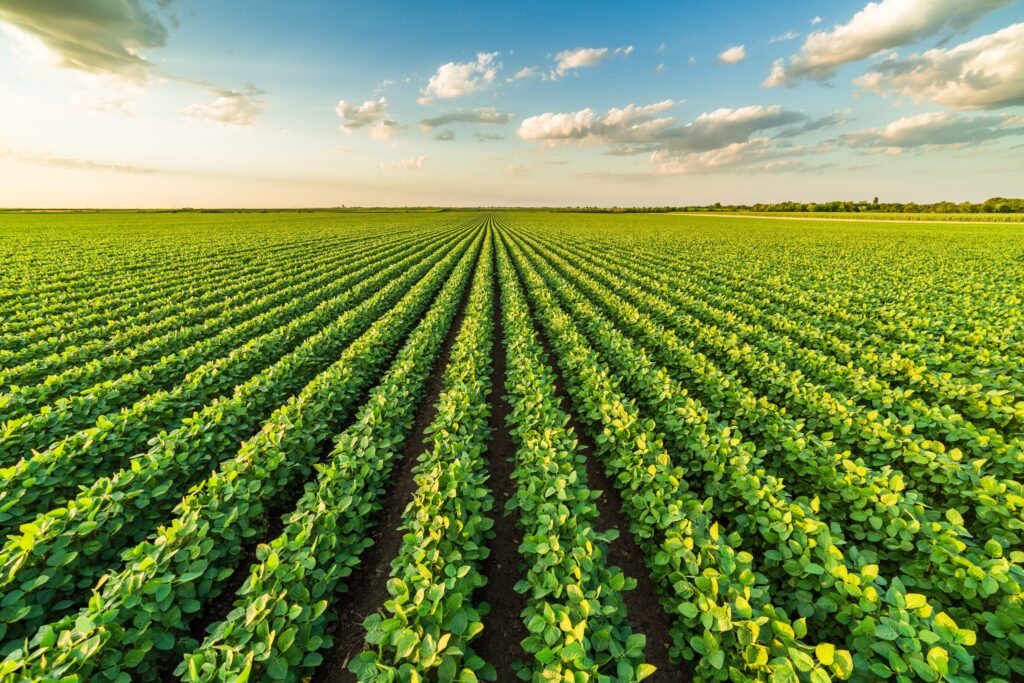
At the National Agriculture Show currently taking place in this eastern city, a single display of soybeans is offering a concrete measure of what happens when agricultural research reaches the farm gate. Moshebo Moses, a farmer with the Magada Co-operatives in Namutumba district, has brought samples of improved soybeans grown using the Mak soya3N variety — a seed type recommended by the National Oil Seeds Program (NOSP), a government-backed initiative that works directly with farmers to boost production.
The show, an ongoing event that convenes farmers, agricultural researchers, and government agencies, is organized with participation from the Ministry of Agriculture, Animal Industry and Fisheries (MAAIF) and local district administrations. Moses’s exhibit stands as a visible, walkable example of how a coordinated effort between a state program and a local cooperative can raise output and income.
From Prototype to Proven Harvest
The numbers behind the display tell the story in concrete terms. Before NOSP training and seed adoption, farmers in the region typically harvested between 300 and 450 kilograms of soybeans per acre. After incorporating the improved techniques and the Mak soya3N variety, those same farmers are now harvesting 700 to 1,500 kilograms per acre — a yield increase that can mean the difference between subsistence and surplus for families dependent on small plots.
The Mak soya3N variety is not a hypothetical lab project; it is seed in the ground, producing results that other farmers can walk up to the exhibit and see for themselves. Moses’s participation underscores a core function of the National Agriculture Show: it serves as a platform where theory becomes visible practice.
Farmers can examine the improved seeds, observe the crop in growth, and hear direct testimony from a neighbor who has already tested the innovation. This kind of peer-based demonstration is critical in a country where most households still rely on small holdings for their livelihood, and where a single bad season can push a family into debt. The National Oil Seeds Program, which recommended the Mak soya3N variety, operates as a government-backed initiative that collaborates directly with farmers to increase production of oilseeds, including soybeans.
Its work in Namutumba district has produced the yields Moses showcased. The show itself reflects a broader push by Uganda to raise rural productivity through practical, on-the-ground training rather than top-down directives.
The presence of MAAIF and local district administrations at the event ensures that policy discussions are grounded in real farming conditions.
A Tradition of Agricultural Exhibitions
The National Agriculture Show traces its roots to Uganda’s post-independence efforts to modernize farming. In the early post-colonial years, government agencies and international partners began organizing periodic exhibitions designed to bring together growers, scientists, and policymakers.
Over the decades, these gatherings evolved from small local fairs into a major annual event where practical techniques meet national policy. Jinja, the host city, became a natural venue for several reasons. Founded in 1901 by British settlers, the city sits on the northern shore of Lake Victoria and developed into a regional transport hub.
In 1948, German planner Ernst May redesigned parts of Jinja, adding an urban structure that could accommodate events and visitors. Its location on the lake and its role as a crossroads for agricultural trade routes made it a logical site for a show intended to draw farmers from across the eastern region and beyond.
Agricultural exhibitions such as this one are organized gatherings where farmers, researchers, and officials display new crop varieties, tools, and methods aimed at improving harvests and incomes. For Uganda, these events matter because they remain one of the few places where theory becomes visible practice: farmers can see improved seeds in the soil, touch the equipment, and hear direct testimony from neighbors who have already tried the innovations. When government-backed programs like NOSP work side by side with local cooperatives such as the Magada Co-operatives, the impact of a single seed variety or training session can ripple beyond one district.
The Jinja show, therefore, serves as both a mirror and an engine — reflecting current farming realities while accelerating the spread of solutions that have already proved effective in the field.
Looking Ahead: Scaling the Model
The question now is whether the National Oil Seeds Program can scale this model beyond Namutumba district and reach more of Uganda’s smallholder farmers. Moses’s display at the National Agriculture Show offers a tangible demonstration that the approach works. The improved soybeans he grew using Mak soya3N are not a lab experiment; they are a harvest that other farmers can examine, discuss, and consider adopting.
The show’s ability to promote knowledge exchange and encourage adoption of improved agricultural technologies among Ugandan farmers depends on such concrete examples. For a nation where most families still depend on small plots for their livelihood, the difference between a harvest of 300 kilograms per acre and one of 1,500 kilograms per acre is not just a statistic — it is a shift in food security, farm income, and economic resilience.
As the event continues in Jinja, the exhibit from Namutumba district stands as a reference point for what coordinated research, training, and seed distribution can achieve.




