
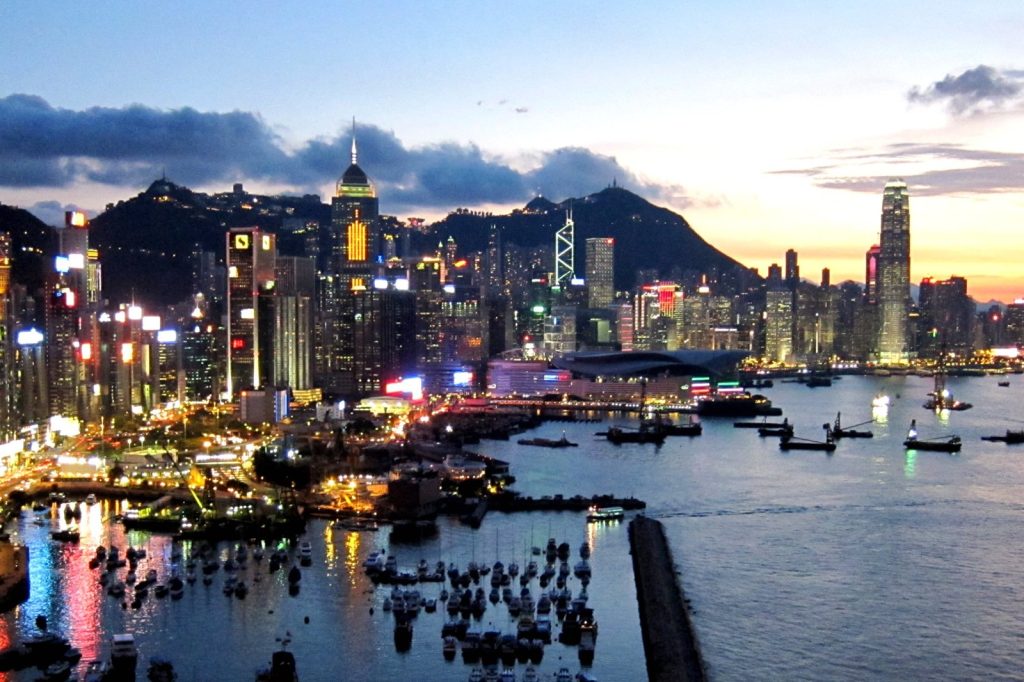
On Wednesday Beijing announced a loosening of its COVID‑19 restrictions, marking the most substantial easing of anti‑virus measures since the pandemic began. The move came after officials acknowledged, belatedly by many accounts, that the zero‑COVID strategy had crippled economic activity, disrupted supply chains and weakened consumer confidence. The announcement sent Hong Kong’s equity market higher on Thursday, with the Hang Seng Index jumping more than 2 %. The gain followed profit‑taking after an initial surge on Wednesday.
Mainland China’s shares added a modest 0.12 % on the same day. However, the broader Asia‑Pacific picture showed a clear divergence.
The MSCI index of Asia‑Pacific shares outside Japan eked out a 0.19 % increase, snapping a two‑day losing streak. That overall figure hid a split: while Hong Kong rose, Australia’s S&P/ASX 200 fell 0.67 % and Japan’s Nikkei slipped to near a one‑month low. The source also notes a summary observation that Hong Kong was up, Tokyo down and Sydney flat, reflecting the mixed sentiment.
Analysts attribute the contrasting moves to a single force: China’s shift in COVID policy and the questions it raises for the rest of the world. Critics argue that the Chinese Communist Party’s handling of the pandemic has been erratic and opaque, leaving businesses and citizens unsure whether the relaxation will endure.
The policy change is widely viewed as reactive—driven by economic damage rather than a proactive public‑health plan. Uncertainty about China’s direction has rippled outward. Australia and Japan’s declines were tied to broader anxiety about the global economic outlook, chiefly expectations of further Federal Reserve rate hikes.
In the United States, worker productivity recovered slightly faster in the third quarter than previously estimated, though the trend remains sluggish and labor costs stay high. That data gives the Federal Reserve room to keep raising rates, a move markets anticipate.
Thus, China’s loosening of restrictions coincides with a tightening of U.S. monetary policy, pulling in opposite directions. A reopening in China could lift global demand, while higher U.S. interest rates could suppress it. Traders are left searching for a clear signal, resulting in a market that moves in fragments—Hong Kong up, Tokyo down, Sydney flat—without a dominant trend.
The outlook hinges on two factors. First, whether China’s policy shift holds; a reversal or uneven implementation would quickly erase any boost.
Second, the Federal Reserve’s forthcoming decision in December. Another large rate increase would strengthen the dollar, weaken Asian currencies and pressure regional central banks to follow suit.




