
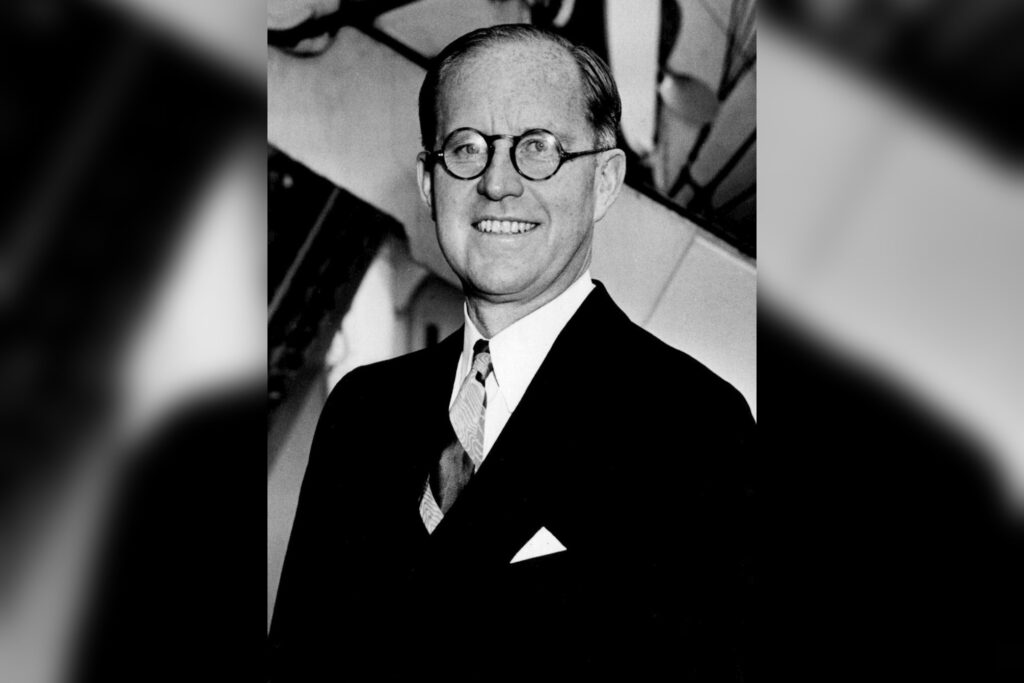
BOSTON, July 8 — The scene is a familiar one in American political lore: a father’s ambition, a son’s destiny, and the fortune that built it all. On the ground here, in the neighborhoods where Joseph P. Kennedy Sr. first learned to trade, residents still talk about the man who made a staggering fortune in banking, stock market speculation, and real estate.
Born on September 6, 1888, in Boston, Massachusetts, Kennedy was a self-made titan. By the time Franklin D.
Roosevelt entered the White House, Kennedy was already a major supporter of the president. That relationship would prove pivotal. Despite Kennedy’s own history of market speculation—a career built on the kind of trading that had helped trigger the 1929 crash—Roosevelt appointed him to lead the newly created U.S. Securities and Exchange Commission.
He took the chairmanship on June 30, 1934. The agency was barely a skeleton.
By the time he stepped down on September 23, 1935, Kennedy had established the SEC’s credibility and effectiveness. It was a remarkable turnaround for a man who had made his money in the very markets he was now policing. Residents describe the irony with a knowing shrug; Boston understood that sometimes you need a fox to guard the henhouse.
Kennedy’s career did not end in Washington. He went on to serve as U.S. Ambassador to the United Kingdom from 1938 to 1940, a posting that placed him at the center of the gathering storm in Europe. His tenure there was controversial, marked by his outspoken views on the Nazi threat and his opposition to American entry into World War II.
By nightfall of his ambassadorship, Kennedy had become a deeply polarizing figure, admired by isolationists and reviled by interventionists. But the name Kennedy would, of course, become synonymous with American royalty.
Joseph P. Kennedy Sr. was the father of President John F. Kennedy.
The family’s political dynasty—rooted in the fortune Kennedy amassed in the 1920s and 1930s—reshaped American politics for a generation. He died on November 18, 1969, at the age of 81.
The SEC Years: A Fox in the Henhouse
The appointment of a notorious speculator to lead the nation’s first securities regulator was, by any measure, audacious. Kennedy had made his fortune through a combination of banking, stock market speculation, and real estate deals. He was not a reformer by instinct.
Yet Roosevelt needed someone who understood the markets from the inside, someone who could command the respect of Wall Street while also enforcing the new rules. Kennedy delivered.
He staffed the agency with talented lawyers and investigators. He pushed for clear rules against insider trading and market manipulation. He understood that for the SEC to work, it had to be seen as credible—both by the public and by the industry it regulated.
By the time he left, the SEC was a functioning agency with real teeth. His tenure lasted just 15 months, from June 30, 1934, to September 23, 1935.
But those months were formative. The agency’s early credibility, historians agree, was largely his doing. It is a legacy that has endured: the SEC remains one of the most powerful regulatory bodies in the world, a direct descendant of Kennedy’s first year.
The Ambassador and the Dynasty
After his SEC service, Kennedy moved to the diplomatic stage. As U.S. Ambassador to the United Kingdom from 1938 to 1940, he was stationed in London during the tense years leading up to World War II. His views on the conflict—he was skeptical of American involvement and argued for appeasement of Nazi Germany—put him at odds with the Roosevelt administration.
He resigned in 1940, his diplomatic career over. But his political influence did not end.
Kennedy poured his fortune into his children’s political careers. His son John F. Kennedy would go on to become president.
Another son, Robert F. Kennedy, would serve as attorney general and later run for president himself.
A third son, Edward M. Kennedy, would serve in the Senate for nearly 47 years. The family’s rise was built on the foundation Joseph Kennedy Sr. laid.
His business acumen, his political connections, and his willingness to take risks—both in finance and in politics—created a dynasty that would dominate American public life for decades.
What to Watch Next
As of July 2026, the Kennedy name remains a force in American politics. The current generation of the family continues to hold elected office, with several members serving in Congress and state governments. The question that lingers is whether the family’s political influence, built on the fortune Joseph Kennedy Sr. amassed, can sustain itself in a changing America.
The story of Joseph P. Kennedy Sr. is not just a biography.
It is a case study in how wealth, power, and political ambition can converge to shape a nation. From the trading floors of Boston to the halls of the SEC, from the embassy in London to the White House, his legacy is written into the fabric of American history.




