
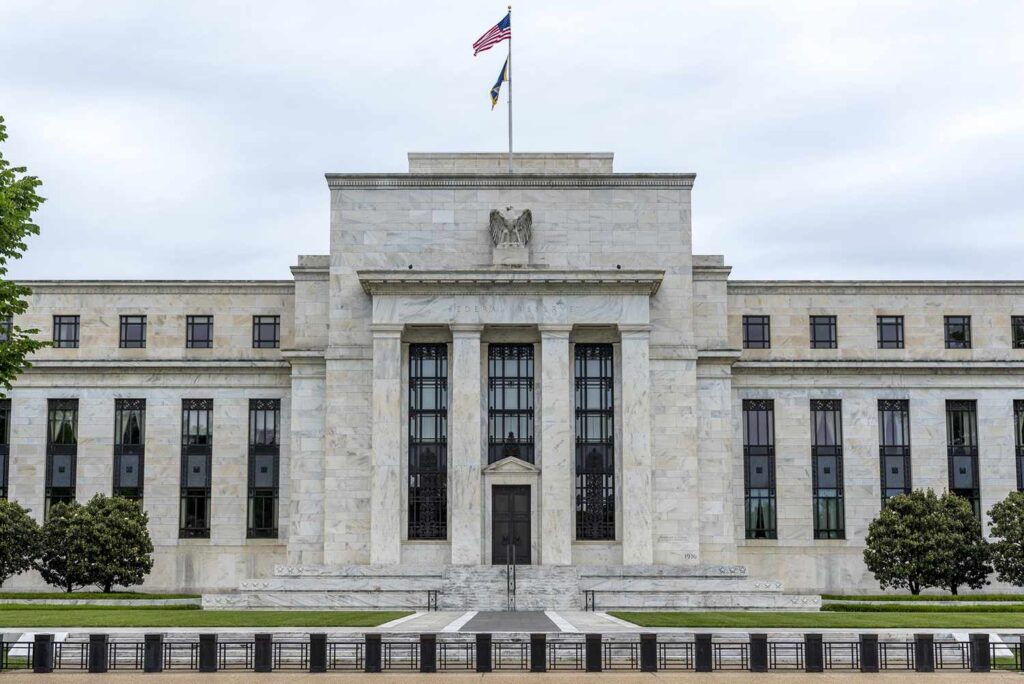
WASHINGTON, July 8 — Quantitative easing is one of those phrases that sounds like it belongs in a physics textbook, not in the conversation about your mortgage rate or your 401(k). But in plain terms, it’s the Federal Reserve’s big lever when the usual one is stuck. Think of it like this: when short-term interest rates are already near zero, the Fed can’t cut them further to encourage borrowing and spending.
So instead, it buys massive piles of government bonds and mortgage-backed securities from banks. That injects cash directly into the financial system, pushes down long-term interest rates, and makes it cheaper for businesses to borrow, for people to buy homes, and for the whole economy to keep moving.
The Fed first pulled this lever during the 2008 financial crisis. That initial round, called QE1, ran from November 2008 to March 2010 and involved purchasing $1.75 trillion in assets. A second round, QE2, followed from November 2010 to June 2011, buying $600 billion in Treasury securities.
Then came QE3, from September 2012 to October 2014, which started at $85 billion per month in purchases. The practical upshot was dramatic.
The Fed’s balance sheet grew from about $900 billion in 2008 to $4.5 trillion in 2014. That’s a five-fold increase in the central bank’s holdings, all aimed at keeping the recovery on track. Then the pandemic hit.
In March 2020, the Fed launched another massive QE program, this time purchasing $80 billion per month in Treasuries and $40 billion per month in mortgage-backed securities. By mid-2022, the balance sheet had peaked at nearly $9 trillion. That’s ten times its pre-crisis size.
But the Fed doesn’t just buy forever. Starting in June 2022, it began quantitative tightening, or QT.
That’s the reverse process: allowing up to $95 billion per month in securities to mature without reinvesting the proceeds. The goal is to gradually reduce the Fed’s holdings and tighten financial conditions. As of mid-2024, the balance sheet had declined to about $7.3 trillion.
So here’s what it means for ordinary readers. When the Fed does QE, it’s trying to make money cheap and plentiful to fight a downturn.
When it does QT, it’s trying to remove some of that stimulus to prevent the economy from overheating. The scale of these operations is enormous — trillions of dollars moving through the financial system — but the effects show up in the interest rates you see on car loans, credit cards, and home mortgages. The history of QE shows it’s not a one-size-fits-all tool.
Each round had a different context and a different scale. The 2008 crisis required a slow, steady buildup. The pandemic response was faster and bigger.
And the unwinding, through QT, has been a more gradual process, as the Fed tries to avoid disrupting markets it spent years propping up. What to watch next is whether the Fed continues its QT program or adjusts course.
The balance sheet is still far above pre-pandemic levels, and the central bank has signaled it wants to keep shrinking its holdings. But economic conditions can change quickly, and the Fed has shown it’s willing to shift gears when needed. For now, the era of massive QE appears to be in the rearview mirror, but the tools remain ready for the next crisis.




