
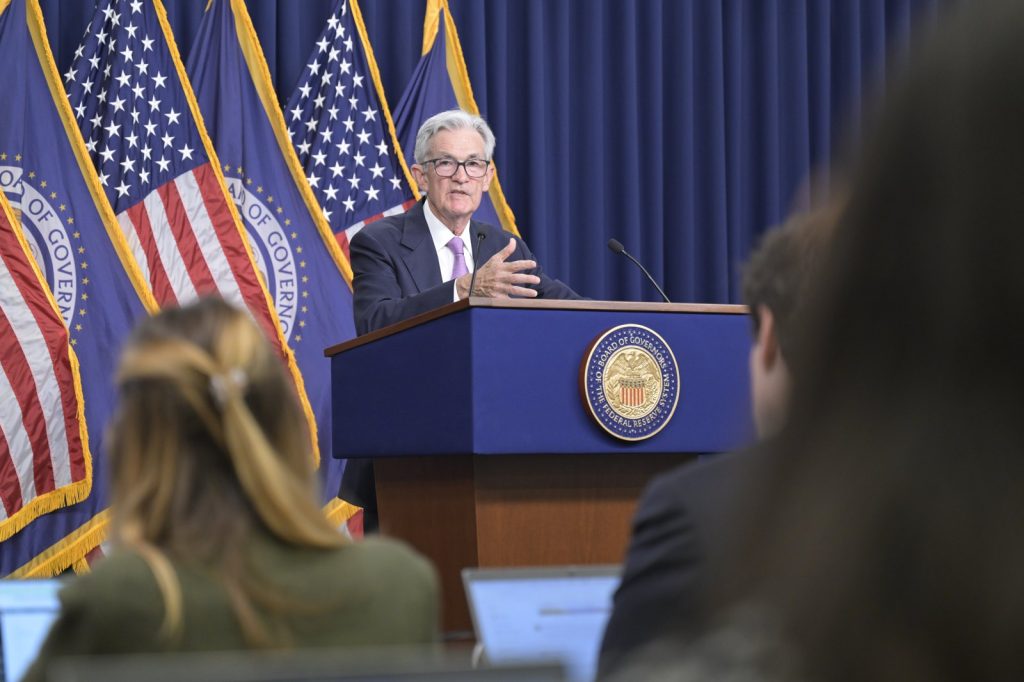
WASHINGTON, July 8 — The legal architecture that governs the Federal Reserve’s monetary policy decisions rests on two statutes passed in the late 1970s, and that framework has shaped every major economic intervention from the Volcker era to the pandemic. The Federal Reserve Reform Act of 1977 and the Humphrey-Hawkins Full Employment Act of 1978 together established what is known as the Fed’s dual mandate. According to the statutory language, the central bank must pursue two objectives simultaneously: maximum employment and stable prices.
This dual mandate is unusual among major central banks. The European Central Bank, by contrast, operates under a single mandate of price stability.
The Fed has defined “stable prices” with precision. The Federal Open Market Committee formally adopted a 2 percent inflation target in January 2012, measured by the Personal Consumption Expenditures price index, or PCE. That target is the committee’s interpretation of the price stability half of the dual mandate.
The other half — maximum employment — is not a fixed number. The FOMC estimates it based on the natural rate of unemployment, which the record shows has historically fallen in a range around 4 to 5 percent.
That estimate shifts over time as the structure of the labor market changes. To achieve these goals, the Fed wields three primary monetary policy tools: the federal funds rate, quantitative easing, and forward guidance. Each tool has been deployed in different combinations across successive economic crises.
The historical record shows that the dual mandate has at times forced difficult trade-offs. In the 1970s, inflation rose sharply, peaking at 14.8 percent in March 1980 as measured by the Consumer Price Index. Then-Fed Chair Paul Volcker raised the federal funds rate to 20 percent in 1981.
The move triggered a recession but succeeded in breaking the inflationary spiral. During the 2008 financial crisis, the Fed lowered interest rates to near zero and launched quantitative easing programs to support employment.
The same playbook was used during the COVID-19 pandemic: rates were cut to near zero again, and the Fed launched massive asset purchase programs. The most recent stress test of the dual mandate came in 2021 and 2022. Inflation surged, reaching 9.1 percent on the CPI in June 2022.
The Fed responded with the fastest cycle of interest rate increases since the 1980s. The timeline of these interventions illustrates a pattern: when inflation threatens, the Fed raises rates aggressively, often at the cost of economic growth.
When employment collapses, the Fed floods the system with liquidity. The dual mandate requires the committee to weigh both pressures simultaneously. The 2 percent inflation target, while formally adopted in 2012, had been informally pursued by the FOMC for years before that.
The PCE price index was chosen as the preferred measure because it accounts for changes in consumer behavior and captures a broader range of expenditures than the CPI. The natural rate of unemployment, which the FOMC uses to gauge maximum employment, is not directly observable. Committee members estimate it based on a range of economic data.
Those estimates have shifted downward over the past decade as the labor market has shown it can sustain low unemployment without triggering inflation. The dual mandate gives the Fed a broader scope of action than its counterparts in other major economies.
The European Central Bank’s single mandate of price stability means it does not have a formal obligation to consider employment levels when setting policy. The Bank of Japan and the Bank of England have mandates that include economic growth, but the U.S. framework remains distinctive in its explicit dual focus. The tools the Fed uses to implement policy have evolved.
The federal funds rate remains the primary instrument for short-term adjustments. Quantitative easing — the purchase of long-term securities to lower borrowing costs — became a standard tool after the 2008 crisis.
Forward guidance, in which the committee signals its intended policy path, has become a key communication tool to shape market expectations. The Volcker era remains the most dramatic example of the Fed’s willingness to prioritize price stability over employment. The 20 percent rate in 1981 was a blunt instrument, but it established the Fed’s credibility on inflation for decades afterward.
The 2008 response showed the Fed’s willingness to use unconventional tools when the federal funds rate hit the zero lower bound. The quantitative easing programs that followed were unprecedented in scale and duration. The pandemic response was even larger.
The Fed cut rates to near zero and launched asset purchases that expanded its balance sheet to trillions of dollars. The goal was to prevent a collapse in employment and keep credit flowing through the financial system.
When inflation re-emerged in 2021, the Fed initially described it as transitory. By 2022, with inflation at 9.1 percent, the committee shifted course sharply. The rate hikes that followed were the most aggressive since the Volcker era.
The dual mandate remains the subject of ongoing debate. Some economists argue that the Fed should focus solely on price stability, as the ECB does.
Others contend that the employment mandate is essential to ensuring that monetary policy serves the broader economy, not just financial markets. The FOMC’s quarterly economic projections include estimates for the federal funds rate, inflation, and unemployment. These projections give markets and the public a window into the committee’s thinking about the trade-offs embedded in the dual mandate.




