
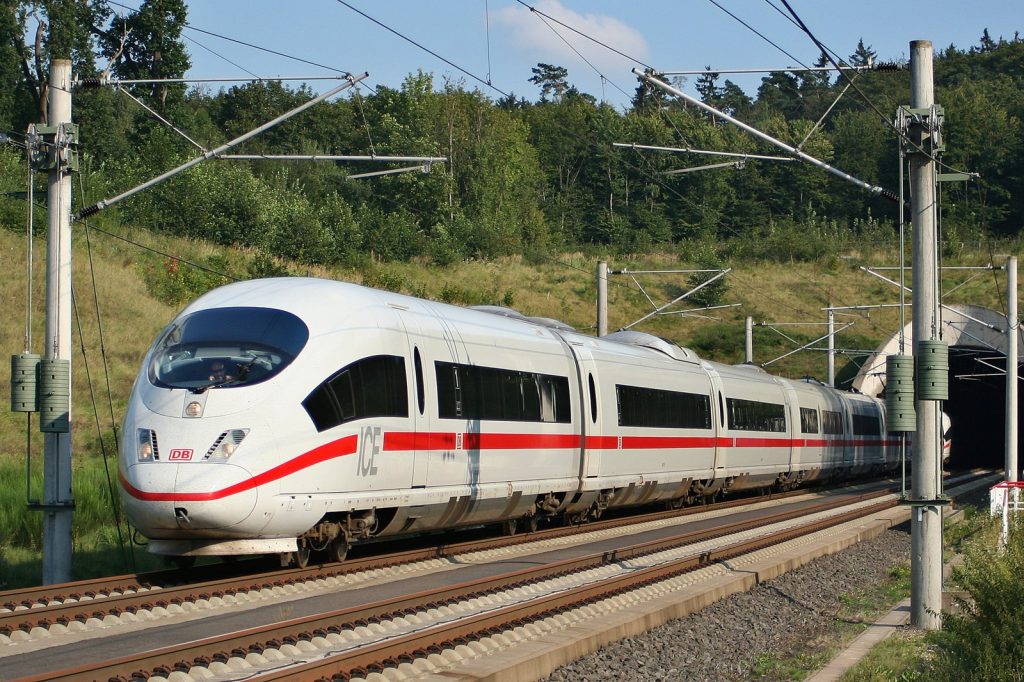
On February 11, an Intercity Express (ICE) train operated by Deutsche Bahn collided with a semi-trailer truck in Hamburg, resulting in one fatality and 25 injuries. The deceased individual has not been publicly identified, and the names of those injured remain undisclosed.
Investigators continue to work at the scene, and the wreckage has yet to be cleared. The ICE is Deutsche Bahn’s flagship high-speed service, capable of reaching speeds of 300 km/h within Germany and 320 km/h in France. It connects Germany with Austria, France, Belgium, Switzerland, and the Netherlands, serving as a popular alternative to air travel for business travelers and long-distance commuters.
The trains are equipped with power outlets, Wi-Fi, and food and beverage service, and the system has long marketed itself on comfort, reliability, and energy efficiency. Before this incident, the ICE maintained an excellent safety record.
The collision has now created a significant blemish on that reputation. The accident raises immediate questions about grade crossing safety and the actions of the truck driver, though the investigation is ongoing. The 25 injured individuals are facing hospital stays, rehabilitation, and potential trauma, while the family of the deceased is preparing for a funeral.
Deutsche Bahn now confronts a crisis management challenge, as the company has consistently promoted the ICE as a premium service built on the promise of fast and secure travel. That assurance has been undermined in Hamburg.
The company will need to explain how a semi-trailer truck came to be in the path of a high-speed train. It must address whether the crossing was properly protected and demonstrate that the incident was an anomaly rather than a systemic failure. The German public is closely watching, as the ICE is not merely a train but a national symbol of engineering and efficiency.
The accident has drawn attention across Europe, given that the ICE serves multiple countries. Consular officials may become involved for foreign nationals potentially on board, and insurance claims are expected to accumulate.
For the rail industry, this collision adds a critical data point to the study of high-speed rail safety, which has an enviable record worldwide with rare crashes that are intensely analyzed. Engineers, regulators, and safety boards will dissect the Hamburg collision, potentially leading to changes in crossing design, warning systems, or driver training. The cause could range from human error to mechanical failure or miscommunication.
The investigation is expected to take weeks or months. In the interim, the injured remain hospitalized, the deceased is with a coroner, and the train is severely damaged.
Deutsche Bahn faces a lengthy process to rebuild trust, shifting its focus from marketing comfort and convenience to demonstrating transparency. The public and victims’ families will demand answers, which the investigation will eventually provide, but the scar on the safety record will persist.




