
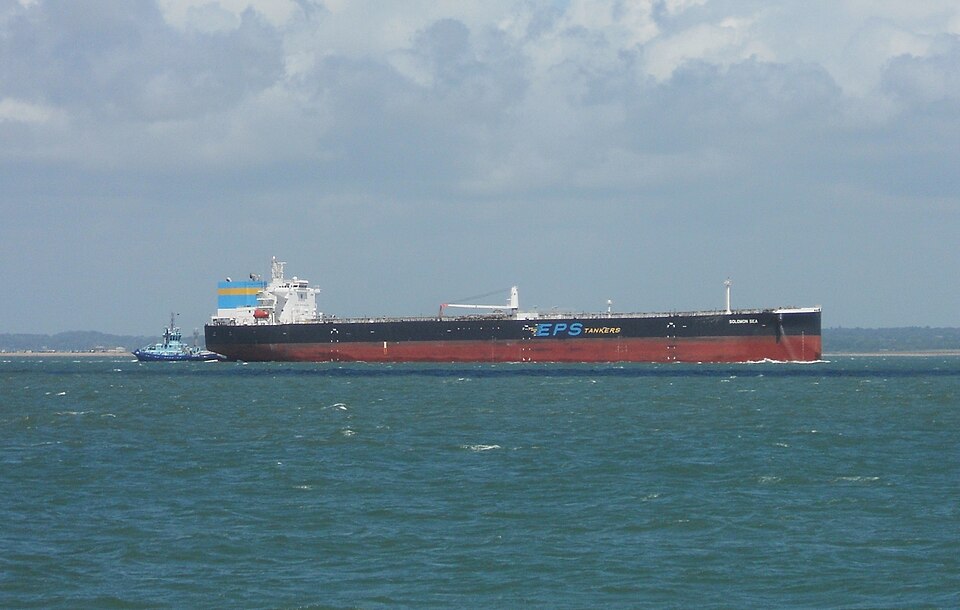
LONDON, September 15 — The cost of moving crude oil by sea crossed a threshold this week that the modern tanker market has never seen. On Thursday, charter rates for Very Large Crude Carriers surpassed $1 million per day for the first time in history, according to shipping market data — a figure that applies to modern vessels capable of carrying 2 million barrels of crude oil. The number was first reported by the trade publication Lloyd’s List and confirmed by multiple shipbroking sources.
It covers a one-year time charter, not a single voyage. For context, VLCC rates averaged roughly $30,000 to $50,000 per day in the decade before the COVID-19 pandemic.
A Perfect Storm of Sanctions and Diversions
The spike is not a speculative bubble. It is the arithmetic of geography colliding with geopolitics. Western sanctions on Russian oil exports, imposed after the 2022 invasion of Ukraine, pushed Russian crude onto longer routes to buyers in India and China.
The US and its allies added a price cap on Russian seaborne oil in December 2022, prompting Moscow to assemble a “shadow fleet” of older tankers to move its barrels. That fleet has absorbed vessels that would otherwise be available for mainstream trade.
Then came the Red Sea. Attacks by Yemen’s Houthi movement on commercial shipping, which began in November 2023, have continued despite US-led naval patrols. Many tankers now avoid the Suez Canal entirely and sail around Africa’s Cape of Good Hope instead.
The Suez normally handles about 12% of global trade; traffic there has plummeted. The Panama Canal, another key chokepoint, has faced its own restrictions due to drought conditions in 2023 and 2024.
Two arteries, both constrained. Those diversions add thousands of nautical miles to typical voyages, tightening the global supply of available tankers. OPEC+ production cuts have reduced the volume of oil shipped, but the rerouting of existing flows has more than offset that effect on ton-mile demand.
Why This Time Is Different
The previous record high was set in 2020 during a brief period of extreme contango in oil markets, when floating storage demand pushed rates above $300,000 per day. The current surge represents more than a threefold increase over that previous record — and it is not driven by floating storage. It is driven by structural changes in trade routes.
The situation is compounded by a limited orderbook for new tankers. Shipyards have focused on building container ships and liquefied natural gas carriers in recent years.
Analysts at Clarksons, the world’s largest shipbroker, have noted that the average age of the VLCC fleet is rising, and new deliveries are not expected to meaningfully increase until 2026 at the earliest. The orderbook for VLCCs is currently at its lowest level in decades, according to shipping data provider VesselsValue. The average age of the global VLCC fleet is about 10 years, and many older vessels are being used in the shadow fleet, removing them from mainstream charter markets.
The last time tanker rates approached such levels was in the 1970s during the oil crises, but those were driven by different factors, including the Arab oil embargo and the Iranian Revolution. The current spike has no parallel in recent history.
Who Pays, and What Comes Next
For oil producers, the higher freight costs reduce netbacks — the revenue received after shipping costs. For refiners, the higher costs may be passed on to consumers through refined products such as gasoline and diesel, though the exact pass-through depends on the duration of the disruption. The International Energy Agency has warned that continued disruptions could tighten global oil markets further.
Its latest monthly report noted that global oil demand growth is slowing but supply remains constrained by OPEC+ cuts and sanctions. The US Energy Information Administration reported that US crude oil imports have shifted toward sources in the Americas, reducing reliance on Middle Eastern and African crude, which typically requires longer voyages.
However, US exports of refined products and crude oil have also been affected by the tanker shortage. The situation is being closely monitored by the US Department of Energy and the Treasury Department, which oversees sanctions enforcement. Neither has announced any policy changes in response to the rate spike.
The US administration has released oil from the Strategic Petroleum Reserve in the past to counter price spikes, but no such action has been announced in response to the current situation. Some analysts predict that rates could moderate if new tanker deliveries increase or if the security situation in the Red Sea improves.
Against this backdrop, the wider picture is one of a shipping system stretched by chokepoint disruptions that show no sign of easing. The rate spike is a reminder of how geopolitical shocks reverberate through commodity supply chains — and of how vulnerable the global economy remains to a handful of narrow waterways.




