
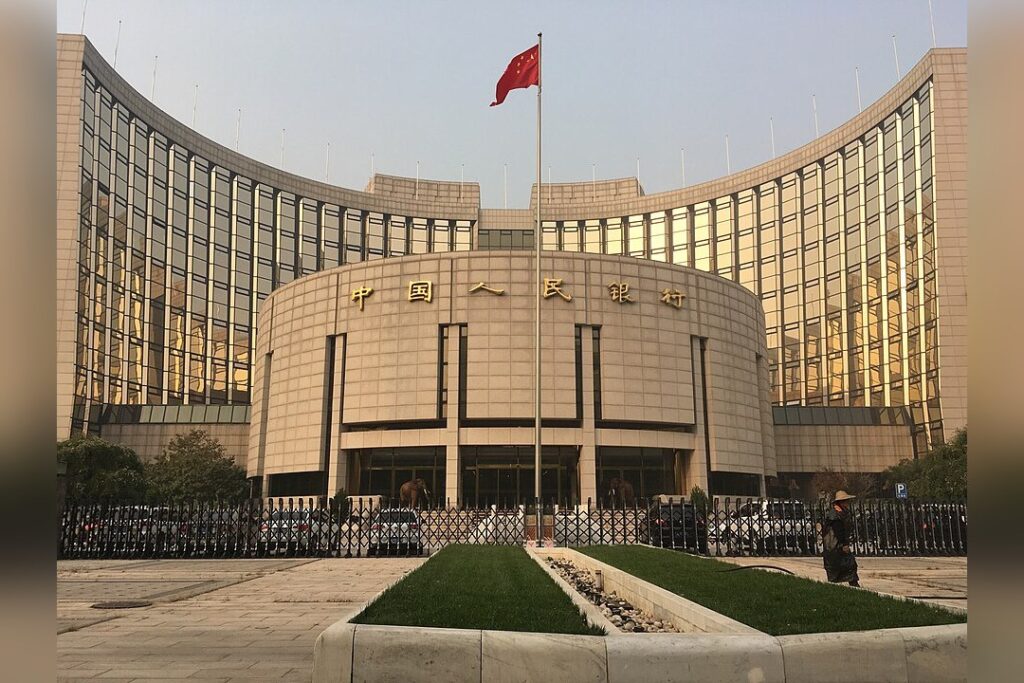
BEIJING, March 5 — China’s state-owned investment vehicle Central Huijin Investment is set to channel 390 billion yuan (about $54 billion) into the country’s largest commercial banks and insurers, a capital injection announced by Premier Li Qiang during the opening of the National People’s Congress. The move, disclosed on March 5, 2025, marks one of the most significant state-led financial stabilisation efforts since 1998, when Beijing provided 270 billion yuan (about $32.5 billion) to recapitalise state banks.
The property sector’s troubles have left lenders exposed, and the state is stepping in before losses metastasise. Central Huijin holds controlling stakes in Industrial and Commercial Bank of China (ICBC), China Construction Bank, Agricultural Bank of China, and Bank of China.
The 390 billion yuan (about $54 billion) will flow through this vehicle, reinforcing a financial architecture that Beijing has relied upon for decades. The capital injection aims to help banks absorb potential losses from bad loans, particularly in the troubled property sector, and to support lending to key industries. The government has concluded that private-sector confidence will not recover without explicit state backing of the banking system’s foundations.
Economic Context and Targets
The announcement formed part of Li’s broader government work report, which set a 2025 economic growth target of around 5% and outlined plans for increased fiscal spending and monetary easing. The report also pledged to raise the fiscal deficit ratio to about 4% of GDP in 2025, up from 3% in 2024, and to issue special treasury bonds to fund infrastructure and other projects. The economy grew at its weakest pace in decades in 2024.
Deflationary pressures and weak consumer confidence have persisted, compounded by a property market downturn, high local government debt, and sluggish global demand. Notably, the legislative session itself — running from March 5 to March 11, 2025 — served as the formal venue for these commitments, with final approval by the National People’s Congress expected before the session’s close.
Market Reception and Structural Questions
Market participants greeted the announcement with cautious optimism, viewing the move as a positive step while noting that more structural reforms are needed to address underlying economic imbalances. What distinguishes this intervention is its scale and its timing. The 1998 recapitalisation addressed a banking system on the brink; the 2025 measure is framed as proactive stabilisation.
Whether that distinction holds depends on whether the property sector’s contagion has already advanced further than official accounts suggest. What follows now is implementation.
The plan’s passage through the National People’s Congress is anticipated but not yet complete. Observers will watch whether the 5% growth target proves achievable, and whether the special treasury bonds translate into actual infrastructure activity rather than balance-sheet accounting. Any signs that the 390 billion yuan (about $54 billion) masks deeper systemic distress will draw scrutiny.




