
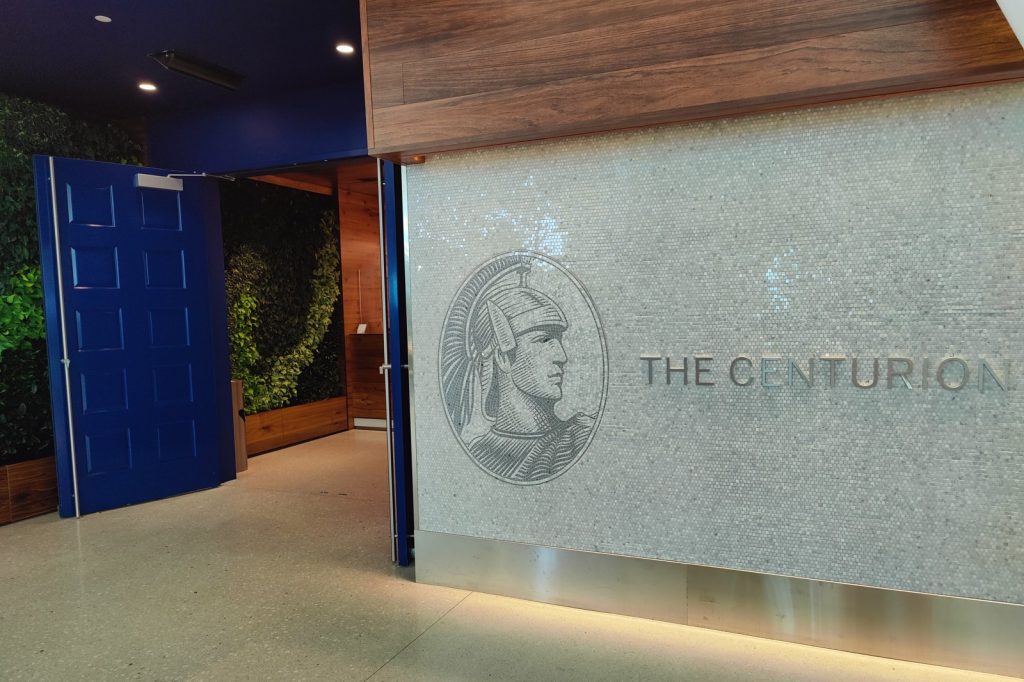
The fine print on premium credit cards is getting a new address. It no longer lives only at the airport. American Express and Chase have opened urban lounges in Manhattan that do not require a boarding pass.
The rules of access remain the same — a Platinum or Centurion card gets you into the Amex space in the Flatiron district. A Sapphire Reserve card opens the door at Chase’s Hudson Yards location.
The difference is location. Cardholders can walk in off the street. This is a policy shift, not a design trend.
Both companies have spent years building airport lounges. Those spaces served a captive audience — travelers waiting for a flight.
The new urban lounges serve a different purpose. They are meant to be used daily. A person who stops in for coffee on a Tuesday morning is not just using a perk.
That person is being locked into an ecosystem. The math is simple. A cardholder who uses a lounge regularly is less likely to switch to a competitor.
American Express and Chase are betting that physical space builds loyalty faster than points or cash back. The lounges are not about convenience.
They are about retention. American Express has confirmed plans for additional non-airport locations in San Francisco and Tokyo. Chase has signaled expansion but has not named specific cities.
The competition is not about square footage or free drinks. It is about who controls the cardholder’s daily habits.
The airport lounge arms race has simply migrated to the sidewalk. That is the technical reality. The policy question is what happens when these spaces become a standard expectation.
If one company opens urban lounges in every major city, the other must follow. The cost of entry rises. The barrier to competition gets higher.
There is a regulatory angle here, though it is quiet for now. Urban lounges are not airports.
They are retail spaces. They are subject to local zoning, health codes, and liquor licenses. No federal agency oversees them the way the TSA oversees airport lounges.
That means the rules of access are entirely private. American Express and Chase decide who gets in.
No public authority has a say. That is a different model from airport lounges, which operate under lease agreements with airport authorities. Those agreements often include public access requirements or nondiscrimination clauses.
Urban lounges have none of that. They are private clubs in all but name. The financial logic is clear.
A cardholder who uses a lounge regularly is less likely to switch. That is the policy.
The execution is the lounge itself. The consequence is a tighter grip on the premium card market. American Express opened its first Centurion Lounge outside an airport in New York City.
It is a large space in the Flatiron district. It has a full restaurant, a bar, and a wellness room.
Chase followed with a location in Manhattan’s Hudson Yards. That space has a coffee bar and a speakeasy-style cocktail lounge. Neither requires a flight.
The wry observation is that the airport lounge arms race has simply migrated to the sidewalk. The stakes are the same. The rules are private.
The customers are locked in.




