
The Georgia Forestry Commission has one realistic strategy left for the emerald ash borer, and it is not containment. It is early detection. The beetle is already in the state.
The commission confirmed its arrival June 29. The technical playbook now is tracking how fast the insect spreads, not stopping it.
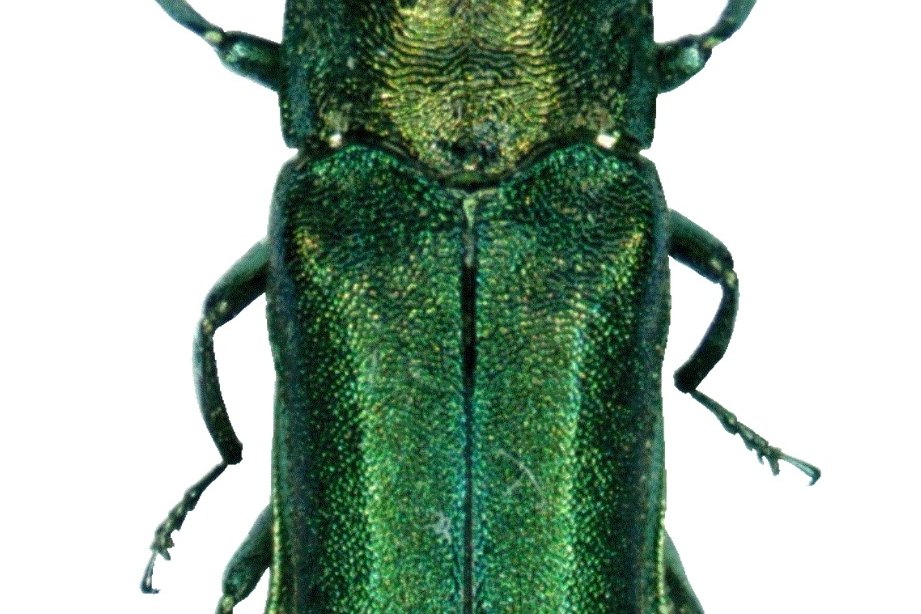
The borer has killed hundreds of millions of ash trees across North America. Georgia’s ash trees are next. The insect is small — about the size of a penny — and metallic green.
That makes it distinctive. But by the time anyone spots the beetle or the damage, the tree is usually already dying.
Larvae tunnel under the bark. They cut off water and nutrients. Visible symptoms like thinning crowns, D-shaped exit holes, and bark splits mean the infestation is advanced.
Early detection is the only window left, and it is narrow. The commission’s policy approach rests on public cooperation. They are asking residents to report any signs of infestation.
They are running awareness campaigns to teach landowners and arborists what to look for. They are using visual surveys and trap monitoring.
None of this will stop the borer. The hope is that it slows the spread enough to save some trees. The primary vector for new infestations is firewood.
The beetle hitches rides in firewood and nursery stock. It has been moving south and east for years.
Georgia’s response hinges on one rule: do not transport ash wood long distances. That is the single most effective policy lever the commission has. It is also the hardest to enforce.
People move firewood for camping, for home heating, for convenience. The commission can urge, but it cannot police every truckload of logs. The borer’s arrival was not unexpected.
The state has known it was coming. The question now is how fast it will be found and whether that speed matters.
The commission’s message is straightforward. Look for the signs. Report them.
Do not move ash wood. That is the policy.
That is the law of the situation. Georgia’s ash trees face the same pressure that reshaped forests from the Midwest to the Northeast. Those regions lost millions of trees.
The borer is efficient. It is devastating. The commission is not promising to win.
It is promising to track the loss and maybe, if early detection works, save a few trees on the edges of the infestation. There is no talk of eradication.
There is no talk of stopping the beetle. The policy is damage control. The commission is treating this like a slow-moving disaster where the only variable is how many trees die before the borer runs out of food.
That is bleak. It is also honest.
The public awareness campaigns are the main tool. They are not flashy. They are not expensive.
They rely on people paying attention to their own backyards. Arborists and landowners are the front line. The commission provides the information.
The public provides the eyes. That is the partnership.
That is the plan. The beetle is here. The policy is not about victory.
It is about early detection and public compliance. The commission is playing the only hand it has left.




