
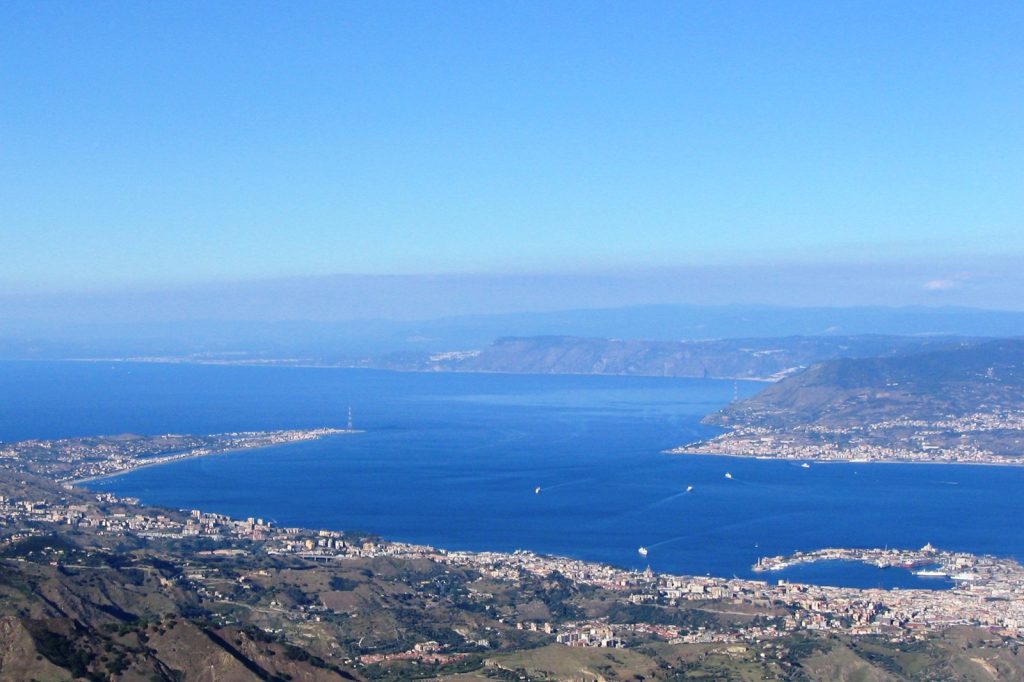
The Italian government has formally authorized the construction of a suspension bridge across the Strait of Messina, a project that has been studied, debated, and postponed for decades. The planned structure would become the longest suspension bridge in the world, with a target completion date of 2032 or 2033.
The authorization represents a significant milestone for a proposal that has been discussed since the mid-20th century. The idea of physically connecting Sicily, the largest island in the Mediterranean, to mainland Italy has been examined by multiple administrations, subjected to feasibility studies, and repeatedly shelved over the years. According to the government, the decision is driven by a commitment to infrastructure development and economic growth.
Sicily has long been characterized by both significant cultural heritage and persistent economic challenges. Proponents argue that a fixed link would fundamentally alter transportation dynamics for freight logistics and tourism, potentially reshaping the region’s economic landscape.
The project will be executed under Italy’s constitutional framework, established in 1948, which defines the nation as a democratic republic with a president serving as head of state. The government’s executive authority, operating within this system of separated legislative, executive, and judicial powers, is now moving forward with the initiative. Construction is expected to be a prolonged endeavor requiring detailed planning, exacting engineering standards, and coordination among multiple parties.
The Strait of Messina presents considerable natural obstacles, including powerful currents, seismic risks, and significant water depths. Contractors will need to address all of these environmental factors during the building process.
The completion timeline remains approximately a decade away, leaving room for potential complications. Environmental organizations are expected to raise concerns, local populations will seek to benefit from projected economic advantages, and cost increases are widely anticipated for an infrastructure project of this magnitude. The government and contractors have acknowledged the need to collaborate to address these challenges.
For residents of Sicily, the long period of anticipation continues. For the Italian mainland, the connection represents an opportunity to strengthen national integration.
The bridge carries symbolic weight beyond its engineering function, signaling that the government views Sicily as a central component of the country’s future rather than a remote territory. Public interest in the project is growing, linked to hopes that construction will finally proceed after years of false starts. The timeline anchors these expectations, with a target that is distant enough to seem theoretical but near enough to require concrete planning.
The government has emphasized that the construction process will be methodical and carefully managed, acknowledging that the Strait of Messina demands rigorous attention. No shortcuts are anticipated.




