
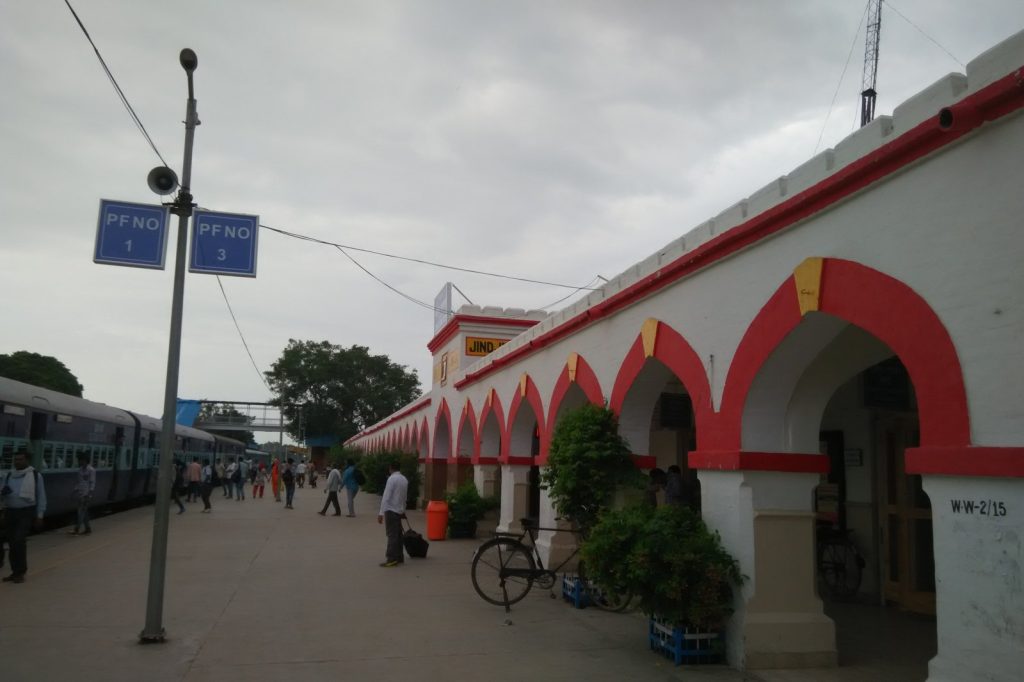
JIND, Haryana, July 17 — The idea of a train that emits nothing but water vapour sounds like science fiction, but India is about to make it a reality on a busy regional rail corridor. The country’s first hydrogen-powered train is set to run on the 89-kilometre Jind–Sonipat section of the Northern Railway in Haryana, a route chosen specifically to prove that the technology can handle the demands of a typical suburban commuter service. The train itself is a 10-coach trainset with a capacity of approximately 2,600 passengers.
That is not a small demonstration vehicle; it is a full-sized, high-capacity train designed to move a lot of people. The Jind–Sonipat line is a busy regional corridor connecting the two Haryanvi cities, and the choice of route is no accident.
Researchers and engineers wanted to test hydrogen propulsion under real-world conditions, not just on a quiet test track. How it works is intriguingly simple at the chemical level. Instead of burning diesel or drawing power from overhead electric wires, the train generates electricity onboard using hydrogen fuel cells.
The only byproduct is water vapour, making it a zero-emission option for rail networks that currently rely on diesel locomotives. The science behind it has been proven in other parts of the world, but scaling it to a 2,600-passenger train on a live commuter route is a significant step.
The train has an approved maximum operating speed of 75 kmph, with a design speed of 110 kmph. That means it will not break any speed records, but that is not the point. The goal is to demonstrate reliability, range, and the ability to handle frequent stops and starts on a 89-kilometre route.
What researchers found, when comparing this project to others globally, is that the Jind–Sonipat route is comparable in length to Germany’s 100-kilometre Buxtehude–Bremervörde line, which already operates hydrogen trains. India is not inventing the technology from scratch, but it is adapting it to a very different kind of rail network — one with higher passenger densities and different operational patterns. The capacity of approximately 2,600 passengers and the specific route were chosen to demonstrate the viability of hydrogen propulsion on a typical Indian suburban rail service.
That word “typical” is key. If the train can handle the Jind–Sonipat corridor, it can likely handle many similar routes across the country.
The train is being developed for the Northern Railway zone, and the 89-kilometre section between Jind and Sonipat will serve as the proving ground. Both cities are in Haryana, a state that has been actively exploring cleaner alternatives for its transport networks. For now, the project represents a careful, methodical approach to a new technology.
Instead of rushing to electrify every remote line with expensive overhead wires — a process that can take years and face significant infrastructure hurdles — hydrogen trains offer a potential alternative for routes where full electrification is not practical or cost-effective. The fuel cells can be refuelled at dedicated stations, much like diesel locomotives are today, but without the exhaust fumes.
What to watch next is the actual rollout and operational testing. If the Jind–Sonipat hydrogen train performs as expected, it could open the door to similar services on other non-electrified regional corridors across India. That would be a quiet but significant shift in how the country thinks about rail propulsion — not as a binary choice between diesel and electric wires, but as a spectrum of options that includes hydrogen as a clean, workable middle ground.




