
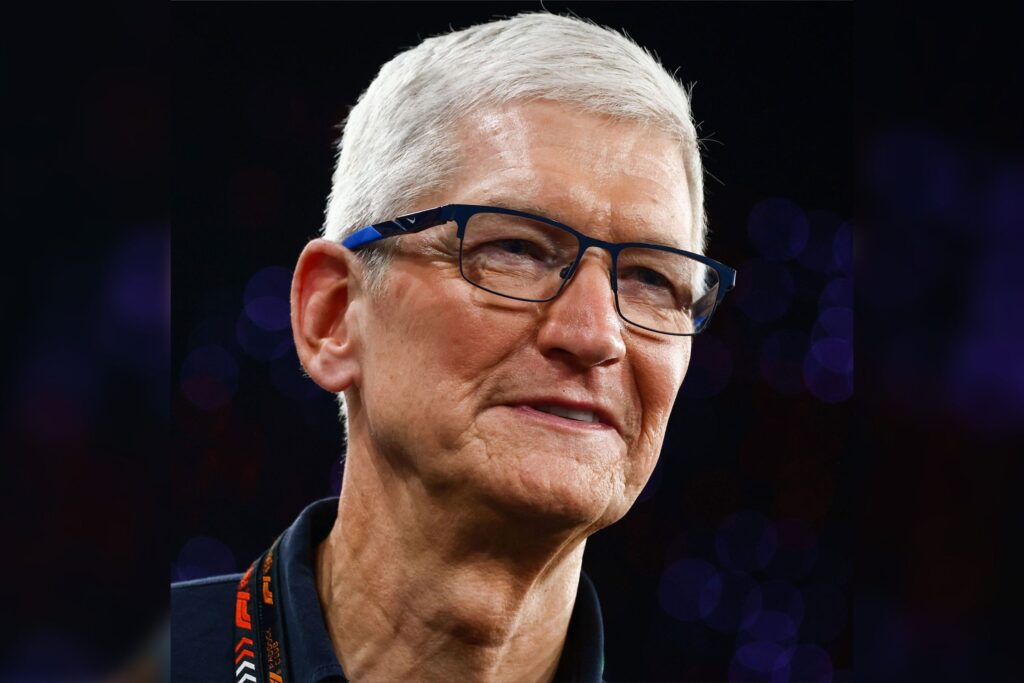
CUPERTINO, July 9 — Tim Cook has led Apple Inc. as chief executive officer since August 2011, a tenure that has transformed the company from a consumer electronics giant into a trillion-dollar industrial and environmental operation. The record shows that Cook inherited Apple from co-founder Steve Jobs at a moment of immense transition. The company’s market capitalization stood at roughly $350 billion in 2011.
By 2023, that figure had grown to over $2.5 trillion, reflecting a period of sustained product expansion and financial discipline under Cook’s management. But the story of Cook’s leadership extends beyond the balance sheet.
According to the company’s public filings and announcements, Apple under Cook set an ambitious environmental target in April 2021: making all products carbon neutral by 2030. That goal includes a specific intermediate milestone, announced for 2025, of using 100% recycled cobalt in Apple batteries. ## The Recycling Infrastructure To meet those targets, Cook oversaw the development of Daisy, Apple’s recycling robot. The machine can disassemble 200 iPhones per hour, recovering materials for reuse.
The company reported in 2022 that 20% of all materials shipped in its products came from recycled sources, up from 13% the prior year. In that same year, Apple recycled 12.2 million devices through its program.
The financial mechanism backing these efforts is notable. Apple has issued $4.7 billion in green bonds since 2016, funds designated specifically for recycling and renewable energy projects. The bonds represent one of the largest corporate green-bond programs in the technology sector. ## Energy and Operations Cook also led Apple’s transition to 100% renewable energy for its global operations, a milestone the company achieved in 2018.
That shift covers Apple’s offices, data centers, and retail stores worldwide, though the carbon neutrality goal for 2030 extends further to include the entire supply chain and product lifecycle. Sources familiar with the company’s environmental strategy have noted that the 2030 target is among the most aggressive in the technology industry, covering not just direct operations but also the emissions generated by manufacturing partners and customer use of devices. ## Background and Public Role Cook holds an MBA from Duke University and a B.S. in industrial engineering from Auburn University.
His background in operations and supply chain management has shaped Apple’s approach to both manufacturing efficiency and environmental compliance. He has been a vocal advocate for climate action on the public stage.
In 2021, Cook testified before the U.S. House Energy and Commerce Committee, making the case for corporate environmental responsibility and Apple’s specific commitments. ## What to Watch As 2026 progresses, the 2025 recycled-cobalt deadline has passed, and the 2030 carbon neutrality target is now four years away. Investors and environmental groups will be watching Apple’s next sustainability report for data on whether the company has met its intermediate goals. The green bond program continues, and Daisy’s disassembly capacity may expand as Apple scales its recycling operations.
Cook’s tenure, now in its second decade, presents a case study in how a major technology company balances market growth with environmental commitments. The numbers—from market capitalization to recycled devices to green bond issuance—provide the factual record against which that balance will be measured.




