
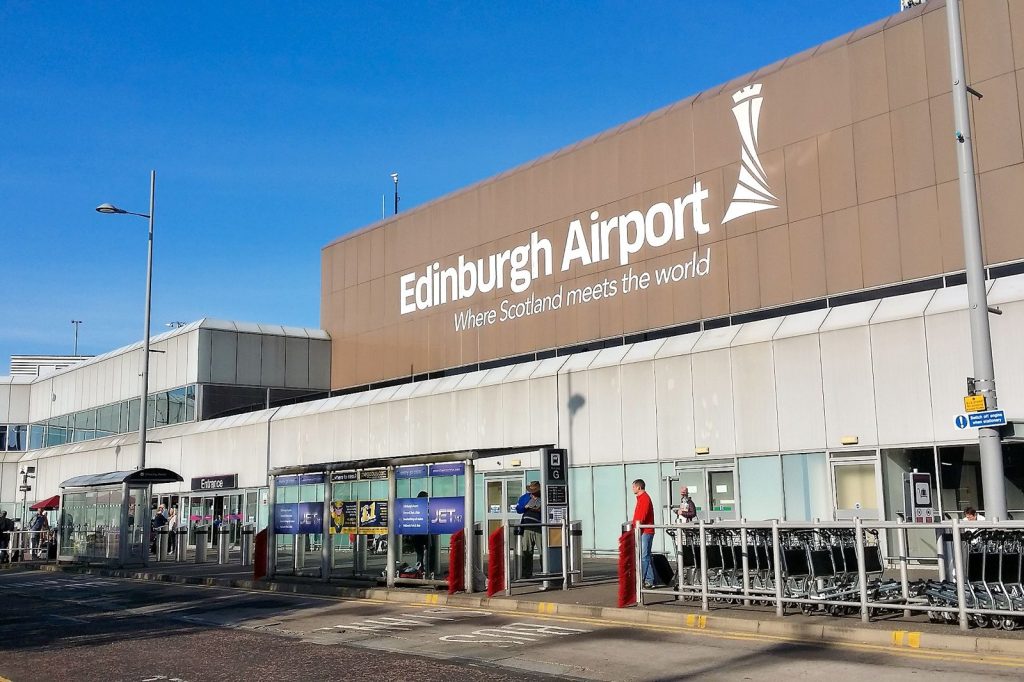
Edinburgh, June 21 — Edinburgh Airport has resumed normal operations after a security alert Friday evening forced a full evacuation of the terminal and triggered the deployment of specialist emergency teams. The incident began when Police Scotland received a report of a potentially suspicious item at approximately 6:50 p.m. local time on June 20. Explosive Ordnance Disposal (EOD) units were dispatched to the scene to assess the item and determine whether it posed a genuine threat.
Airport authorities implemented a comprehensive evacuation plan across the terminal complex as a precautionary measure, prioritizing the safety of passengers and staff over operational continuity. A security cordon was established around the airport perimeter, and surrounding roads were closed to traffic to facilitate the emergency response and protect everyone in the vicinity.
Security Operation and Ongoing Investigation
Police Scotland confirmed that enquiries into the incident continued throughout the evening, with officers working in close coordination with airport security personnel and EOD teams to manage the scene and collect evidence. During the investigation, parts of the airport remained partially evacuated while EOD specialists conducted their detailed assessment of the suspicious item.
The partial evacuation meant that some areas were accessible only to emergency personnel. Airport authorities coordinated closely with police and emergency services to manage the evolving situation and maintain clear communication with the public. Passengers were advised to check directly with their airlines for the latest flight information, as schedules were disrupted by the security operation and the temporary suspension of normal airport activities.
Strategic Importance and Historical Background
Edinburgh Airport serves as a critical transport hub for Scotland and the wider United Kingdom. It is the busiest airport in Scotland and among the busiest in the United Kingdom, handling tens of millions of passengers each year with service to a wide range of international destinations.
Because of its role, any security incident that forces an evacuation or closure can ripple across travel schedules for a large number of passengers and airlines. The airport’s origins trace back more than a century. In 1916, Turnhouse Aerodrome opened as the northernmost air defense installation in Britain during the First World War, operated by the Royal Flying Corps.
After the war, the site became RAF Turnhouse, controlled by the Air Ministry. Through the 1920s and 1930s, it housed a reserve squadron flying light bombers from a grass strip.
During the Second World War, a paved runway was laid to accommodate modern fighters, and squadrons were stationed there during the Battle of Britain. The shift to civilian use came after the war. The airport remained under military control until 1947, when it was officially opened for commercial traffic. The first commercial flight was a domestic service from London to Shetland, making intermediate stops aboard an 18-seat Douglas C47.
For decades afterward, the airport operated from a terminal building that soon proved far too small for the volume of traffic it was handling. In 1971, the British Airports Authority took over ownership.
The terminal was badly overcrowded, running at many times its designed capacity. After public consultation, a major redevelopment began that included diverting a local river to make space. A new terminal building was designed by architect Sir Robert Matthew, and Queen Elizabeth II opened it in 1977.
That redevelopment transformed the airport from a cramped facility into a modern gateway. With operations now resumed, authorities have not released further details about the nature of the suspicious item, and the investigation remains ongoing.




