
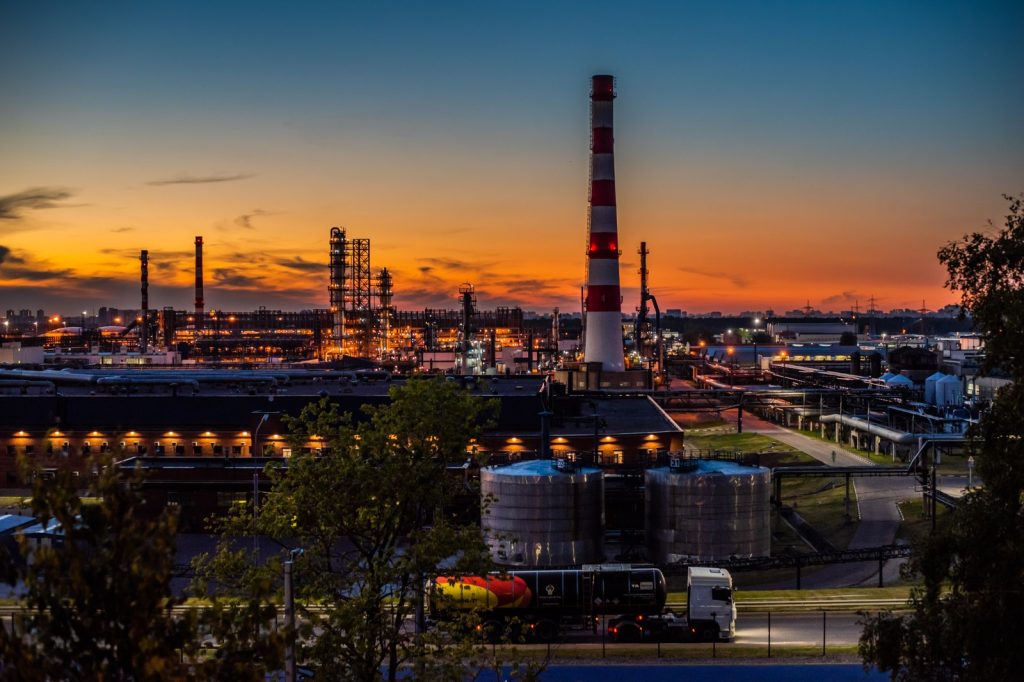
KYIV, September 22 — Ukraine’s long-range strikes on Russian oil refineries have knocked out more than 45% of Russia’s projected refining capacity, according to Ukrainian officials cited by Ukrainska Pravda. The figure is cumulative, covering strikes through the reporting period rather than a single attack, and it lands directly on the revenue stream that funds Russia’s federal budget. The mechanics here matter more than the headline number.
Refined product exports — diesel in particular — generate hard currency earnings that crude sales alone do not. Crude is the lower-margin business; turning it into diesel is where the money is.
Strip out more than 45% of projected refining capacity and Moscow is left with two unappealing paths: export more crude at lower margins, or import refined products at market prices. Either way, the budget surplus that Moscow has relied on to sustain military spending narrows.
Diesel prices and the market floor
The market impact is already visible in diesel. Regional scarcity and price spikes have become a live issue for trucking and freight operators, according to industry coverage of a “triple crisis” in diesel prices, regional scarcity, and autonomous trucking. And the catch is that this pressure does not ease just because crude benchmarks hold steady.
Lost Russian refining capacity keeps a floor under refined product prices even when crude looks calm. There is a second supply risk sitting alongside it.
Shipping trackers report improved oil flows from the south side of the Strait of Hormuz, under Omani control, but analysts at Mirae Asset warn that Iran’s Hormuz leverage, while weakened, leaves oil supply risks in place. Two separate chokepoints, one price signal.
No deal, and competing accounts
Kyiv says no deal has yet been reached to halt strikes on refineries. US President Donald Trump and Ukraine have offered differing accounts of a supposed agreement with Russia to stop attacks on energy infrastructure. Trump said Russia has “unfortunately lost control” of its diesel refineries, a statement carried by the Kyiv Post.
On closer reading, the diplomatic track is stalled and neither side has confirmed a halt. The refinery campaign is part of a broader pattern of attacks on energy choke points — refineries, pipelines, and export terminals — that analysts describe as a deliberate effort to dismantle the infrastructure that moves Russian oil to global markets.
Russia’s response has included ballistic missile attacks that have caused record civilian deaths in Ukrainian cities, according to a Russian expert cited in coverage warning of an impending social crisis as Ukraine’s death toll rises. The next data points to watch are Russian refinery runs, diesel export volumes, and whether Moscow’s budget revenue from oil products continues to fall in the months ahead. Those three numbers will tell you whether the 45% figure is a temporary shock or a structural bleed.




