
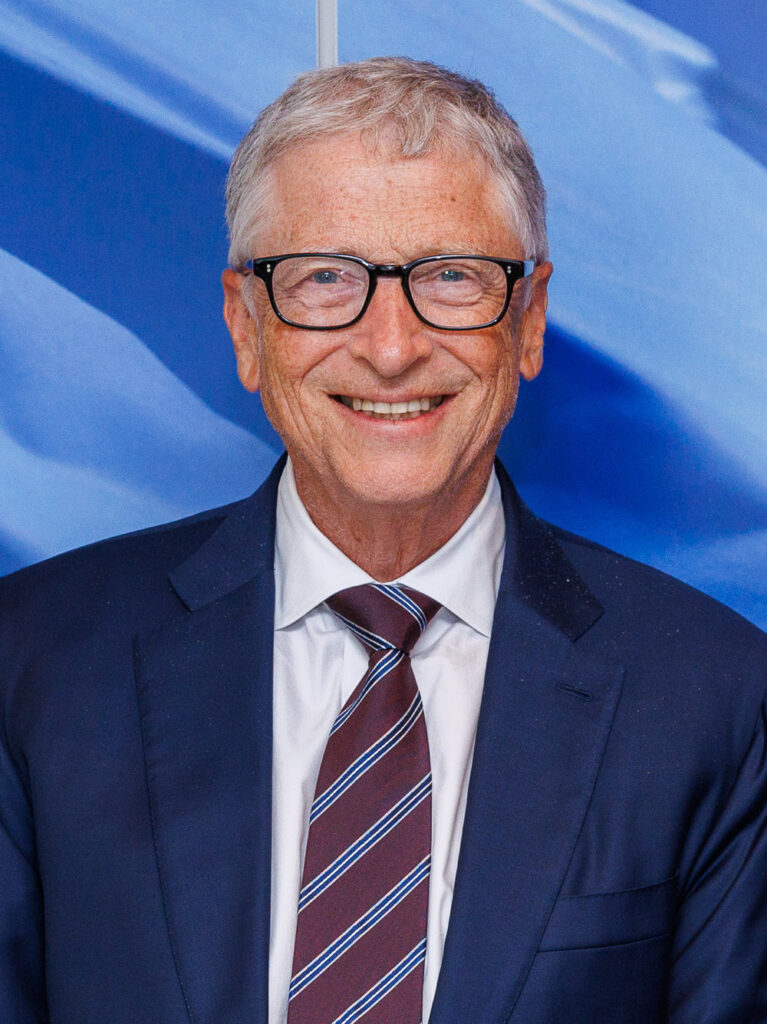
For decades Bill Gates was one of the most admired figures in American life — the college dropout who built Microsoft, became the world’s richest man, and then gave much of his fortune away through the Gates Foundation. In 2026, that carefully built reputation is under the heaviest strain it has ever faced. A fresh wave of scrutiny over his ties to Jeffrey Epstein has pulled a string of older and newer controversies back into public view, and the man who spent years as the acceptable face of billionaire philanthropy is now fielding uncomfortable questions on several fronts at once.
The Epstein files reopen an old wound
The renewed storm began early in 2026, when the U.S. Department of Justice released files connected to the late sex offender Jeffrey Epstein. The documents named a number of prominent people, Gates among them, and detailed years of communication between the two men. Gates has never been accused of a crime in connection with Epstein, but the disclosures revived hard questions about why he kept meeting a convicted sex offender long after Epstein’s 2008 conviction.
According to a recording of a Gates Foundation town hall reviewed by The Wall Street Journal, Gates told staff it was “a huge mistake to spend time with Epstein.” In the same session he acknowledged two extramarital affairs that Epstein had discovered, while insisting the affairs “didn’t involve Epstein’s victims.” Gates also defended himself against the broader implication, saying, “I did nothing illicit. I saw nothing illicit.”
The known timeline is not in dispute: Gates has said the meetings began in 2011 — years after Epstein’s conviction — that he flew on Epstein’s private jet, met him in Washington, New York, Germany and France, and last saw him in 2014. Gates says he never visited Epstein’s private island. Amid the renewed attention, Gates abruptly canceled a keynote at India’s AI Impact Summit in February 2026, and he later faced questions from a U.S. House Oversight panel examining Epstein’s network of contacts.
The controversies that came before
The Epstein saga landed on a reputation that already carried scars. In the late 1990s and early 2000s, Microsoft — under Gates’ leadership — was the defendant in one of the most consequential antitrust cases in modern history. A U.S. federal court found the company had illegally maintained a monopoly in personal-computer operating systems, and Gates’ combative videotaped deposition became a defining image of corporate arrogance for a generation of critics.
In 2021 came a more personal rupture: Gates and Melinda French Gates announced the end of their 27-year marriage. Reporting that followed raised questions about Gates’ conduct at Microsoft and the foundation, and French Gates has since spoken about her own unease over his relationship with Epstein — something Gates himself acknowledged, saying she “was always kind of skeptical about the Epstein thing.”
Criticism of the foundation’s work
Even the philanthropy that rehabilitated his image draws sustained criticism. The Gates Foundation’s agricultural programs in Africa, channeled largely through the AGRA initiative, have been faulted by farmer and faith-based groups. In a 2021 letter, the Southern African Faith Communities’ Environment Institute argued the foundation’s interventions had “harmed grassroots and small-scale farmers, displaced communities” and degraded farmland. Independent evaluations have questioned whether AGRA met its own targets for lifting yields and incomes.
The debate turned sharper in 2026, when reporting indicated that public-relations firms linked to the foundation and AGRA had edited Wikipedia entries to remove critical evaluations and references to research showing the program had fallen short of its goals. Critics also point to Gates’ large personal holdings of American farmland — he is among the biggest private farmland owners in the United States — and to long-running disputes over the foundation’s stance on vaccine patents and its outsized influence on global health priorities.
Separating criticism from conspiracy
Not everything said about Gates deserves equal weight. Alongside legitimate, documented criticism sits a thick layer of internet conspiracy theory — claims that he engineered the COVID-19 pandemic, or that his foundation used vaccines to implant tracking microchips. Those specific claims have been investigated and repeatedly debunked; there is no evidence for them, and they should not be confused with the real, sourced controversies above. Conflating the two tends to let the serious questions off the hook rather than sharpen them.
A complicated ledger
None of this erases the scale of Gates’ giving. The Gates Foundation has committed tens of billions of dollars to disease eradication, vaccination and poverty programs, work that by many measures has saved millions of lives. But 2026 has made clear that the public is no longer willing to weigh that record in isolation. For a figure who spent years cultivating trust as a rational, benevolent problem-solver, the harder reckoning is not any single accusation — it is the accumulation, and the sense that the full story was managed rather than told.




