
WASHINGTON, October 4 — Senator Tom Cotton has called for a Pentagon investigation after sensitive F-35 components treated with classified radar-absorbing coatings were mistakenly diverted to Hong Kong and fell into Chinese possession. The incident, disclosed in a letter to Defense Secretary Lloyd Austin, involves a cockpit canopy and weapons-bay door shipped from Australia for repair in late May. These parts, critical to the jet’s low-observable signature, were rerouted via a UPS commercial flight and subsequently went missing in Hong Kong.
The F-35 Joint Program Office and the broader Department of Defense are investigating the shipment failure and working with industry partners to retrieve the missing stealth components. Congressional committees are holding closed-door briefings to assess the full extent of the intelligence compromise.
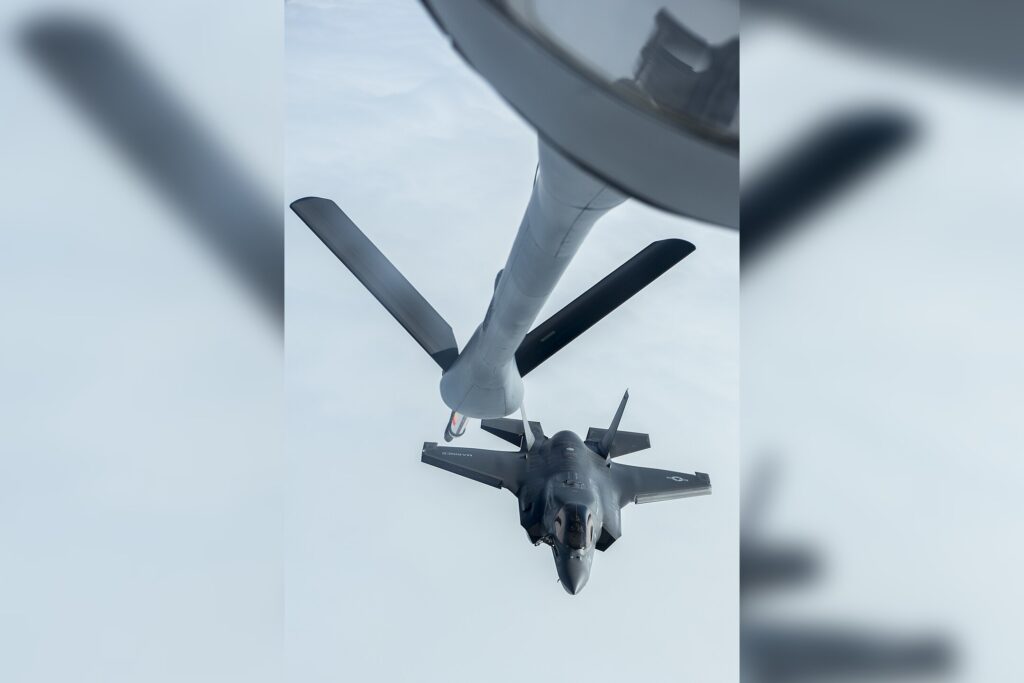
The F-35 Lightning II, manufactured by Lockheed Martin with key partners Northrop Grumman and BAE Systems, relies on specialized stealth coatings to minimize detection by enemy radar. These coatings, applied to components like the canopy and bay doors, are integral to the aircraft’s ability to penetrate defended airspace. Any compromise of this technology could enable adversaries to reverse-engineer low-observable features, undermining a core advantage of the stealth fighter.
The Joint Strike Fighter program, which produced the F-35, was designed to replace legacy aircraft such as the F-16 and F/A-18 across multiple services and allied nations. As of April 2026, the United States operates all three F-35 variants — the F-35A conventional takeoff model, the F-35B short takeoff and vertical landing version, and the F-35C carrier-based variant — alongside allies including Italy, Japan, Australia, and the United Kingdom.
Israel flies its own F-35I derivative, while numerous NATO members have placed orders for the aircraft. The program, though criticized for cost overruns and delays, remains central to US and allied airpower strategy, with plans to procure 2,456 jets through 2044. The F-35 has seen combat use by US forces in Iraq, Iran, and Venezuela since 2018, and by Israel and the UK in multiple theaters.
Senator Cotton, as chairman of the Senate Intelligence Committee, framed the mishandling of stealth components as a national security lapse requiring accountability. His letter to Secretary Austin underscores congressional concern over supply chain vulnerabilities in defense logistics, particularly when commercial carriers are involved in transporting classified material. The Pentagon’s investigation will examine how the parts were improperly rerouted and whether procedural failures allowed the diversion to occur.
Retrieval efforts are ongoing, though no public update has been issued on the status of the missing components. Watch for further developments in congressional oversight and potential changes to contractor-managed transport protocols for sensitive defense cargo.




