
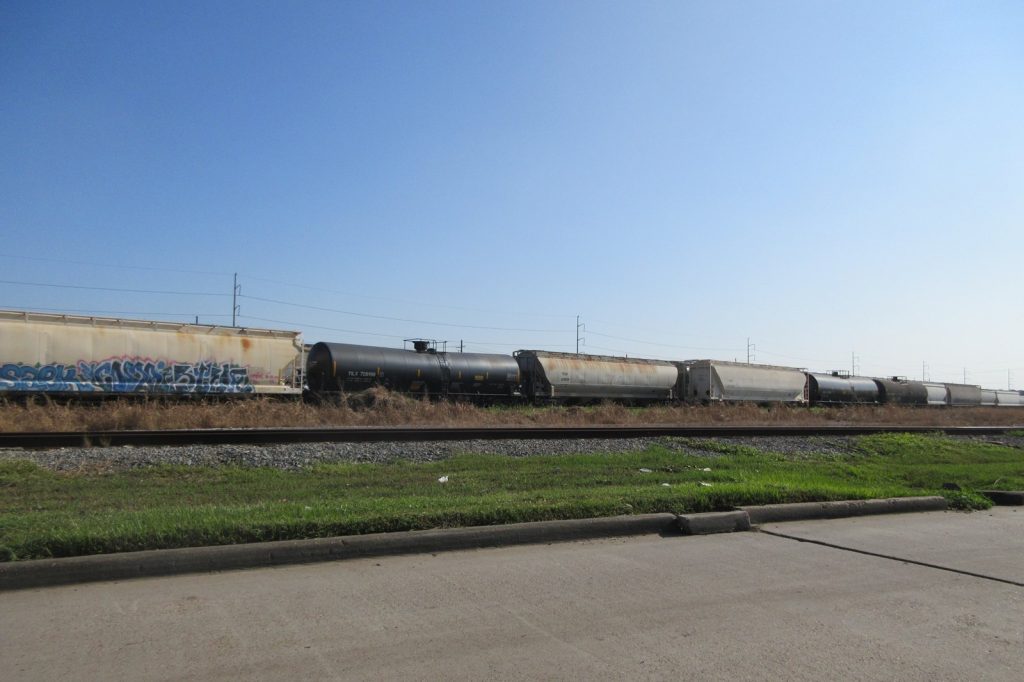
On a sweltering morning at a rail yard outside Chicago, a line of diesel locomotives idles in the heat, waiting to haul grain and automobiles across the plains. These engines, like the vast majority of America’s freight-moving fleet, embody a technology that is both the workhorse of the economy and a stubborn environmental challenge. Their story is one of total dependence, deep efficiency, and mounting regulatory pressure.
A Nation Built on Diesel
Diesel engines power roughly 90% of all global freight transport, from heavy trucks that stock supermarket shelves to the ships that carry containers across oceans. In the United States, the reliance is even more pronounced in certain sectors.
According to the American Trucking Associations, diesel trucks moved about 72.5% of all freight by weight in 2022. Rail, too, leans heavily on the technology: diesel locomotives handle about 40% of U.S. rail freight by ton-miles. The numbers paint a picture of near-total dependence that extends far beyond transportation.
In American agriculture, diesel powers about 80% of farm tractors. On construction sites, 90% of heavy equipment runs on it.
The global diesel engine market was valued at $220 billion in 2022, according to Grand View Research, and is projected to reach $280 billion by 2030 — growth that reflects the engine’s dominance not just in freight but across multiple industrial sectors. That growth is fueled by the engine’s unmatched combination of torque and efficiency, which have made it the default power source for moving goods and operating heavy machinery. The engine itself was developed in the late 1800s by an engineer seeking a more efficient alternative to steam power.
Early use was slow to spread, but by the middle of the 1900s the design had found steady footing in heavy industry and transport because it delivered strong torque and used fuel that was then cheap. Rail and shipping operators adopted it widely over following decades.
The shift from animal-drawn carts and simple wagons to engine-driven haulage reshaped trade and supply chains across continents, cementing diesel’s role as the backbone of modern commerce.
The Efficiency-Emissions Tradeoff
The economic case for diesel is powerful. Its fuel economy is about 30-40% better than that of gasoline engines — a margin that saves the U.S. trucking industry an estimated $40 billion annually in fuel costs. That efficiency is the reason trucking companies and railroads have stuck with diesel through decades of regulatory pressure.
The engine keeps costs down for virtually every good that reaches store shelves, from groceries to electronics. Its torque allows heavy loads to be moved over long distances with fewer refueling stops, a critical advantage in a logistics system built on just-in-time delivery.
But the environmental ledger is stark. According to the Environmental Protection Agency, diesel emissions contribute to about 38% of U.S. transportation-related nitrogen oxide pollution — a class of pollutants linked to respiratory illness, smog, and acid rain. The tension between the engine’s economic utility and its health toll is acute.
While diesel engines have become cleaner over time through improved fuel injection, exhaust after-treatment, and ultra-low-sulfur diesel, older models still in service continue to emit at higher rates. The public health burden falls disproportionately on communities near ports, rail yards, and truck corridors, where residents face elevated risks of asthma and other diseases.
Enduring Role, Persistent Challenge
Freight movement long relied on animals and simple carts before mechanical power arrived. The adoption of diesel engines transformed that landscape, enabling the scale of trade and supply chains that people depend on daily. Today, that engine still carries most goods — from the grain waiting on railcars outside Chicago to the produce in supermarket aisles across the country.
Its efficiency keeps supply chains affordable, yet its emissions remain a public health burden that regulators keep confronting. The 2022 market valuation of $220 billion, climbing to a projected $280 billion by 2030, shows that investment in diesel technology continues even as alternatives like battery-electric trucks and hydrogen fuel cells gain attention.
The shift will not happen quickly: the existing fleet of diesel locomotives, trucks, ships, and farm equipment represents decades of capital investment and infrastructure built around diesel fuel. For now, the idling locomotives at that Chicago rail yard are a snapshot of a system that delivers essential goods — and the environmental costs that come with them. The challenge for policymakers, industry, and communities is to square the engine’s unmatched utility with the imperative to clean the air.
{“@context”: “https://schema.org”, “@type”: “NewsArticle”, “headline”: “America’s Freight Giants Face Diesel Dilemma as Climate Pressure Mounts”, “description”: “WASHINGTON, July 13 — On a sweltering morning at a rail yard outside Chicago, a line of diesel locomotives idles in the heat, waiting to…”, “datePublished”: “2026-07-13T09:30:00+00:00”, “author”: {“@type”: “Person”, “name”: “James Roberto”}, “publisher”: {“@type”: “Organization”, “name”: “InfoPulse Today”, “url”: “https://newsfeed.infopulsetoday.com/”}}




