Home Environment Australia Bushfires Cause $2 Billion Economic Damage

Australia Bushfires Cause $2 Billion Economic Damage

1
0
Thick smoke from bushfires blankets a city skyline, with flames visible on a distant hillside.
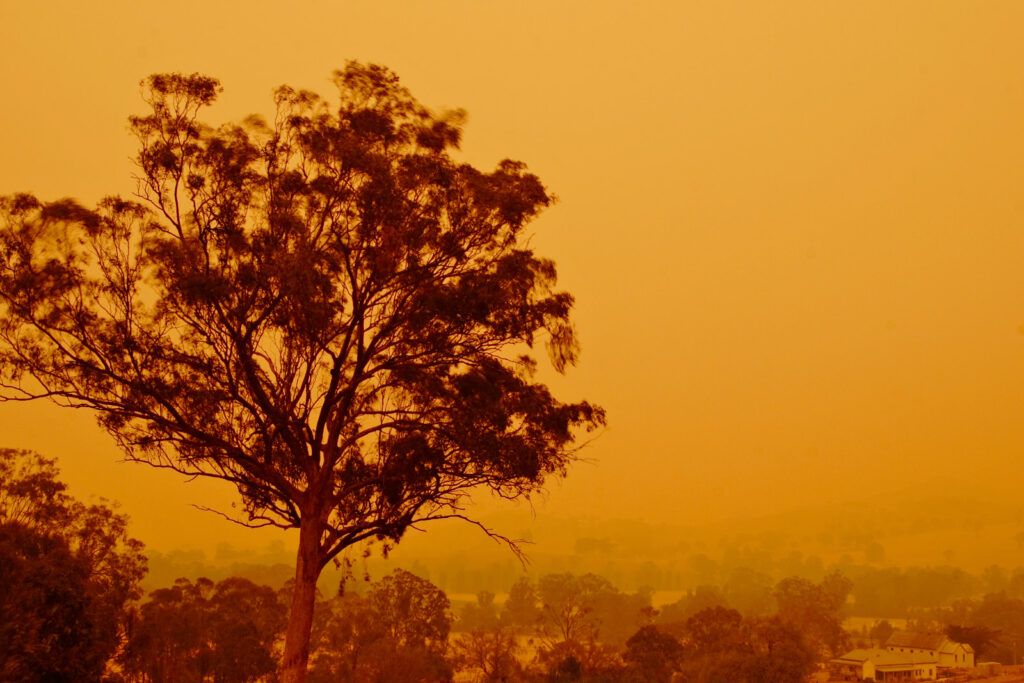
Bushfire destruction in Australian landscape.

Australia’s bushfires have inflicted more than $2 billion in economic damage as of early January 2020, with resorts, factories, and insurance firms among the hardest hit. The fires, which have been burning since November 2019 across millions of hectares in New South Wales and Victoria, have destroyed thousands of buildings and infrastructure, knocked out mobile signals and electricity, and blanketed major cities including Sydney, Canberra, and Melbourne in hazardous smoke. The economic toll continues to climb as the crisis enters its third month.

Economic cost mounts as fires rage

The Insurance Council of Australia reported that approximately 6,000 insurance claims had been lodged since November 2019. The total insured loss is expected to rise sharply as more properties are assessed. Economists estimate the broader economic cost has already reached about $2 billion, with the figure growing daily.

The smoke haze alone has reduced national economic productivity by around $500 million, according to analysts. The haze has disrupted air travel, closed businesses, and forced people indoors, cutting output across multiple sectors. The tourism industry has been particularly hard hit, with holidaymakers cancelling trips to fire-affected regions.

Tourism and hospitality take a direct hit

Property company Aspen Group, which owns tourist parks in fire-prone areas, said the convergence of the bushfire crisis with the holiday season has driven tourists and residents away from affected regions. The company expects a hit of at least A$500,000 to its income.

“Fire activity along the NSW south coast has been catastrophic with significant loss of life, housing and infrastructure,” an Aspen Group spokesperson said. “It is not known when trading conditions will return to normal.”

The statement reflects the uncertainty gripping the tourism sector. Resorts, hotels, and other accommodation providers in fire zones have reported widespread cancellations. Many are operating at a fraction of normal capacity, and some have closed entirely.

Dairy and agriculture face supply chain disruption

Australia’s largest dairy processor, Bega Cheese, said the fires have not severely damaged its own facilities but have harmed some of its suppliers. Paul van Heerwaarden, the company’s chief executive, said the company is working to keep milk flowing.

“We are working closely with our employees, dairy farm suppliers and freight providers to ensure milk can be delivered and processed,” van Heerwaarden said.

The fires have destroyed pasture, killed livestock, and damaged fencing and water infrastructure on many dairy farms. Some farmers have lost entire herds. The disruption threatens to reduce milk production and push up prices for consumers.

Berry farms and other crops suffer losses

Vitalharvest Freehold Trust, a real estate and agricultural firm, said the fires damaged its berry farms’ sheds, equipment, and vehicles. The total cost of the damage has not yet been assessed, the company said.

Berry farms in fire-affected regions have lost crops and infrastructure. The smoke haze has also reduced sunlight and affected fruit quality. Growers face a long recovery period, with some fields unlikely to produce a full crop for years.

Other agricultural sectors are also feeling the impact. Vineyards in South Australia and Victoria have been damaged by fire and smoke. Wine producers warn that smoke taint could ruin entire vintages. The full extent of agricultural losses will take months to calculate.

Insurance claims surge as recovery begins

The Insurance Council of Australia said the number of claims is expected to rise significantly as more people return to their properties and assess the damage. Many claims are for total property loss, meaning insurers face large payouts.

The fires have destroyed more than 2,000 homes, with thousands more damaged. Thousands of outbuildings, vehicles, and pieces of equipment have also been lost. The insurance industry is bracing for claims to exceed A$1 billion, making this one of the costliest natural disasters in Australian history.

The economic impact goes beyond direct damage. Lost tourism revenue, reduced agricultural output, and lower productivity from smoke haze will continue to weigh on the economy for months. The Reserve Bank of Australia has warned that the fires could slow economic growth and delay a recovery in consumer spending.

The bushfire crisis has already cost Australia more than $2 billion, and the bill is still rising. Businesses from tourist parks to dairy processors are counting their losses while hoping for rain. The fires have disrupted supply chains, destroyed assets, and driven away customers. For many companies, the question is not just how much they have lost, but whether they can survive until conditions return to normal.