
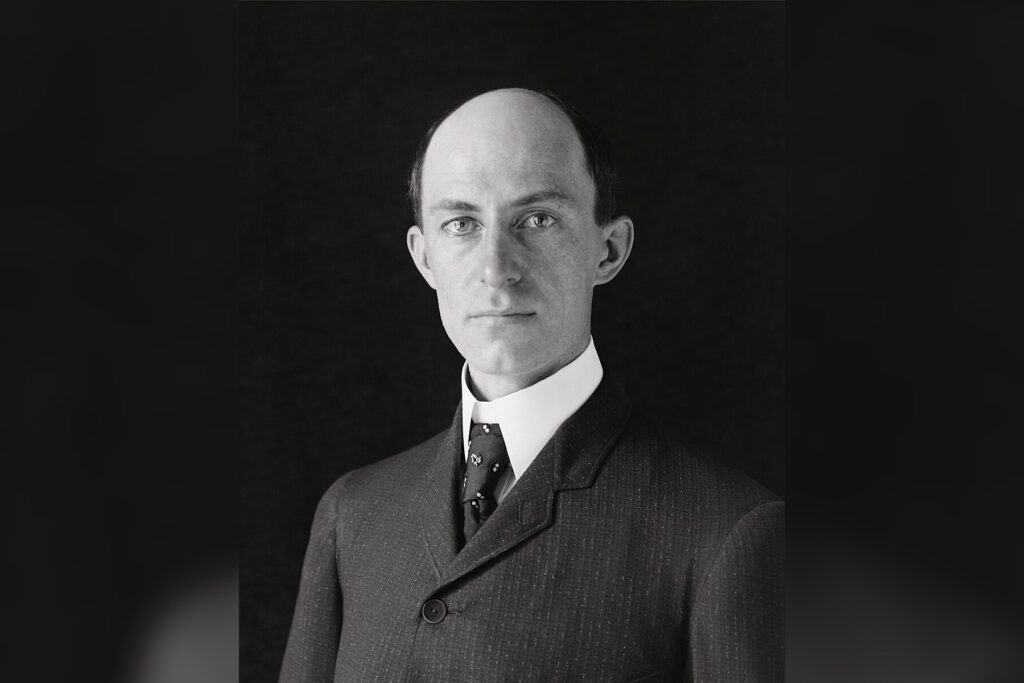
DAYTON, Ohio, July 8 — 120 feet in 12 seconds. That is the figure that matters. On December 17, 1903, at Kitty Hawk, North Carolina, the Wright brothers’ Flyer covered that distance in that time.
It was the first powered flight. Wilbur and Orville Wright designed the machine.
The bottom line: every aircraft in the sky today traces back to that single moment. By the numbers, the industry has come a long way. The global airline industry carried 4.5 billion passengers in 2019, pre-COVID.
That is a lot of tickets. Investors will note that the business of moving people through the air has grown from a 120-foot hop to a multi-trillion-dollar enterprise.
The Wright Flyer was just the start. By 1914, the first scheduled airline service began in Florida. The St. Petersburg-Tampa Airboat Line connected two cities across Tampa Bay.
It was a short hop, but it was scheduled. That was the first airline. Then came the wars.
World War I ran from 1914 to 1918. Aviation advanced fast.
World War II, from 1939 to 1945, pushed it even harder. The Messerschmitt Me 262 became the first operational jet fighter in 1944. That was a game-changer.
The jet age began in earnest on August 27, 1939, with the Heinkel He 178, the first turbojet aircraft. But the commercial side took longer.
The de Havilland Comet, the first commercial jet airliner, had its first flight on July 27, 1949. It entered service on May 2, 1952. The Boeing 707, first flight December 20, 1957, really revolutionized air travel.
That was the plane that made long-distance flying routine. Supersonic transport arrived with the Tupolev Tu-144, first flight December 31, 1968, and the Concorde, first flight March 2, 1969. The Concorde was retired on November 26, 2003.
It was fast, but it never made economic sense for the mass market. Key milestones dot the timeline.
The first nonstop transatlantic flight was flown by Alcock and Brown on June 14-15, 1919. Charles Lindbergh made his solo transatlantic flight on May 20-21, 1927. Chuck Yeager broke the sound barrier in the Bell X-1 on October 14, 1947.
That was the first supersonic flight.
Modern Materials and Systems
Modern aviation is about efficiency. The Airbus A320, first flight February 22, 1987, introduced fly-by-wire systems. That means computers control the flight surfaces, not direct mechanical links.
It is standard now. The Boeing 787 Dreamliner, first flight December 15, 2009, is 50% composite by weight.
That is a lot of carbon fiber. It is lighter, more fuel-efficient, and can fly longer routes. The Airbus A380, first flight April 27, 2005, went the other direction — big, double-deck, designed to move huge numbers of people through hub airports.
Electric propulsion is now a reality. The Pipistrel Velis Electro, first type-certified electric aircraft on June 10, 2020, is the first of its kind.
It is small, but it proves the concept works. Investors will watch this space. The bottom line: aviation has moved from a 12-second hop to a global network moving billions.
The next chapter is electric, composite, and automated. The figure that matters today is 4.5 billion passengers in 2019. That is the scale of the business now.
{“@context”: “https://schema.org”, “@type”: “NewsArticle”, “headline”: “Aviation’s 120-Year Evolution: Wright Flyer to Supersonic Jets”, “description”: “DAYTON, Ohio, July 8 — 120 feet in 12 seconds. That is the figure that matters. On December 17, 1903, at Kitty Hawk, North Carolina,…”, “datePublished”: “2026-07-08T09:30:00+00:00”, “author”: {“@type”: “Person”, “name”: “Ava Anderson”}, “publisher”: {“@type”: “Organization”, “name”: “InfoPulse Today”, “url”: “https://newsfeed.2bme.xyz/”}}




