India’s quick commerce sector reached $10-11 billion in Gross Merchandise Value in 2025 and is projected to hit $65-70 billion by 2030, according to Bain & Company and Flipkart’s How India Shops Online 2026. The segment now accounts for 16-17% of the country’s e-retail market, making India the global leader in adoption.
The Dark Store Cost Structure
Quick-commerce firms operate by placing inventory in small neighbourhood warehouses, known as dark stores, that serve only online orders. Each facility carries fixed costs for rent, electricity, inventory management, and salaries. The unit economics improve only when the volume of orders lowers the fixed cost per delivery enough to offset the variable costs of additional riders, space, and delivery capacity. Growth improves profitability only when the extra revenue exceeds those extra costs.
Gig Workers Absorb Hidden Costs
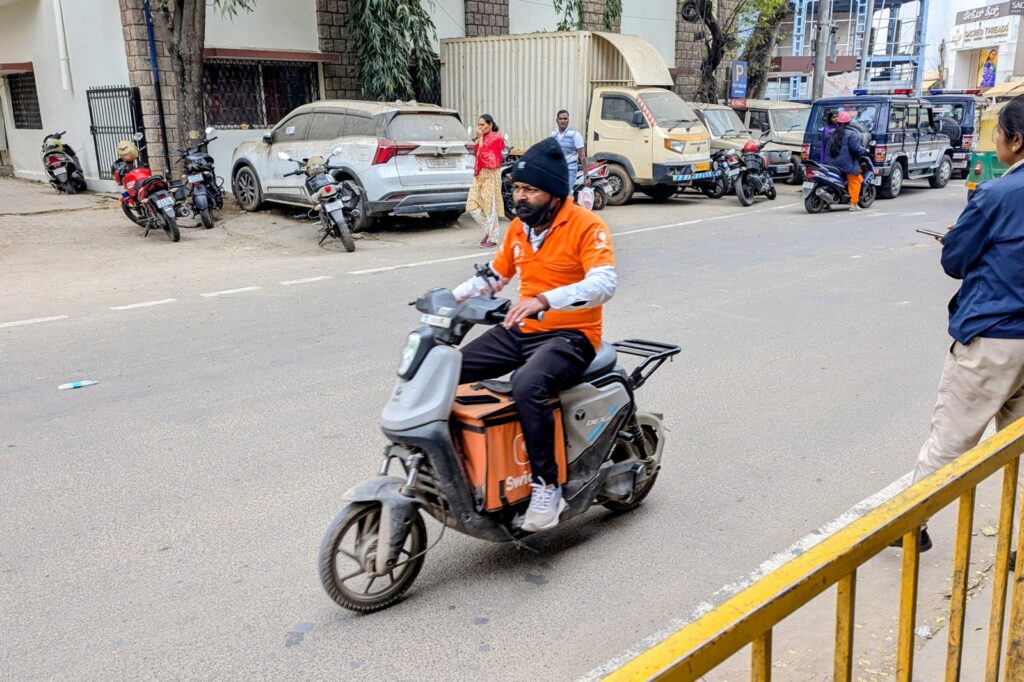
Delivery partners cover fuel, vehicle maintenance, and mobile data out of their own pockets while facing unpredictable incentive formulas. Earnings depend on platform rules they do not control: how orders are allocated, how incentives are calculated, and how performance is rated. Because incentive formulas are rarely disclosed, many riders cannot predict what a day’s work will earn them.
Regulatory Pressure From Traditional Retail
The All India Consumer Products Distributors Federation has taken allegations of predatory pricing against leading platforms to the Competition Commission of India. Neighbourhood kirana stores, which still handle a significant proportion of trade, cannot compete with discounts funded by investor capital. Regulators are watching whether competition is lowering prices for consumers or relying on sustained losses to capture market share before raising fees once competitors exit.
Product Mix and Public Health Scrutiny
Research by LocalCircles found that more than half of packaged food listings on major quick commerce platforms fall under high-fat, high-sugar, and high-salt categories. The study of seven platforms as of November 25, 2026, showed Blinkit with the highest share at 58%, followed by JioMart at 55% and Zepto at 54%. The Supreme Court has ordered mandatory red warning labels for such products, requiring visibility on online platforms within a four-month timeline.
The Path to Structural Profitability
Platforms together handle more than nine million orders a day. The market reached around $13 billion in FY26 and is projected to touch $90 billion by FY31, according to a Google-Redseer study. The Consumer Protection (E-Commerce) (Amendment) Rules, 2026, notified on September 9, will come into force on January 1, 2027, requiring sellers to disclose best-before dates, country of origin, and explain product-ranking parameters in simple language.
Sources
- Dairy Day launches Ob & Gob canned sundaes for quick-commerce sales
- P&G scales AI-led marketing and quick commerce, targets 30% digital sales growth through FY29
- Amazon vs. Alibaba: Which E-Commerce Giant Has an Edge Right Now?
- Gold Spot is back, but only in cans and only on quick commerce: Coca-Cola sources – CNBC TV18 | CNBC-TV18
- India’s quick-commerce boom is outpacing protections for its gig workers | Countercurrents
- Over 1 in 2 packaged food items on quick-commerce apps are junk, finds research
Photo: SerChevalerie (CC0)