
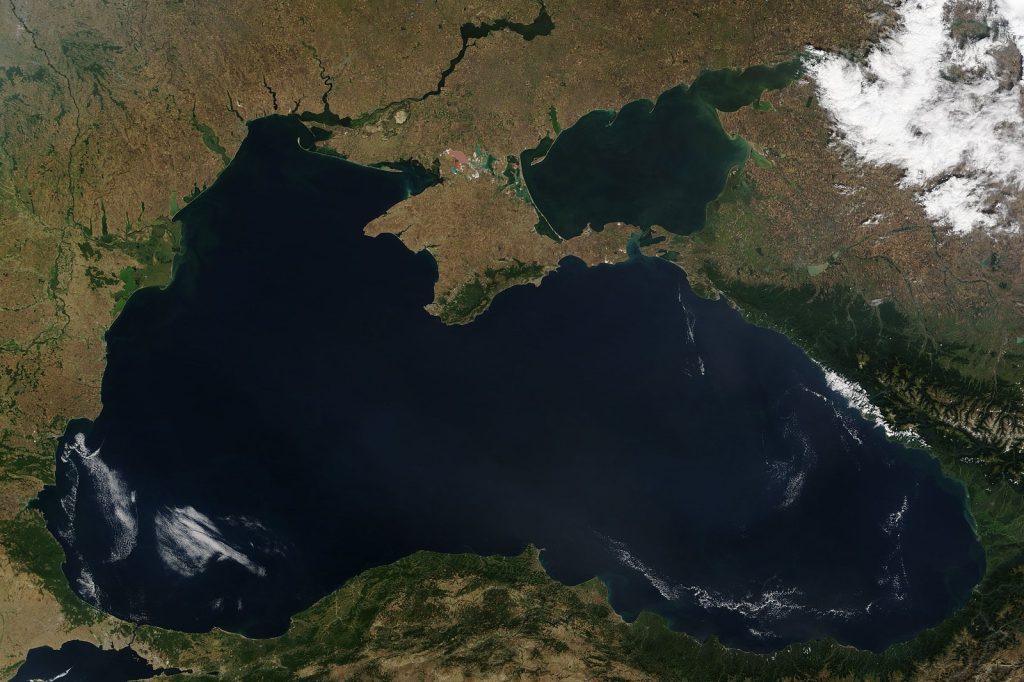
ISTANBUL — The shift is underway in the Black Sea, and it’s not just about grain. Ukraine’s successful strikes on 21 Russian naval vessels in 72 hours may fundamentally degrade Moscow’s ability to enforce its naval blockade of Ukrainian ports. Watch this space: the military calculus here is changing the economic one.
The Black Sea Grain Initiative, signed in Istanbul on July 22, 2022, was a diplomatic lifeline. It allowed Ukraine to export over 32 million metric tons of grain and other foodstuffs through a safe maritime corridor.
That deal, brokered by the UN and Turkey, was a rare point of cooperation during a grinding war. But Russia suspended its participation on July 17, 2023, citing unmet demands regarding its own agricultural exports. The trend underneath: Moscow weaponized food, and Kyiv adapted.
In response, Ukraine established a temporary maritime corridor along its western Black Sea coast. The route hugs the shores of Romania and Bulgaria, both NATO members.
As of early October 2023, several cargo ships had successfully used this corridor, though insurance costs remained high. The strikes on the Black Sea Fleet could reduce the risk of Russian interdiction. Lower risk means potentially lower insurance premiums, and that could encourage more shipping companies to resume trade.
What’s changing is the risk profile.
The naval calculus
Twenty-one vessels in 72 hours. That is a significant degradation of Russia’s Black Sea Fleet capability. The fleet was already under pressure from Ukrainian naval drones and missiles.
This latest operation suggests Ukraine is systematically dismantling Russia’s ability to project power at sea. For the grain corridor, that means fewer Russian warships to intercept commercial traffic.
For insurers, that means a different calculation. But Russia has threatened to target civilian vessels entering Ukrainian ports. The threat is not idle.
Moscow has a track record of striking port infrastructure and grain storage facilities. The risk of escalation remains high.
The UN and Turkey continue diplomatic efforts to revive the grain deal, but those talks have not yet produced a breakthrough. The trend underneath the diplomacy is that Kyiv is creating facts on the water. Ukraine’s next operational priority may be to target the Kerch Strait Bridge, a critical supply link to Crimea.
The bridge was damaged by a truck bomb in October 2022 and again by naval drones in July 2023. Watch this space: if Ukraine can sever that link, it would further isolate Russian forces in Crimea and complicate logistics for the entire southern front. That would be a strategic shift, not just a tactical one.
The economic ripple
For global grain markets, the stakes are clear. Ukraine is one of the world’s largest exporters of wheat, corn, and sunflower oil. Before the war, it shipped most of its agricultural output through its deepwater Black Sea ports.
The blockade and the collapse of the grain initiative disrupted that flow. The temporary corridor is a workaround, but it is not a permanent solution.
Insurance costs remain a barrier. If the naval strikes reduce those costs, more ships will sail. What’s changing is the balance of risk.
Shipping companies are in the business of managing risk. If the Ukrainian corridor becomes safer than the Russian blockade, the market will respond.
The question is whether Russia will escalate its threats against civilian vessels. That would raise the stakes for everyone involved, including NATO members Romania and Bulgaria, whose territorial waters border the corridor. The UN and Turkey continue diplomatic efforts to revive the grain deal.
But the trend underneath is that Ukraine is no longer waiting for diplomacy. It is creating its own security conditions. The strikes on the Black Sea Fleet are a signal: Kyiv can protect its own trade routes.
That changes the negotiating dynamic. Moscow may have to decide whether to escalate further or accept a new reality on the water.
What to watch next
The Kerch Strait Bridge remains a target. If Ukraine can damage it again, the logistics for Russian forces in Crimea become significantly harder. That would be a major operational blow.
Watch this space for more naval drone operations. The Black Sea is becoming a laboratory for asymmetric warfare, and Ukraine is writing the playbook.
For the grain corridor, the next few weeks will be telling. If insurance premiums drop and more ships enter Ukrainian ports, the blockade will effectively be broken. If Russia follows through on its threats to target civilian vessels, the situation could escalate quickly.
The UN and Turkey are still working the diplomatic track, but the momentum is on the water. What’s changing is the balance of power in the Black Sea, and the grain trade is along for the ride.




