
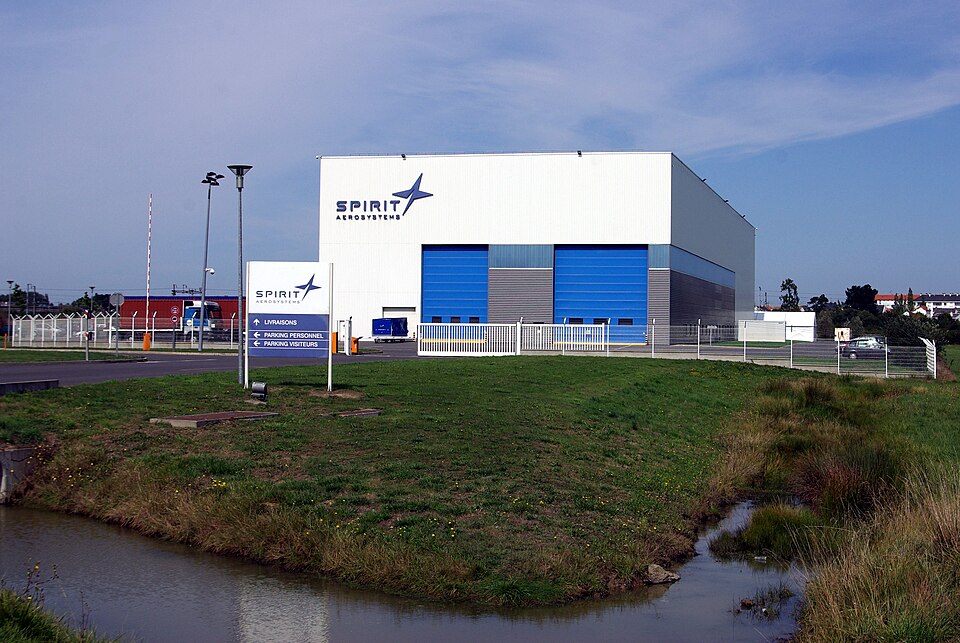
WICHITA, Kan., July 21 — A year after regulatory sign-offs cleared the way, Spirit AeroSystems is once again part of the Boeing fold, marking the end of a two-decade experiment in outsourcing critical airframe production. The re-acquisition, valued at $4.7 billion and closed alongside a parallel transfer of Airbus-related assets to the European planemaker, reshapes the strategic calculus for both Boeing’s supply chain and the broader aerospace industrial base. Spirit’s origins are deeply interwoven with Boeing.
The Wichita plant, founded in 1927 as Stearman Aircraft, was acquired in 1941 by Boeing and went on to build the B-29 Superfortress, B-47 Stratojet, and B-52 Stratofortress. But in June 2005, Boeing sold the Wichita factory along with facilities in Tulsa, Oklahoma and McAlester, Oklahoma to the investment firm Onex Corporation.
The deal valued the enterprise at $1.2 billion — $900 million in cash plus the assumption of $300 million in debt. The spin-off was part of an effort to increase return on net assets.
Strategic Reabsorption
The spin-off was meant to force Spirit to diversify. Under Onex, it did precisely that. In April 2006, Spirit acquired BAE Systems’ aerostructures business for £80 million, picking up plants at Prestwick and Samlesbury in the United Kingdom.
These moves gave Spirit a broader customer base but also introduced complexity. Today Spirit produces fuselage sections for Boeing’s 737 and for the 787, as well as flight deck sections for a majority of Boeing airliners.
On the Airbus side, it supplies fuselage sections and front wing spars for the A350, and wings for the A220. That dual role made the company a lynchpin in both major commercial platforms. But quality issues at Spirit have been cited as contributing to Boeing’s recent production and quality challenges, a fact that likely shaped Boeing’s decision to bring the supplier back in-house.
A Complex Heritage
The re-acquisition signals something broader: the limits of asset-light supply chain strategies in an industry where even minor manufacturing deviations can ground entire fleets. Boeing’s calculus appears to favor direct control over critical fabrication, especially for the 737. Spirit’s Tulsa plant builds wings and components for Boeing aircraft.
The McAlester plant was closed in 2020 with work shifted to Tulsa and Wichita. That consolidation did not fully resolve the quality picture.
Spirit’s competitors — Collins Aerospace, Kawasaki Heavy Industries, Leonardo, and Triumph Group — continue to vie for contracts in an industry marked by tight margins and heavy regulation. But with Spirit now back under Boeing ownership, the competitive landscape shifts notably. Boeing gains direct supervisory control over its most critical structural supplier, while Airbus secures independent production capacity through the asset transfer deal struck in April 2025.
What This Signals
The broader stakes go beyond one company. Spirit AeroSystems’ journey from Boeing division to independent supplier and back again mirrors a recurring pattern in American defense and aerospace: corporate structures that optimize for financial metrics often yield unintended operational risks. Reintegrating Spirit gives Boeing a chance to tighten quality oversight, but it also adds billions in debt and integration costs.
Regulators had signed off on both transactions by December 2025, and now, seven months later, the combined entity’s performance will face scrutiny from investors, airlines, and safety authorities alike. Strategically, the move reasserts Boeing’s commitment to vertical integration at a time when its rival Airbus is also reshoring key production.
The question now is whether the reabsorption of Spirit can stabilize Boeing’s production lines — or whether the complexities of merging two decades of separate corporate cultures will produce new friction. The facility in Wichita, which once built bombers for a world war, is again at the heart of an industrial pivot — one with no less weighty consequences for the future of American commercial aviation.




