
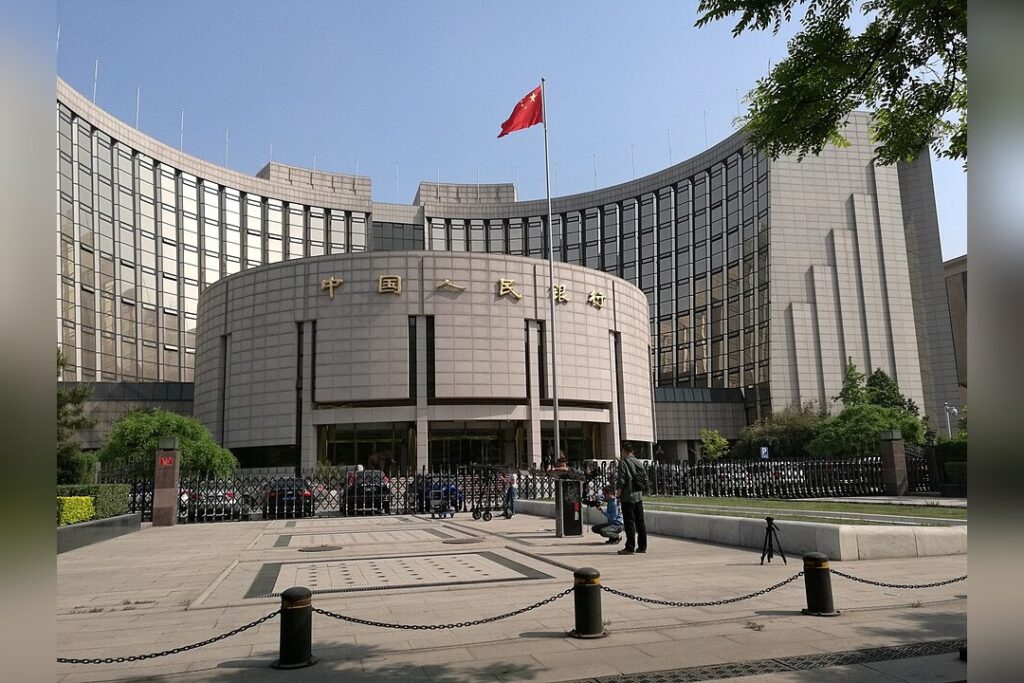
BEIJING — China’s central bank has pumped $54 billion (about 390 billion yuan) into the country’s largest state-owned financial institutions, a capital injection aimed at reviving lending and shoring up an economy facing a property market slump and weak consumer confidence. The People’s Bank of China (PBOC) announced the move, targeting major lenders including the Industrial and Commercial Bank of China, China Construction Bank, Agricultural Bank of China, and Bank of China. The package also extends to key insurers such as China Life Insurance.
The scale of the intervention is notable. The $54 billion figure represents one of the largest such injections in recent years, signaling Beijing’s urgency in countering growth headwinds.
State media reported the announcement.
Mechanism and Targets
The PBOC said the capital boost would strengthen the banks’ lending capacity and enhance the financial system’s stability. Officials noted the funds are intended to flow toward infrastructure projects and small businesses — sectors Beijing has identified as critical for supporting economic growth. The injection forms part of a broader stimulus package that includes interest rate cuts and increased government spending.
The PBOC has been deploying multiple levers simultaneously, suggesting policymakers view the economic slowdown as requiring coordinated rather than piecemeal responses.
Analyst Caution on Credit Demand
Analysts have flagged a persistent constraint. The capital injection will increase the banks’ capital adequacy ratios, allowing them to extend more credit on paper. But demand for loans remains weak.
Without borrowers willing to take on debt — whether property developers, local governments, or private enterprises — the expanded lending capacity may not translate into actual economic activity. This gap between supply and demand for credit has plagued Chinese stimulus efforts throughout the property sector downturn.
The PBOC can make capital available; it cannot compel businesses or households to borrow.
Context and Outlook
The announcement arrives against a backdrop of sustained economic pressure. China’s property market slump has dragged on, eroding household wealth and local government revenues while undermining construction activity and related industrial demand. Consumer confidence has failed to recover, constraining domestic spending even as Beijing promotes a pivot toward consumption-led growth.
For Central Asian economies tied to Chinese trade and investment flows — including Kazakhstan, where Bank of China maintains operational presence — the injection carries indirect significance. A stabilized Chinese banking system supports continued project financing for regional infrastructure and energy ventures.
Any sustained credit contraction in China would transmit quickly through commodity demand and cross-border lending channels. What follows now depends on whether the capital translates into actual lending, and whether borrowers materialize to absorb it. The PBOC’s next policy moves, and any supplementary fiscal measures from Beijing, will signal how aggressively authorities intend to press the stimulus campaign.




