
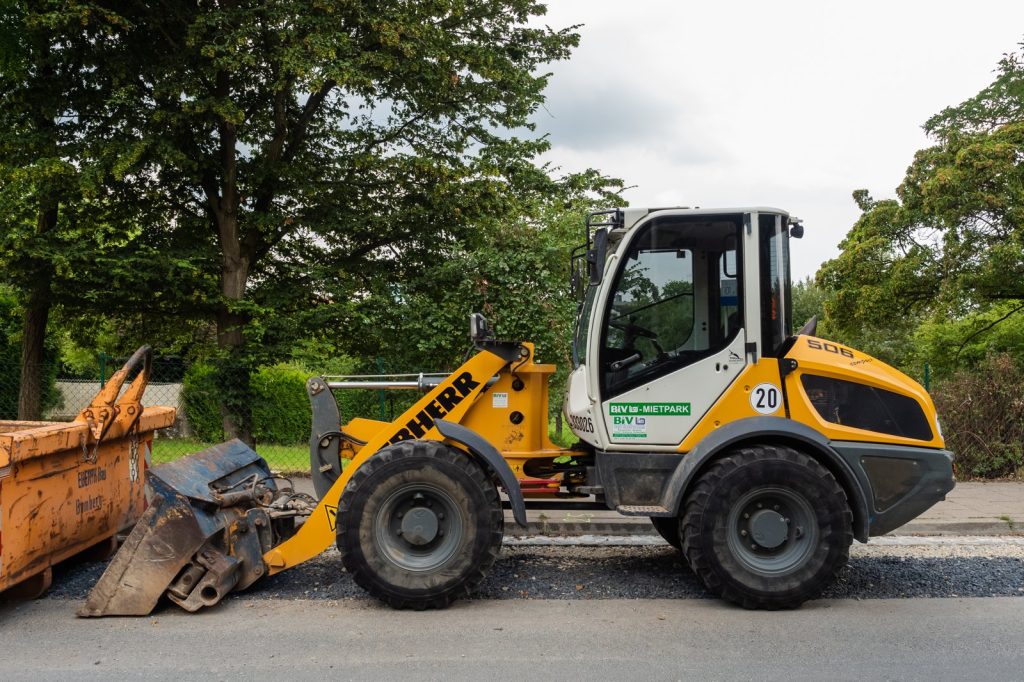
The twin pillars of Germany’s export economy—machinery and chemicals—are showing unmistakable signs of structural strain, according to new data from the country’s two leading industry trade associations. The German Engineering Federation (VDMA) reported that machinery exports to China fell by 8 percent in 2023. That decline, while significant in isolation, points to a deeper shift: Chinese competitors are steadily capturing market share in sectors where German firms have long held a commanding lead.
The VDMA data does not assign a precise percentage to how much of that export loss is due to Chinese rivals, but the directional trend is clear. Companies such as Sany Heavy Industry and XCMG have gained ground in construction machinery, directly displacing orders that once flowed to German manufacturers.
Machinery exports to China lose ground
The VDMA’s 8 percent decline is not merely a statistic; it represents lost contracts for precision machinery that German factories have supplied for decades. German engineering has traditionally dominated its largest export market for machinery, but that position is eroding.
The rise of domestic Chinese firms, backed by heavy investment in production capacity and technology, has narrowed the quality and cost gap that once insulated German products. The VDMA data, drawn from industry press releases and trade association reports, underscores that the erosion is not a temporary blip but part of a broader realignment. German machinery makers now confront a two-front challenge: higher energy costs at home and increasingly capable competitors abroad.
Chemical sector suffers a deeper contraction
The chemical industry’s picture is even starker. The German Chemical Industry Association (VCI) reported that chemical production in Germany fell by 11 percent in 2023.
This is a sharp contraction for an industry that has long served as the backbone of German industrial output. BASF, the world’s largest chemical company, announced in 2023 that it would cut 2,600 jobs globally, citing high energy costs and competition from China as the primary drivers. Germany’s chemical sector was built on access to cheap Russian natural gas, which provided the essential energy for its highly energy-intensive production processes.
That era is over. The VCI’s production drop of 11 percent reflects a structural shift, not merely a cyclical downturn.
The disparity is highlighted by data from the China Petroleum and Chemical Industry Federation, which reported that China’s chemical output grew by 6 percent in the same period. The gap between the two countries’ chemical sectors is widening. BASF’s job cuts are a direct consequence of the squeeze; the company is often seen as a bellwether for the broader German industrial model.
High energy costs do not affect BASF alone—they ripple through the entire supply chain of chemical intermediates that feed into automotive, construction, and consumer goods production. The VCI’s 11 percent production decline signals that the entire sector is under intense pressure.
A structural challenge for Germany’s industrial model
The machinery and chemical sectors are the twin engines of Germany’s export economy, and both are now running at reduced power. Germany’s industrial model took shape after World War II, built on high-value manufacturing, vocational training, and export-led growth within a social market economy that balanced private enterprise with strong labor protections.
Over decades, German industry built a reputation for quality and reliability, securing dominant positions in machinery and chemicals. That model depended on two key advantages: access to low-cost energy—primarily cheap Russian natural gas—and dominance in high-end export markets. The balance began shifting in the 2010s as China expanded its manufacturing capacity, improved product quality, and invested heavily in infrastructure and industrial parks.
By the early 2020s, Chinese firms in heavy machinery and basic chemicals had not only matched but, in many cases, exceeded German standards in cost efficiency and scale. The erosion of Germany’s traditional industrial edge comes at a time of broader economic strain.
High energy prices, supply chain disruptions, and rising labor costs have further eroded competitiveness, while global demand patterns shift toward faster and cheaper production. The VDMA and VCI will release updated figures for 2024 later this year, and those numbers will show whether the trend is accelerating or stabilizing. German policymakers in Berlin are watching closely, but the tools available to them are limited.
Subsidies can cushion the blow, but they cannot replicate the cheap energy that once powered the chemical industry, nor can they stop Chinese competitors from gaining share in construction machinery. The decline in machinery exports to China and the contraction of chemical output signal more than a temporary downturn—they reflect a structural challenge that German industry must now adapt to or risk losing ground in markets it has dominated for generations.




