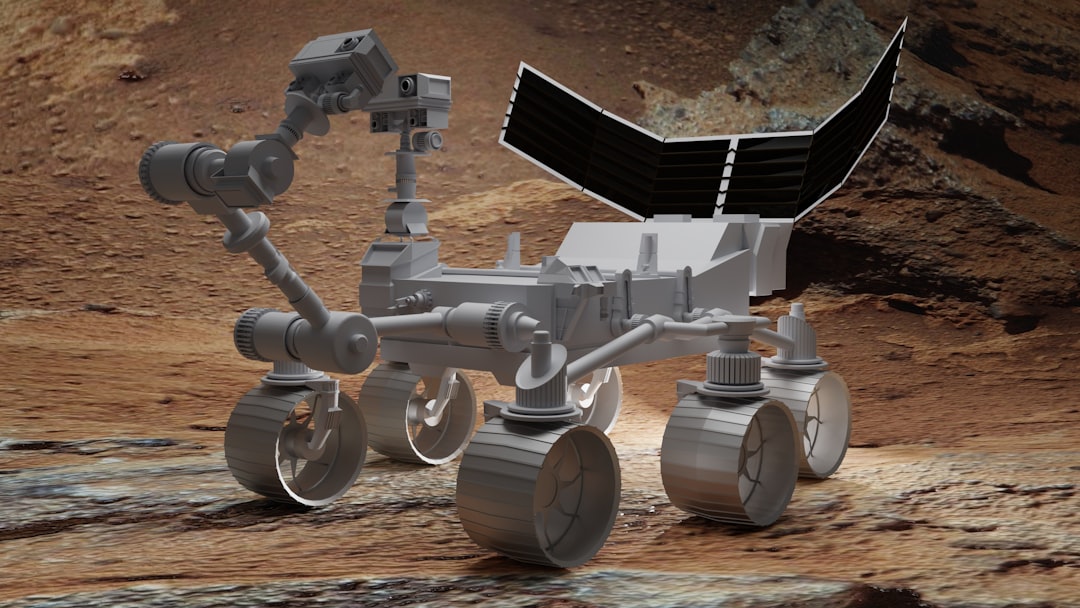
When NASA’s Curiosity rover finally shook off a 13-kilogram rock named Atacama on April 29, it wasn’t just a mechanical problem solved. It was a quiet demonstration of how exploration on another planet actually works — slow, remote, and dependent on human ingenuity operating under brutal constraints.
The rock had been stuck on the rover’s drill since early June. Engineers tried vibrations. They tried repositioning the robotic arm. Nothing worked. Atacama, a sandstone slab, was simply too heavy and unstable for the arm to shake loose safely. The rover was stuck with it for weeks.
Curiosity has been on Mars for 14 years. It was built for a two-year mission. The drill was designed to crush rock into powder for chemical analysis, not to act as a tow truck for boulders. Hardware wear is a given after more than a decade of operation millions of kilometers from Earth. Yet the rover has collected 42 drilled samples. The fact that this was the first time it accidentally lifted a rock is remarkable.
What finally worked was a combination of everything at once: drill rotation, vibration, turret movement, and arm tilting. The rock broke apart when it hit the surface. The ordeal ended. Curiosity resumed its science campaign shortly after. Engineers said there was no lasting risk to the rover.
This incident tells you something about the nature of planetary exploration. Every problem is new. There is no mechanic on Mars. No spare parts. No second chances if a critical system fails. The rover’s design and construction have to account for the unknown, and the team on Earth has to solve problems they never anticipated.
The Atacama rock was a sandstone slab. Sandstone forms in water. Curiosity’s mission has already confirmed that ancient Mars had lakes and the chemical conditions for microbial life. Every sample the rover drills adds to that picture. The 42 samples already collected are a library of Martian history, pulled from a world that was once wet and possibly habitable.
What comes next is more of the same. Curiosity will keep drilling. It will keep encountering surprises. Some will be minor. Some might be serious. The rover’s ability to overcome unexpected challenges has kept it running well past its original mission. That resilience is the product of good engineering and a team that knows how to improvise.
There is no tidy lesson here. No grand statement about human destiny among the stars. Just a robot on a cold, dry planet, drilling into rock, breaking bits off, and sending data back to a planet 225 million kilometers away. The Atacama rock slowed things down for a while. Then it was dealt with. The mission goes on.