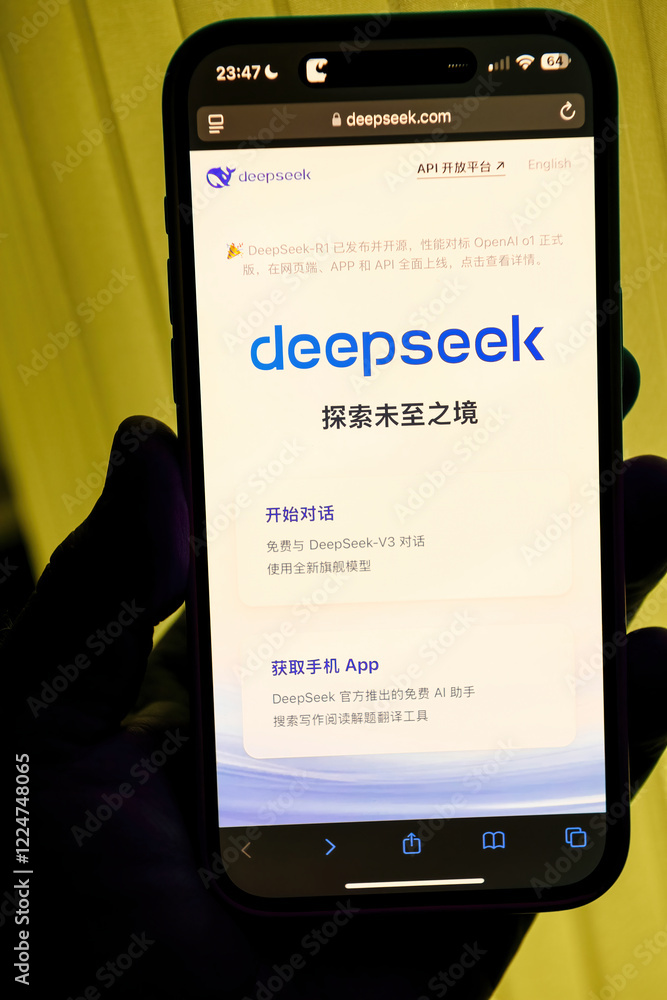
On January 20, 2025, the Chinese company DeepSeek released its generative artificial intelligence chatbot, DeepSeek-R1. Within a week, the app surpassed ChatGPT to become the most downloaded freeware application on the iOS App Store in the United States, a milestone reached by January 27. The rapid ascent of DeepSeek against larger, more established competitors has been described by observers as “upending AI” and initiating “a global AI space race.”
DeepSeek’s success is notable for several reasons. The company has released its open weights and infrastructure code, a move that has been praised for contributing to open-source artificial intelligence. Additionally, the model has been recognized for its energy efficiency, a factor that distinguishes it from many larger, resource-intensive AI systems. These attributes have drawn positive attention from the developer and research communities, who see DeepSeek as a significant step forward in making advanced AI tools more accessible and sustainable.
However, the chatbot’s rapid adoption has not been without controversy. DeepSeek’s compliance with Chinese government censorship policies has raised concerns about information control. The model’s data collection practices have also prompted scrutiny, with critics pointing to potential privacy risks. These issues have led to regulatory investigations in multiple countries, as governments weigh the benefits of the technology against the implications for user privacy and freedom of information.
The dual nature of DeepSeek’s reception—praise for its open-source contributions and energy efficiency, alongside concerns over censorship and data privacy—reflects a broader tension in the global AI landscape. While some users and developers celebrate the democratization of advanced AI capabilities, others worry about the influence of state-backed entities on the flow of information. The company’s Chinese origins add a layer of geopolitical complexity to these debates, as nations compete to set standards for AI development and deployment.
DeepSeek’s emergence has also intensified competition in the AI sector. By achieving market dominance so quickly, it has challenged the position of well-funded rivals like ChatGPT, which is developed by OpenAI. The speed of DeepSeek’s adoption suggests a high demand for alternative AI models, particularly those that offer open-source flexibility. However, the sustainability of this growth remains uncertain, especially as regulatory hurdles mount and questions about data handling persist.
Looking ahead, the key developments to watch include how governments respond to the privacy and censorship concerns raised by DeepSeek. Regulatory actions in the United States, Europe, and elsewhere could shape the chatbot’s availability and features. Additionally, the AI industry will be watching to see whether DeepSeek’s open-source model inspires similar releases from competitors, potentially accelerating the pace of innovation. The company’s ability to maintain its user base while navigating these challenges will be a critical factor in determining whether its initial success translates into long-term influence in the global AI market.