
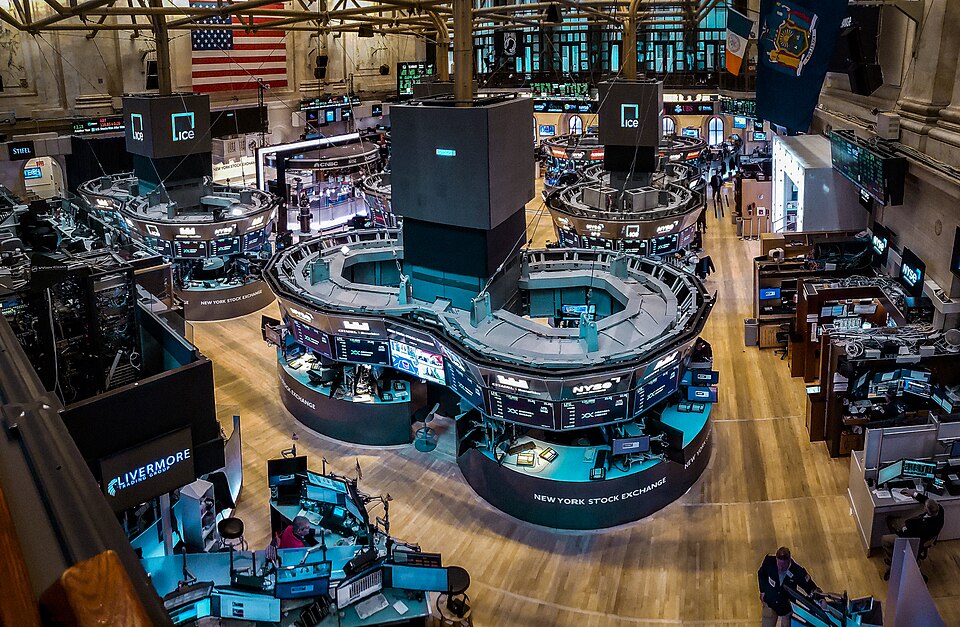
NEW YORK, July 9 — Against the backdrop of a trading floor that has seen calmer days, the S&P 500’s year-to-date gains now stand at 12%, a figure that masks the jolt delivered to markets in late June. On June 20, the Dow Jones Industrial Average suffered its largest single-day decline since May 23, dropping 450 points. That earlier fall, of 500 points, had itself rattled investors.
The June sell-off pushed the CBOE Volatility Index, known as the VIX and often called Wall Street’s fear gauge, to 18, up from 14 the previous week — a clear signal that anxiety had crept back into the corridors of finance. The question in the minds of European investors, watching from across the Atlantic, is whether this is the beginning of something deeper.
The wider picture, for now, suggests a market that remains within historical norms for geopolitical shocks. The S&P 500’s 12% year-to-date rise, alongside the Nasdaq’s 18% advance, still paints a broadly positive picture for 2024. To understand what is at stake, one must look at recent precedent.
During the 2022 Russian invasion of Ukraine, the S&P 500 fell 3% on February 24 alone — a dramatic single-day drop that sent shockwaves through European capitals already bracing for energy disruptions. The 2023 Hamas-Israel conflict produced a more contained reaction: the Dow fell 1.5% on the day of the attack.
The June 20 decline, while sharp, has not matched those earlier convulsions. Yet the rise in the VIX to 18 from 14 in a single week suggests that investors are pricing in a higher probability of disruption — perhaps tied to election uncertainty, interest rate policy, or geopolitical flashpoints that remain unresolved. For Italian and broader European markets, the S&P 500’s performance serves as both a benchmark and a weather vane.
When American equities stumble, European indices often follow, given the deep integration of transatlantic supply chains and financial flows. The 12% year-to-date gain in the S&P 500, however, still offers a cushion that was absent during the darker months of 2022. The Dow, for its part, touched 40,000 in May 2024 — a psychological milestone that now feels distant after the 450-point drop on June 20.
That single-day fall, while notable, is the kind of correction that seasoned traders in Milan and Frankfurt have learned to read as a signal rather than a crisis. What comes next will depend on whether the VIX continues its climb, or whether the fear that spiked in late June subsides as quickly as it arrived.
For now, the S&P 500’s 12% gain remains a sturdy headline, but the fine print — the volatility index, the single-day drops, the historical comparisons — tells a more cautious story.




