
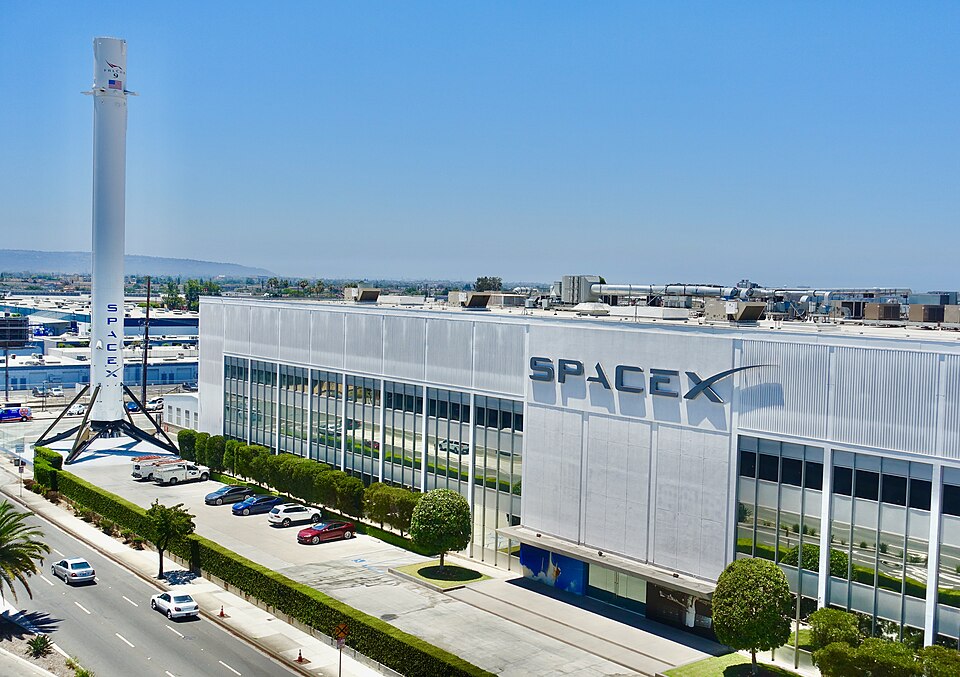
SEATTLE, July 15 — The rivalry between Jeff Bezos and Elon Musk is playing out not just in space, but on the balance sheets of two of the world’s most valuable companies. Amazon and SpaceX, along with Musk’s other ventures, represent a combined financial force that reshapes how communities across Asia connect to the internet and access cloud computing. SpaceX, privately held, was valued at $180 billion in a secondary market valuation from 2024.
Amazon’s market capitalisation sits at roughly $1.8 trillion. That puts the combined value of the two companies at nearly $2 trillion.
A figure of $4.5 trillion, sometimes seen in headlines, actually refers to the combined market cap of Amazon and Tesla — Musk’s electric vehicle company — which reached that level in 2024.
Satellite internet: two paths to connecting the region
For families across the Philippines, Indonesia and rural India, the promise of affordable satellite internet is a concrete hope. The global satellite internet market is projected to reach $18.9 billion by 2030. SpaceX’s Starlink generated $1.4 billion in revenue in 2022, according to a 2023 report by Quilty Analytics.
Amazon’s Project Kuiper, meanwhile, is expected to cost $10 billion to build, per the company’s 2021 announcement. Both systems aim to beam broadband from low-Earth orbit to underserved areas.
Starlink already has thousands of satellites in orbit and is operational in parts of Asia. Project Kuiper has yet to launch its production satellites at scale, but Amazon has committed significant resources to the effort.
Government contracts fuel the competition
Government money is a major driver. SpaceX has held NASA contracts worth over $15 billion since 2006. Amazon Web Services, the cloud computing arm of Amazon, secured a $10 billion contract with the U.S. Department of Defense in 2022, under the Joint Warfighting Cloud Capability programme.
The space economy overall was valued at $546 billion in 2022, per the Space Foundation. That figure encompasses everything from launch services to satellite manufacturing and ground equipment — a market where both Amazon and SpaceX are increasingly active.
Closer to home for many Asian families, the competition between these two tech giants will determine whether satellite internet becomes an affordable utility or remains a premium service. Project Kuiper’s $10 billion investment suggests Amazon is in the race for the long haul, while Starlink’s existing revenue shows SpaceX already has a paying customer base. What happens next depends on execution.
SpaceX has a head start in orbit. Amazon has a deeper balance sheet and an existing cloud customer base through AWS.
For the millions of people across Asia still waiting for reliable broadband, the outcome of this rivalry will have real consequences for education, healthcare and economic opportunity.
Sources
{“@context”: “https://schema.org”, “@type”: “NewsArticle”, “headline”: “Economic Impact: The $4.5 Trillion Collision Course”, “description”: “SEATTLE, July 15 — The rivalry between Jeff Bezos and Elon Musk is playing out not just in space, but on the balance sheets of…”, “datePublished”: “2026-07-15T09:30:00+00:00”, “author”: {“@type”: “Person”, “name”: “Merry Gel Sigui”}, “publisher”: {“@type”: “Organization”, “name”: “InfoPulse Today”, “url”: “https://newsfeed.infopulsetoday.com/”}, “citation”: [{“@type”: “CreativeWork”, “url”: “https://en.wikipedia.org/wiki/Amazon”}]}




