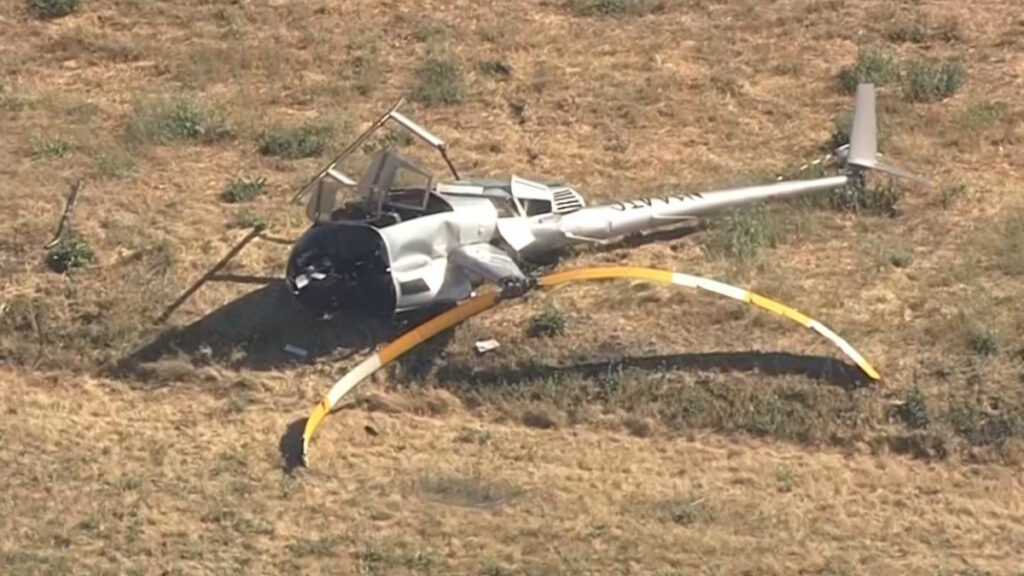
The Robinson R66 that went down near Ekalaka, Montana, on October 22, 2025, killing four people, was a machine built to a specific standard. It was certified by the Federal Aviation Administration on October 25, 2010. That date matters.
It marks the end of a long process — years of design, flight testing, and regulatory scrutiny — before the FAA issued both a type certificate and a production certificate. The R66 was not rushed to market.
It earned its place in the air, one checkride at a time. The helicopter is a five-seat machine with a separate cargo compartment. It runs on a Rolls-Royce RR300 turboshaft engine.
That engine is the thing that set the R66 apart when it launched. Robinson had spent decades building piston-engine helicopters — the R22 and the R44.
The R66 was their first turbine-powered model. Turbine engines are generally smoother, more reliable at altitude, and less prone to the kinds of sudden failures that plagued early piston engines. It was a deliberate step up.
But no certificate, no engine type, no reputation for reliability removes the possibility of failure. The crash near Ekalaka proves that. Four people are dead.
The cause is not yet known. Investigators will look at the aircraft’s condition.
They will examine the pilot’s experience. They will tear down the Rolls-Royce engine if they have to. They will check for mechanical issues, for maintenance records, for anything that broke or wore out or was missed during a preflight inspection.
Ekalaka is in the far southeastern corner of Montana, a stretch of rolling prairie and badlands where the population is thin and the distances are long. Helicopters serve a purpose there.
They move people and cargo over ground that takes hours to cross by truck. The R66 was designed for that kind of work — versatile enough for private transportation, medical evacuation, and cargo hauling. It is a workhorse, not a luxury toy.
But workhorses break. They require constant attention. The report on this incident notes that “regular maintenance can help identify potential issues before they become major problems.” That is the core of aviation safety.
It is a tedious, expensive, unglamorous process. It involves logbooks and torque wrenches and replacement schedules.
It is the reason most flights end safely. It is also the thing that, when skipped or skimped on, can lead to wreckage in a field. The Robinson R66 has a proven track record.
That is a fact, not a sentiment. Thousands of flight hours have been logged across the fleet.
The type certificate is still valid. The design has not been grounded. But every crash, especially one that kills four people, forces a reassessment.
Was this a one-off failure? A design flaw that never showed up before? A maintenance error?
Pilot error? Bad weather?
The investigation will answer those questions, or try to. For now, the only certainties are the date — October 22, 2025 — and the location — near Ekalaka, Montana — and the number: four dead. The rest is work still to be done.