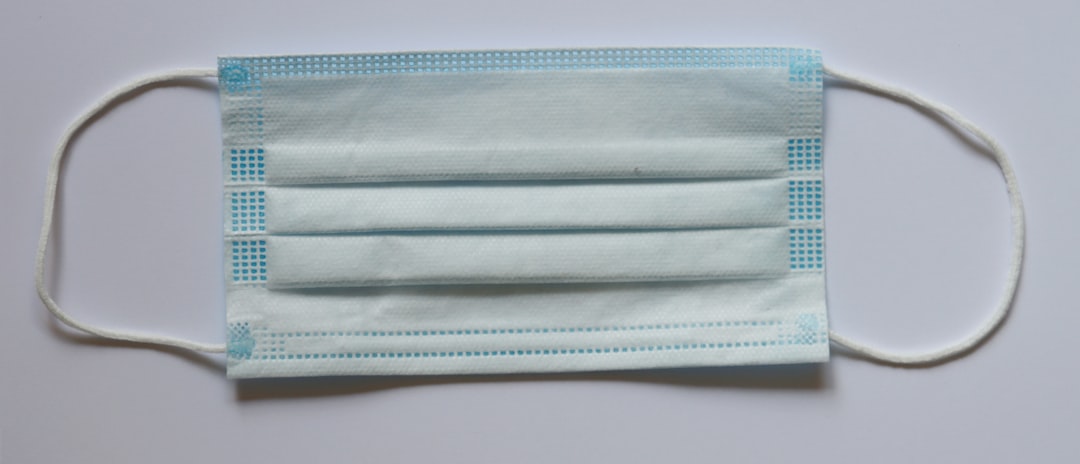
Two layers of cotton fabric. A gap of just 2.5 inches. That is the distance a simulated cough traveled in a Florida Atlantic University study released June 1, 2021. The number is small. It is also the best result among the cloth masks tested.
Dr. Sid Verma, an assistant professor at the university, led the research. His team used a laser to visualize droplets from a simulated cough. Without any mask, those droplets shot 12 feet in 30 to 40 seconds. A bandanna or gaiter-style mask cut that to three feet. A folded handkerchief brought it down to one foot, three inches. A cone-style mask reduced it to about eight inches. Two layers of fabric stopped the droplets at 2.5 inches.
The study lands in the middle of a pandemic that has forced millions to rely on cloth face coverings. Early in the outbreak, health authorities urged the public to reserve N95 respirators for frontline health care workers. Those masks, which filter down to 0.3 micron, require individual fitting to prevent leakage. The COVID-19 virus particle is around 0.1 micron, but it typically bonds to larger droplets. That makes N95s effective. But they were not—and are not—available to everyone.
Surgical masks, the loose-fitting disposables, were also in short supply for much of 2020. So the public turned to cloth. The problem: cloth masks are not a single product. They are a category. A bandanna is not a two-layer cotton mask. A gaiter is not a folded handkerchief. The Florida Atlantic study makes that variation plain. Some cloth masks barely cut droplet travel. Others do a lot better.
Distance matters. Dr. Verma explained why. At nine feet, he said, droplets can linger in the air for two to three minutes. But the concentration at nine feet is less than at six feet by a factor of eight. That means even a modest reduction in how far droplets spread can lower the viral load a person might inhale. A person standing six feet from a cougher gets a heavier exposure than someone at nine feet. Cut the droplet travel from 12 feet to three feet, and the difference is stark.
The study does not say cloth masks are as good as N95s. They are not. But it does say that wearing a cloth mask is better than wearing nothing. The two-layer cotton mask, in particular, performed well. The question is whether people wear them correctly. A mask that gaps at the nose or slips below the chin does not work as intended. The study tested masks as worn in a controlled setup. Real-world use is messier.
This research comes from a university lab, not a hospital ward. It used a simulated cough, not a real patient. But the physics of droplets does not change. A cough propels moisture. A mask blocks some of it. The more layers, the more blockage. The tighter the weave, the better the result.
The pandemic has forced a crash course in aerosol science for the general public. Terms like “droplet” and “aerosol” and “viral load” are now common. The Florida Atlantic study adds a concrete number to the cloth mask debate. Two-point-five inches. That is the gap a good cloth mask can achieve. It is not zero. But it is a lot closer to zero than 12 feet.