
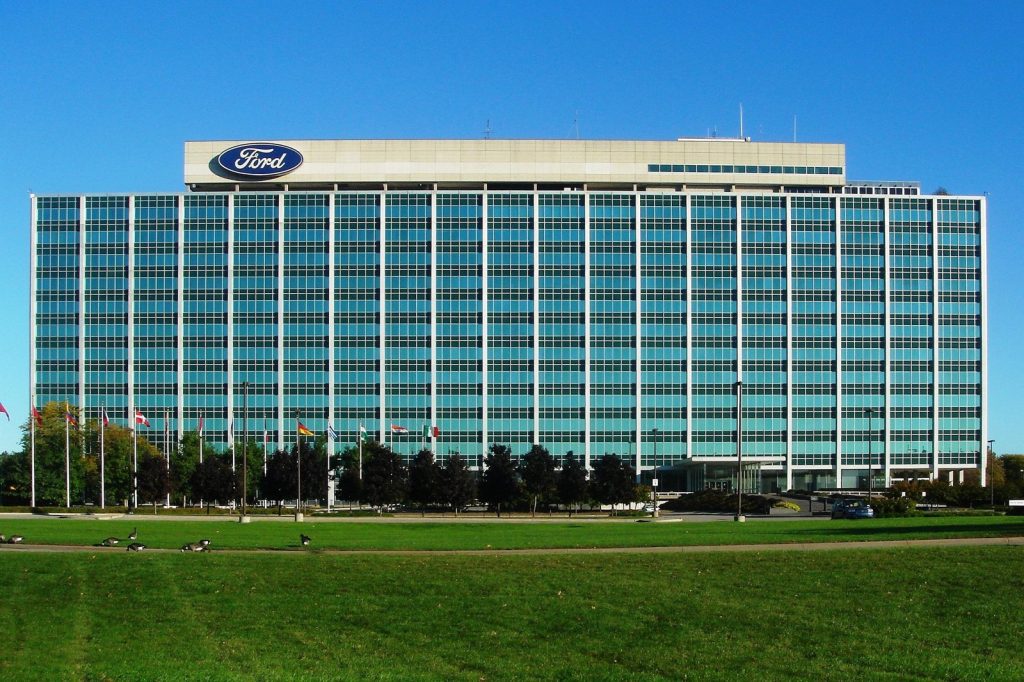
Ford Motor Company is learning a hard lesson about the limits of machines. The Dearborn automaker has brought back 350 veteran engineers after discovering that artificial intelligence and automated systems could not handle quality control the way humans can. These are not fresh graduates.
These are seasoned specialists — some former Ford employees, others who had been working at suppliers. The industry calls them “gray beard” engineers.
The company’s chief operating officer, Kumar Galhotra, said Ford had been “relying more and more on automated quality systems” and found the results disappointing. So the automaker “brought back technical specialists,” Galhotra said. Those specialists now “hunt for failure points before a part ever reaches the plant floor.” This is a bigger story than one company’s staffing shift.
It is a signal that the automation wave sweeping through manufacturing has hit a wall. For years, the narrative was simple: machines are faster, cheaper, and more precise.
Throw AI at a problem and watch efficiency soar. Ford tried that. It did not work.
Charles Poon, Ford’s vice president of vehicle hardware engineering, was blunt. “Mistakenly we thought that by just introducing artificial intelligence and ingesting the design requirements that we had, that that would produce a high-quality product,” Poon said. The failure was not small.
A car leaving the factory with hidden faults does not just mean a warranty claim. For communities across Asia where families depend on reliable vehicles for daily life and livelihoods, the consequences are concrete.
A tricycle driver in Manila loses a day’s income. A family in Bangkok faces an unexpected repair bill that stretches the monthly budget. Ford is not abandoning AI entirely.
But the company has learned a hard lesson. Automation alone cannot replicate the judgment of someone who has spent decades assembling transmissions or diagnosing failures by feel.
That factory worker in Thailand, that mechanic in the Philippines — they know things no algorithm has learned. This is not an isolated case. Across industries, the hype around artificial intelligence has outpaced reality.
Chatbots hallucinate. Self-driving cars crash. Automated quality systems miss defects that a trained eye catches in seconds.
The promise of a fully automated factory floor remains just that — a promise. Ford’s move is a practical correction.
The 350 engineers are now embedded in the company’s quality processes. They are not there to babysit machines. They are there to find failure points before a part ever reaches the plant floor.
That is a job AI could not handle. For the families who depend on Ford vehicles, this matters.
A reliable car is not a luxury. It is the difference between getting to work and missing a shift. Between keeping a small business running and watching it stall.
Between a predictable month and one blown apart by an unexpected repair. The gray beards are back. Experience and intuition still count for something.
Ford’s COO and its hardware engineering chief both said as much. The company spent money on automation and got less than it expected.
Now it is spending money on people. That is the kind of math that makes sense in the real world.




