
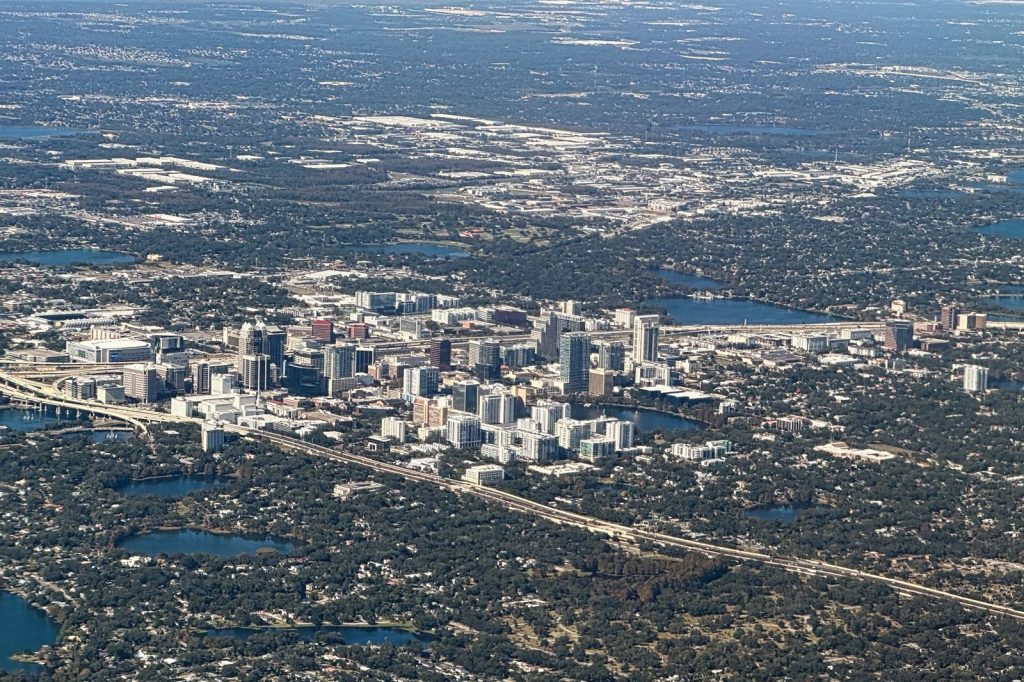
ORLANDO — Joseph McCue figured he had it made. The 45-year-old electrician left New York City for Orlando, a hospital construction job already lined up. No state income tax.
Warm weather. A house for his wife and three kids.
He was earning nearly $250,000 a year in New York. He expected to do even better in Florida. The job fell through.
Three months later, McCue hasn’t landed a lower-paid position at Walmart Inc. “I think I gave it enough time,” he said. “Instead of being with my family every night, I’m down here in this rat race where everybody is just trying to make ends meet.” His story is not an outlier.
It is the core contradiction of Florida’s economy right now. Billionaire Ken Griffin’s Citadel moved in. Wells Fargo & Co. moved in.
Palantir Technologies Inc. moved in. The headlines are about high-wage finance and tech firms. The reality on the ground is a state whose unemployment rate has surged past 4.8%, climbing more than a percentage point over the past year.
That puts Florida among the highest nationwide. The national unemployment rate has barely budged.
Florida’s has risen faster than nearly any other state. Here is what that number hides. Job growth has slowed to a crawl.
The pullback is concentrated in industries that made Florida boom: real estate, retail, tourism. All of them are highly sensitive to interest rates and consumer demand.
Those sectors do not employ hedge fund managers. They employ electricians, retail workers, hotel staff. Florida was one of the hottest economies in the country coming out of the pandemic.
That is reversing course. The pain shows up in individual stories like McCue’s. It also shows up in the numbers that do not make the press releases.
A rising cost of living is starting to send would-be Floridians elsewhere. The state that sold itself on cheap sunshine is no longer cheap.
The corporate relocations grab attention. They do not fix the math for a family trying to buy a house on a construction worker’s salary. The disconnect is stark.
High-wage firms move in. The broader economy struggles.
The headline figures on corporate investment do not match the unemployment line. McCue’s experience is a cautionary tale for the entire state. He moved from New York City to Orlando.
He had a job at a hospital construction site. That was the plan. The job fell through.
He gave it three months. He is still looking.
He is not alone. The unemployment rate does not capture the full story. It captures the direction.
Florida is heading the wrong way. The state that once drew workers from across the country is now pushing some of them out.
The cost of living is rising faster than wages. The industries that once hired in bulk are pulling back. The corporate names moving in are not hiring the people who need work.
That is the disconnect. That is the story the headlines miss. McCue saw it up close.
He came for the zero state income tax and the nice weather. He found a rat race where everybody is trying to make ends meet.




